
EU livestock production is expected to fall for most animals in 2026, with the exception of pigs.
The EU’s gross indigenous production (GIP) of bovine animals — a measure of animals produced within the EU — is forecast to drop to 11.4 million head in the second half of 2026, down 0.5 million on the same period in 2025, Eurostat revealed on Wednesday. That would represent a fall of 4.2%.
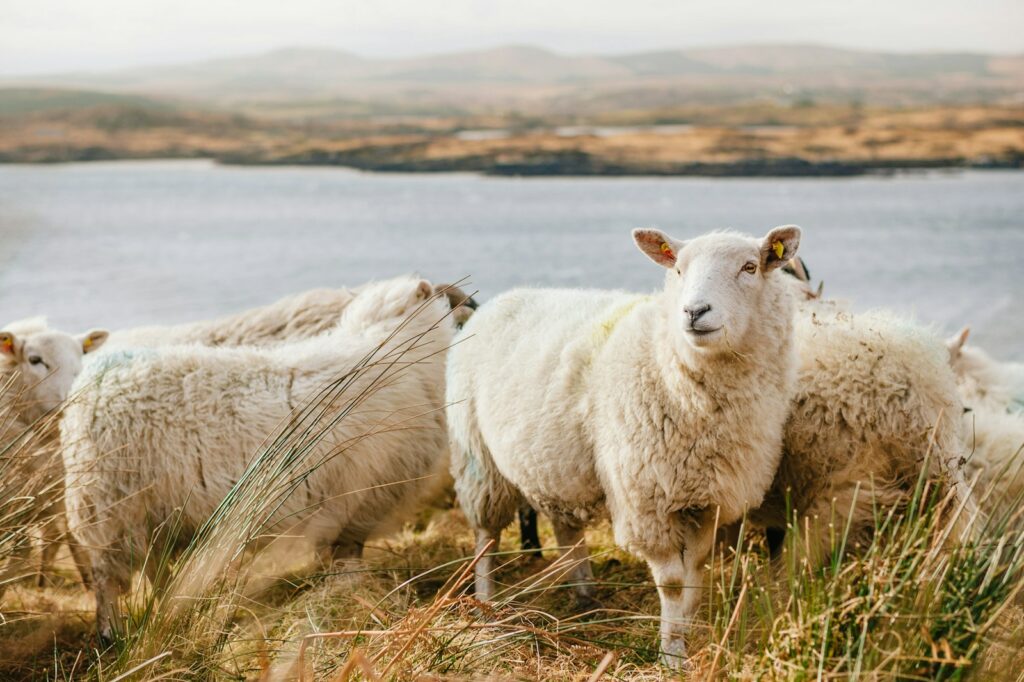
Sheep and goat production are forecast to fall more sharply, with sheep down 17.8% to 12.2 million head and goats down 17.1% to 1.9 million head between the second halves of 2025 and 2026.
Pig production is projected to rise, reaching 61.2 million head in the final quarter of 2026, up 3.2% compared with the same quarter of 2025.
France and Spain lead production in key categories
France is forecast to remain the EU’s largest producer of bovine animals, accounting for 23.1% of the bloc’s total in the second half of 2026, Eurostat said.
Production in France is projected to edge down 0.4% to 2.63 million head over the period.
Among other major bovine producers, output is forecast to fall 0.6% in Germany to 1.7 million head and 5.2% in Ireland to 0.9 million, while Spain is expected to increase production by 2.7% to 1.1 million head.
Spain is also forecast to remain the EU’s largest pig producer, with 15.8 million pigs in the fourth quarter of 2026 — 25.7% of the EU total — representing a 12.0% rise compared with the same quarter of 2025.
Germany (up 3.8% to 9.5 million), Denmark (up 3.1% to 8.0 million) and France (up 2.3% to 5.6 million) are also expected to record increases.
Spain is projected to stay the EU’s leading sheep producer, but output is forecast to fall 40.4% to 2.3 million head in the second half of 2026.
Greece, the bloc’s leading producer of goats, is forecast to produce 0.8 million goats, down 2.6%.
