
Do you ever wonder what you would tell your younger self if you had the opportunity to go back in time? If time-travelling me were to meet 25-year-old me, I would sit her down and insist (firmly and stubbornly) that she start acting on a few important, science-backed habits; the sort that might have spared me one or two ailments today. Still, it is never too late, which is why I'm now passing on the advice I would have given my younger self, and inviting you to take it up too.
Kristina Chetcuti is a registered Health Coach (UKIHCA) certified by the Health Coaches Academy in the UK and the European Lifestyle Medicine Organisation in Belgium, who focuses on helping clients take charge of their health.
Eat
A croissant or baguette for breakfast may work reasonably well up till your twenties, but declining oestrogen levels from your 30s on can make blood sugar regulation less forgiving, resulting in fatigue, unwanted weight gain and other unwelcome symptoms.
Admittedly, the slight whiff of a pain au chocolat can be hypnotic enough to stop rational thought altogether, but a starchy/sweet first meal is not the most strategic start to the day. Ideally, begin the day with something that includes protein, fibre, and some healthy fat. There is no need to overcomplicate matters. An apple and some nuts, perhaps with a serving of Greek yoghurt, will do nicely.
Also, while you're at it, forget calories. Just look at your plate: about half of it should ideally be vegetables. Add beans! Add nuts! Add a variety of colourful vegetables!
New research strongly suggests that a higher intake of plants may help support hormonal balance and make some perimenopausal symptoms for women approaching midlife more manageable.
Floss
Flossing may sound like weird advice, but I'm pretty sure that at age 25, I never did it. I wish someone had told me that as we venture into our 30s and 40s, and oestrogen levels begin their long, gradual shift, women can become more prone to gum inflammation and bleeding, and that since the mouth is not separate from the rest of the body, this can spell trouble elsewhere.
Emerging research links gum disease with cardiovascular health, blood sugar regulation and even cognitive decline later in life. In short, neglecting the small space between the teeth can have wider consequences than once assumed.
Flossing is unglamorous and it's tedious, but it's a worthwhile investment for protecting not just a radiant smile, but long-term health.
Sleep
Beauty sleep is when hormone balance, stress regulation and cellular repair all take place. If you like to think of yourself as the CEO of your body, then good sleep is a performance value that deserves attention and appreciation (give yourself a well-deserved promotion to a spa if you sleep well).
Living on five hours of sleep a night may sound industrious, but science is now linking it to all sorts of unpleasant chronic diseases in our old age. It is perfectly fine if sleep is sometimes elusive, and you find yourself lying awake worrying about a meeting at 08:00 the next day – as long as these are occasional occurrences rather than a pattern.
If sleep problems persist, it is worth seeking help: there are simple lifestyle measures that can truly make a difference.
Breathe
Life is rather good at producing stress. And we've become rather hopeless at managing it. One way to start is by … breathing.
I say this because many a time I find myself actually holding my breath. It happens to me when squashed on a bus stuck in traffic in Flagey, or while standing in the queue at say, Brood bakery, and the person in front of me is ordering for the whole neighbourhood. So how do we train ourselves to consciously breathe when stressed?
Set aside five minutes in the morning and in the evening simply to pause, exhale and notice the breathing process. It is calming in and of itself. The more we practise when we are calm, the more the body learns to use the same response when tension builds.
Drink
Water is the obvious one, even if, oddly, the noun 'drink' refers to alcohol. Am I the only one guilty of postponing a glass of water even when parched, thinking instead that my body is craving chocolate?
Science is clear on this: the brain needs water like a plant does and does not function well if allowed to dry out. This also brings us to alcohol. In women, it can be disruptive, potentially affecting sleep quality, hormone regulation, weight stability and mood.
Of course, life is meant to be lived, so this is not a carpet ban on alcohol. Just ask yourself whether it is worth it in the moment; sometimes the answer will be a resounding yes, and that is perfectly fine.
Jump
After 30, the thing we once did endlessly as children, and then abandoned around 13 when it stopped being cool, suddenly becomes strategic. Jumping is crucial for women. For the simple reason that our skeleton is constantly being broken down and rebuilt (it changes every ten years), and it responds best to load and impact.
As oestrogen levels begin to fluctuate and eventually decline, that rebuilding process can slow, increasing the risk of dreaded brittle bones, aka osteoporosis.
Walking is excellent for many things, but it does not create the same stimulus as the brief, controlled impact that jumping gives. Hopping, skipping, trampoline bounding or even jumping jacks can help signal to the body that you want your bones nice and dense.
Lift
As we leave our 30s behind, we need something more apart from zumba classes, pilates or yoga. We need to consider some form of weight training, gradually increasing it to more than just our body weight. If we do not build muscle strength, we tend to lose it as we age; the science is fairly clear on this. And when our oestrogen parts ways as we enter our mid-life, muscle loss is quicker.
Think of everyday practicalities. Do you want to be able to place cabin luggage into the overhead rack without beads of tears in the corner of your eyes? Then it helps to start training for it; the earlier the better.
There's an added bonus that lifting weights supports the hormonal changes of midlife, helping the body regulate weight more effectively. Start with 20 minutes of weight training twice a week and don't worry about bulking up into a female version of Terminator. You cannot.
Wander
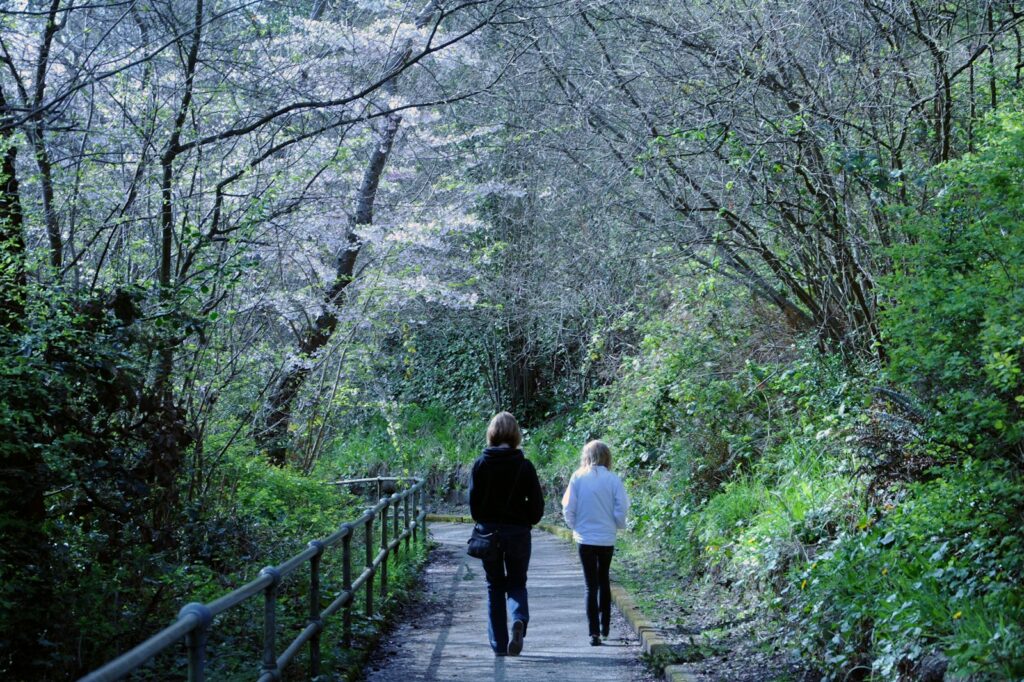
The Sonian Forest has been here since the Ice Age. You can almost imagine early, um, Belgians, moving quietly through the trees with small pouches on their shoulders, perhaps carrying tubers (very early precursors of Maison Antoine). We lived in close contact with nature for thousands of years. Then in the last 500 years we gradually retreated behind four walls, and there are now days when we barely venture outside (work-from-home syndrome).
This has been a setback for our health because nature supports brain function, the gut microbiome and overall well-being. For women, especially, time outdoors may also help hormonal balance, particularly in from our 30s onwards.
In other words, venture out even when the weather is grey and drizzly and miserable: outdoor daylight is what matters, whatever the colour of the sky.
