

The European Union is facing a critical moment in defending the very values on which it was founded. The European Parliament will certainly endorse the European Commission’s proposal on return hubs next week. This right-wing and far-right move would represent a major step backwards in the protection of human rights.
“The Union is founded on the values of respect for human dignity, freedom, democracy, equality, the rule of law, and respect for human rights, including the rights of persons belonging to minorities.” - Article 2 of the Treaty on European Union
These words are not part of a political manifesto. They are binding law. They form the foundation of the policies the European Union is meant to uphold. Yet EU policymakers are now on the verge of crossing a dangerous line by introducing provisions that would allow the creation of return hubs in third countries.
What are “return hubs”?
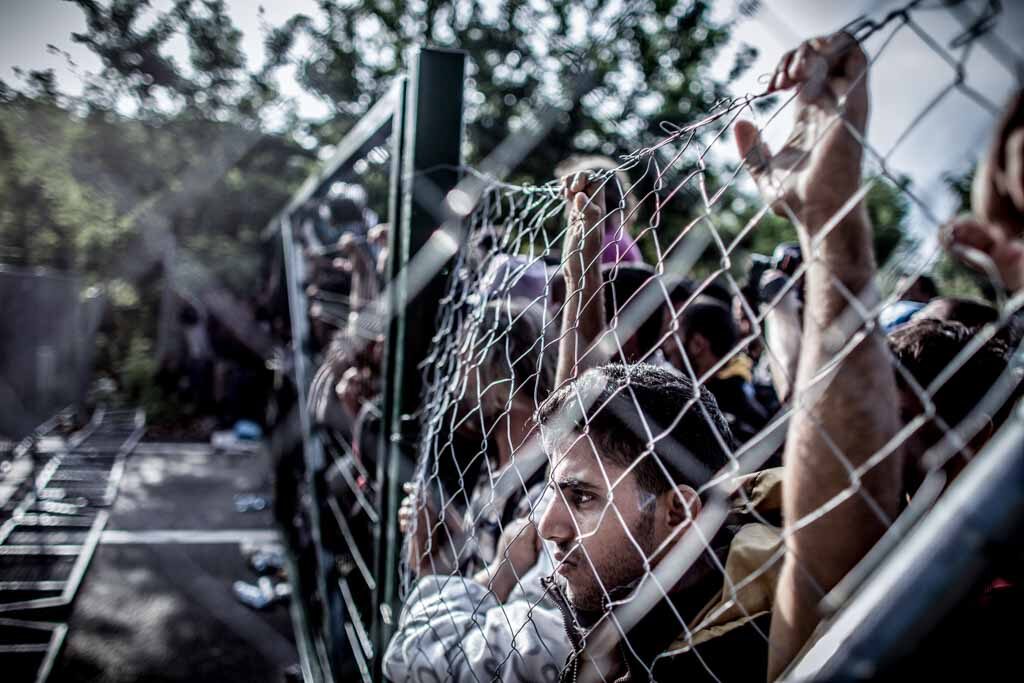
These facilities would be established in third countries with which an EU Member State has concluded an agreement or even arrangement, making impossible to ensure safeguards. They would be used to temporarily detain third-country nationals whose asylum claims have been rejected and who have received a return decision.
So far, no such agreement or arrangement exists between any EU Member State and a third country. Nevertheless, the European Commission proposed to make them legal in March 2025, as part of the upcoming Return Regulation, as a concession to mounting far-right political pressure. Next week, in plenary session a majority going from the EPP (right-wing) to ECR, PfE and ESN, will give a green light to this proposal.
A disastrous step for human rights
This would be a devastating setback for human rights. In September, more than 250 NGOs issued a joint statement urging EU co-legislators to reject the proposal, warning: “This is an egregious departure from international law and human rights standards.”
Earlier in 2025, even before the proposal’s publication, the European Union Agency for Fundamental Rights voiced serious concerns about such externalised hubs. “The planned return hubs cannot become rights-free zones”, it stated.
The Gjadër example
Although no formal return hub exists under an EU-third country agreement, a close precedent can be found in the Gjadër centre in rural Albania, a facility offshored by the Italian government.
In this centre, detainees are identified only by numbers, not by name. Many are given antidepressants to cope. They have limited or no contact with lawyers or NGO representatives. They have no access to clocks or calendars, no idea of the day or time, and no knowledge of how long they will be held. A large number of suicide attempts have been reported.
This situation is utterly inhumane and entirely incompatible with the EU’s core values.
Upholding the EU’s moral and legal foundations
By externalising migration control and return operations, the EU risks making it impossible to ensure respect for human rights. Detainees would be held hundreds or even thousands of kilometres away from EU territory, beyond effective monitoring or legal safeguards.
We cannot give up. We cannot allow populist inhumanity to prevail. This is about defending EU values and EU law. These principles have been under relentless attack in recent months, but protecting them is not optional. It is a top priority for both our present and our future.
I therefore solemnly call on my colleagues in the European Parliament to come to their senses. There will be no second chance.
