
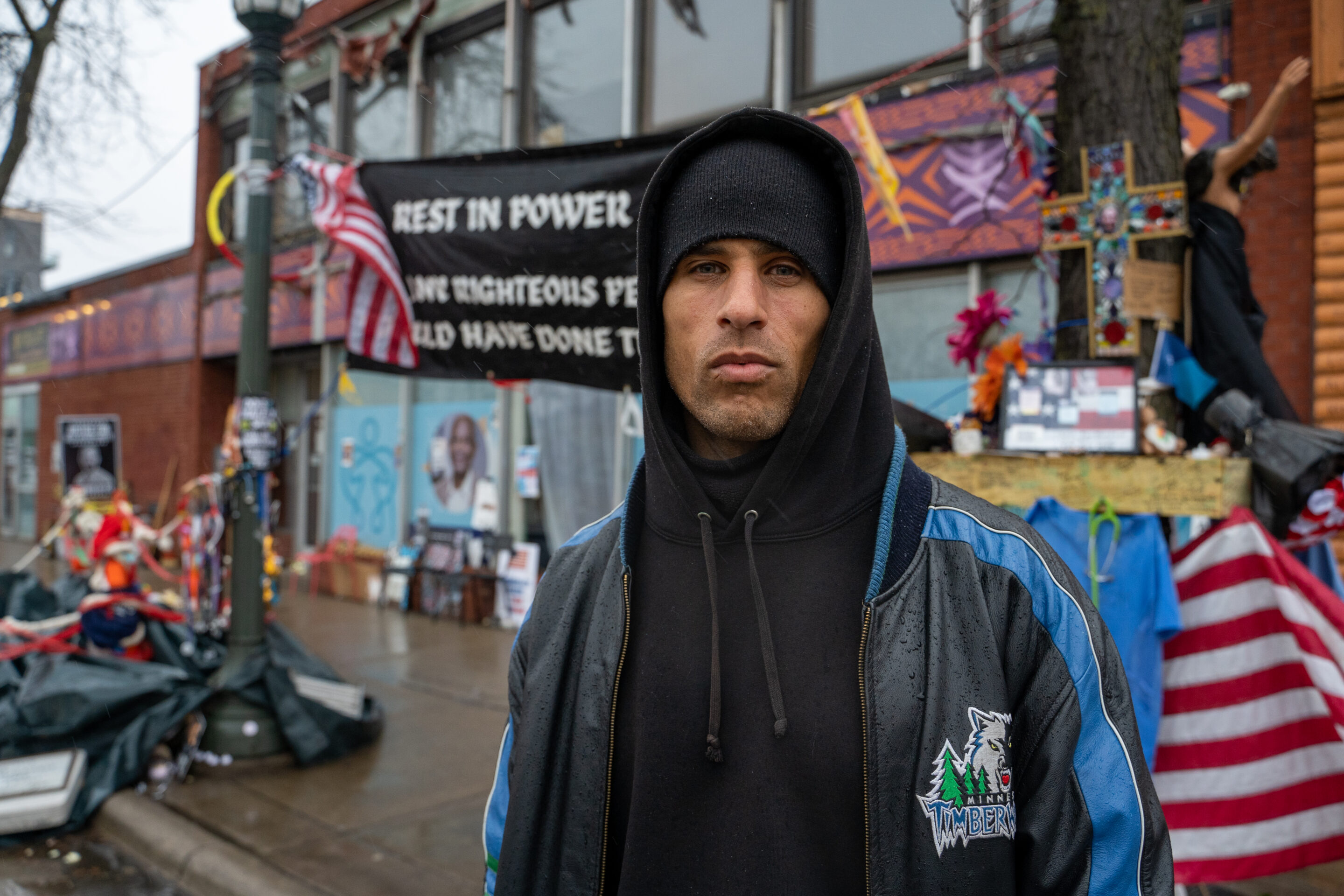
"Belgium is not a serious country," claims convicted far-right agitator Dries Van Langenhove about Belgium's multiculturalism, arguing online in favour of a deportation policy in this country that would "make Trump blush".
But if "seriousness" is measured by financial responsibility and the protection of legal enterprise, the American model he praises has brought on violent assaults on regularised residents and the financial detriment of local businesses.
The American experience with high-intensity immigration sweeps has offered a brutal warning: when a state builds a machine designed for "ICE on steroids," it often impacts all citizens and the local economy.
As the EU grapples with shifting demographics and a complex migration landscape, a provocative proposal is gaining traction in far-right European political circles: the creation of a high-intensity deportation agency modelled after the United States’ Immigration and Customs Enforcement (ICE).
While supporters argue that tactics from the US playbook are essential for national sovereignty, critics point to recent American operations as a cautionary tale of economic disruption and social fracture.
The call for 'ICE on steroids'
Van Langenhove is not alone in wanting a European ICE; various far-right activists, organisations, and political parties are starting to go as far as to praise the Trump administration for its actions in the US.
But is this praise warranted? How did the crackdowns affect the legal migrants or the native population? To further explore the potential consequences for Europe if they choose to follow the US’s steps, The Brussels Times spoke with community members in the Twin Cities area in Minnesota, US, who had been affected by recent immigration enforcement raids.
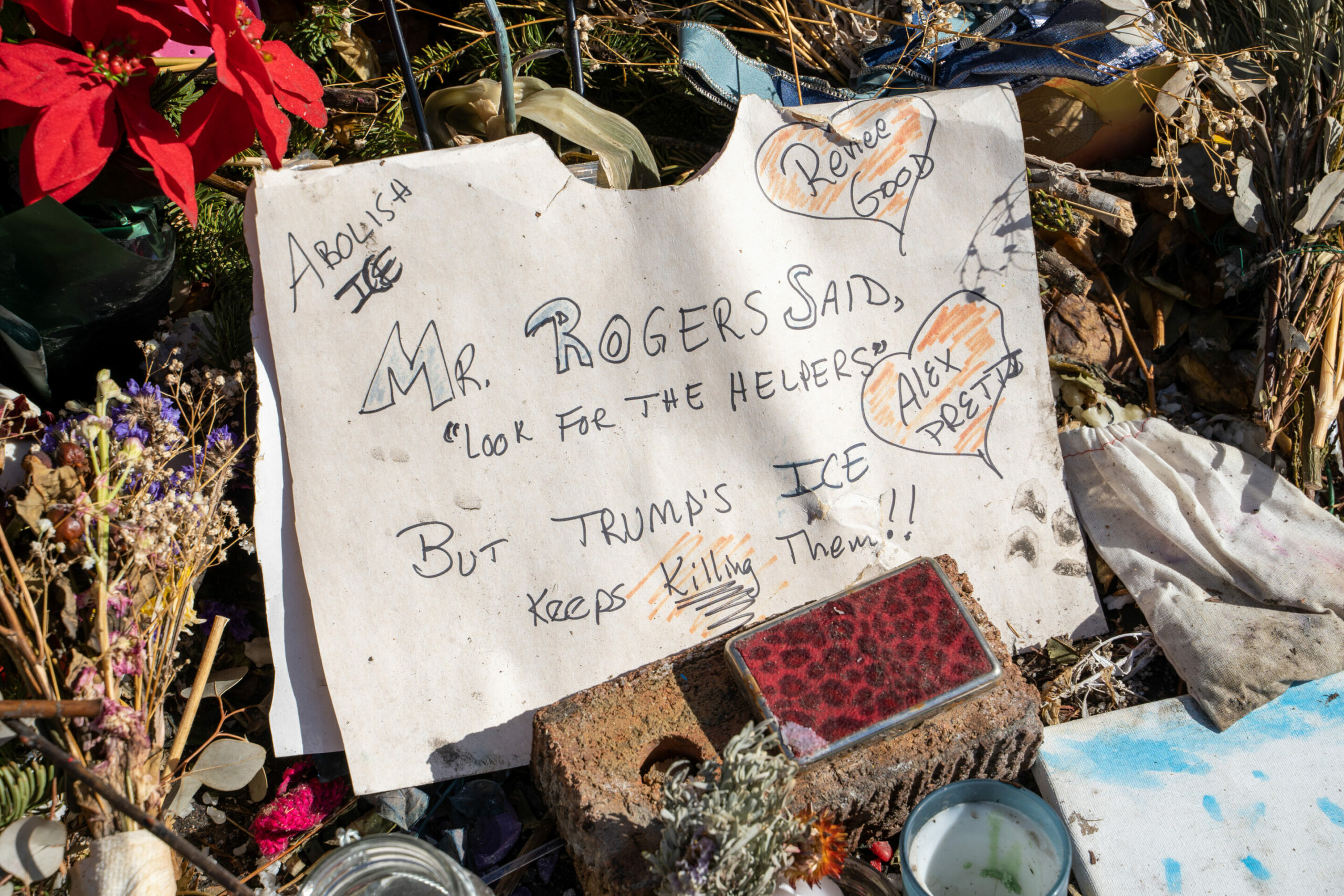
A sign was left at the scene where Renee Good was killed in an altercation with ICE. Credit: Vicente Torre Hovelson/ The Brussels Times.
'Operation Metro Surge' was an operation conducted by the United States Immigration and Customs Enforcement, otherwise known as "ICE", whose stated purpose is to apprehend undocumented immigrants and deport them.
The operation consisted of 3,000 officers who were deployed in the Twin Cities Metropolitan area from 4 December 2025 to February 2026.
The results of the mission were over 4,000 arrests, but also three deaths: Alex Pretti and Renee Good, whose names are known across the world after being killed by ICE agents while protesting, and Victor Manuel Diaz, who died in ICE custody.
The effects on local businesses
"I didn't have workers for two months, because of ICE," said Kim, a mechanic who has run his own shop for over 20 years in Minneapolis.
Kim described how his employees, despite all having legal status in the US, were scared to come into work just because they are all from Latin America. He noted that he felt let down by the government because he went out of his way to ensure he was hiring workers who were either US citizens or had a residence permit with full legal rights to work.
Despite the 4th and 14th amendments seemingly in place to avoid racial profiling and unreasonable search and seizure, it seemed as though ICE acted with impunity in the Twin Cities Metro, throwing all normal law enforcement procedures out the window. “ICE was just looking for all people of colour, legal or not; they’ll throw you in the truck and ship you out to a detention facility,” Kim exclaimed.
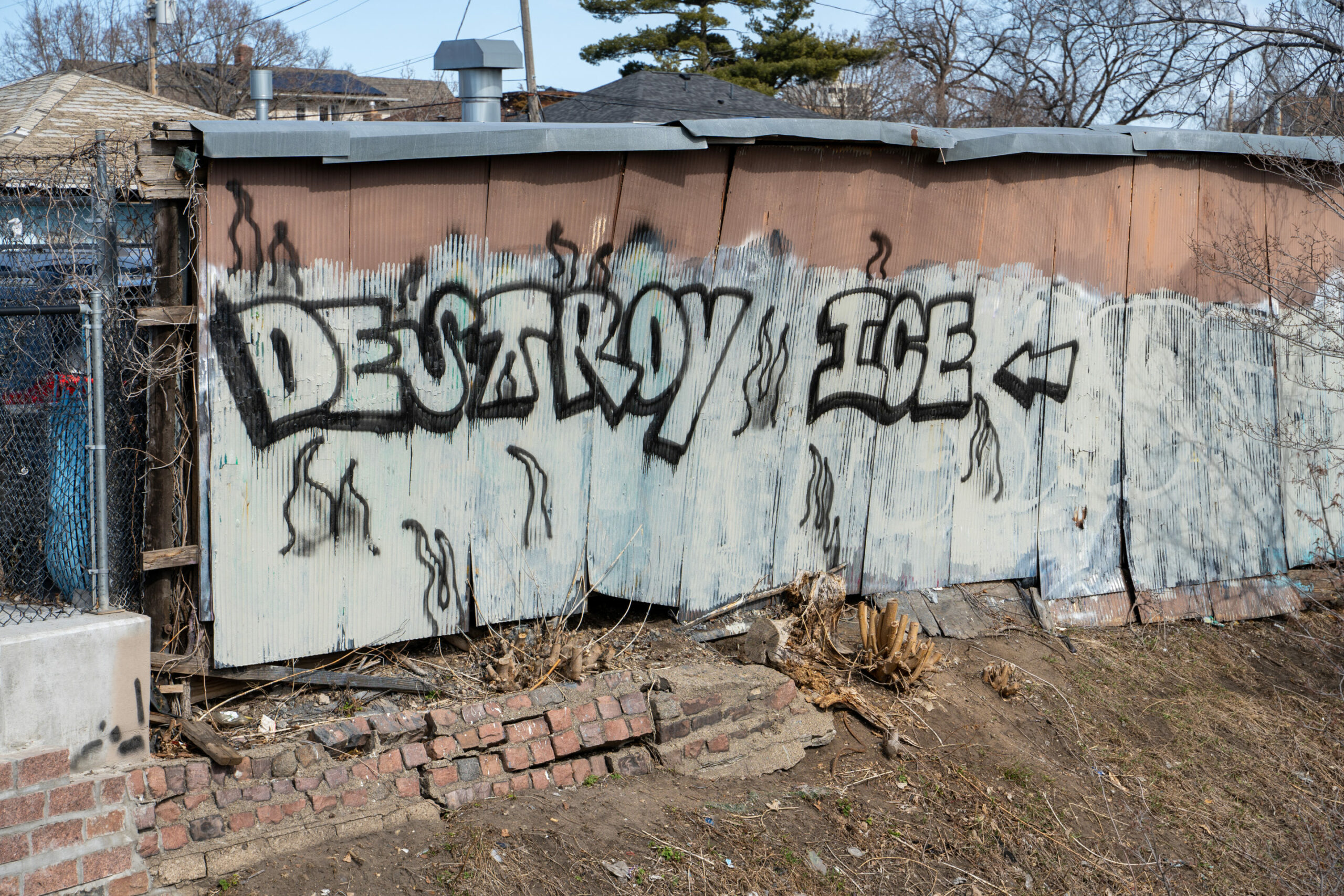
Anti-Ice graffiti a few kilometres away from Kim’s garage. Credit: Vicente Torre Hovelson/ The Brussels Times.
Because the workers did not come in, business slowed drastically, with only Kim and his son working on cars; they had to turn down many customers or keep vehicles much longer than usual.
This caused a lot of financial stress for Kim and his family since, before the Operation Metro Surge, he was already barely making ends meet. “We lose a lot of money, and bills just keep on piling up,” Kim told the Brussels Times.
To top it all off, the US Government is going to provide only minimal financial assistance to businesses affected by ICE’s operations. "I got some papers, but nothing to compensate for what we lost. My compensation can only be up to $10,000, and, likely, I won't get the maximum amount," Kim explained.
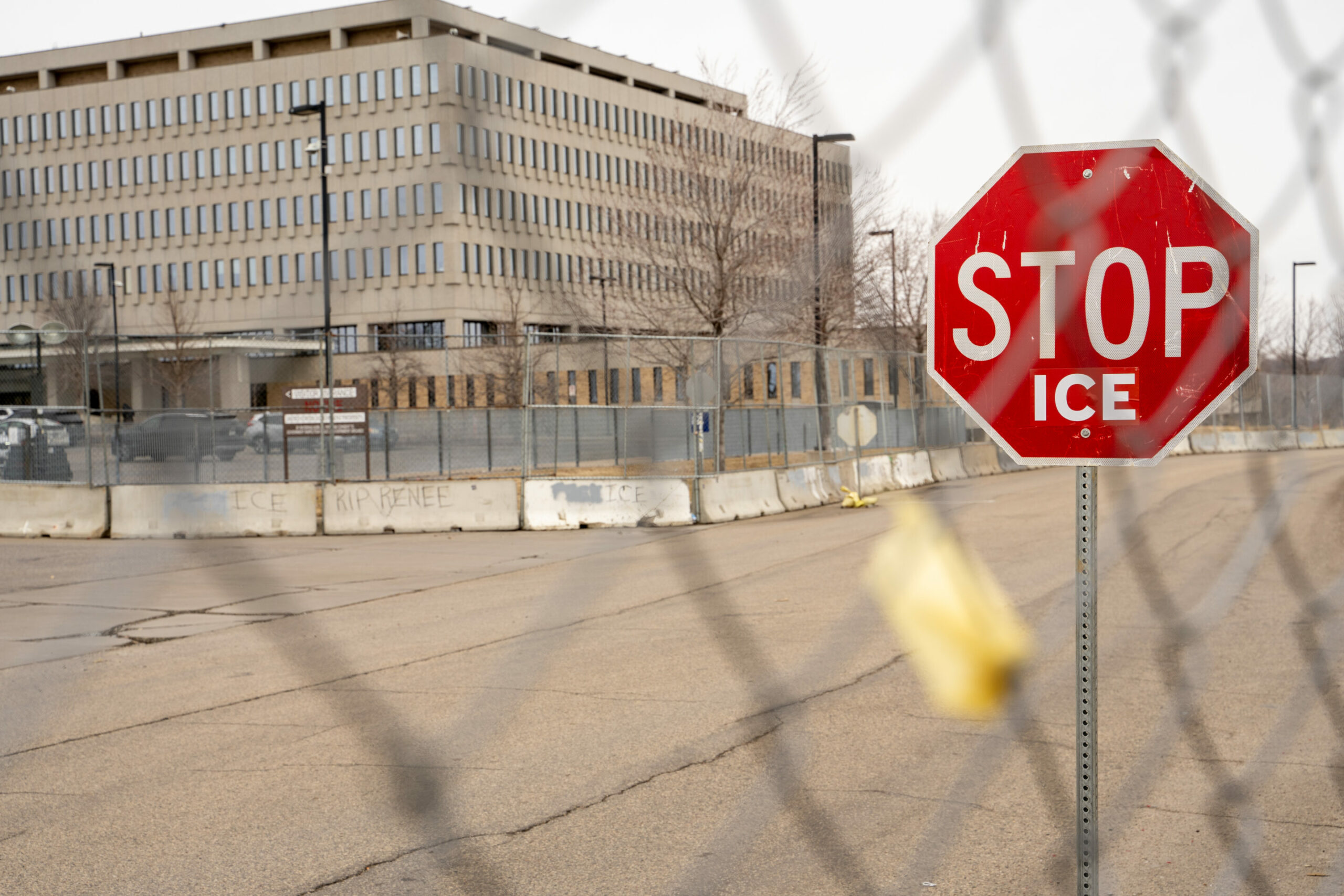
A photo of a stop sign in front of the Whipple government building in Saint Paul, Minnesota, which protesters altered to read “Stop Ice.” Credit: Vicente Torre Hovelson/ The Brussels Times.
How Minneapolis residents revolted
"If these were precise, accurate, and organised arrests of actual criminals, this would make sense. But that's not what's happening," said Darnell Edwards, a Montreal-born model and activist who has called Minneapolis home for 15 years. "I think that if EU countries were to create something similar to ICE, both citizens and non-citizens would be brutalised just like it's happened here."
Edwards was originally moved to action by local injustice that he had seen and experienced; he now documents and shares unedited footage of law enforcement misconduct and ICE operations to provide a raw, "on-the-street" perspective.
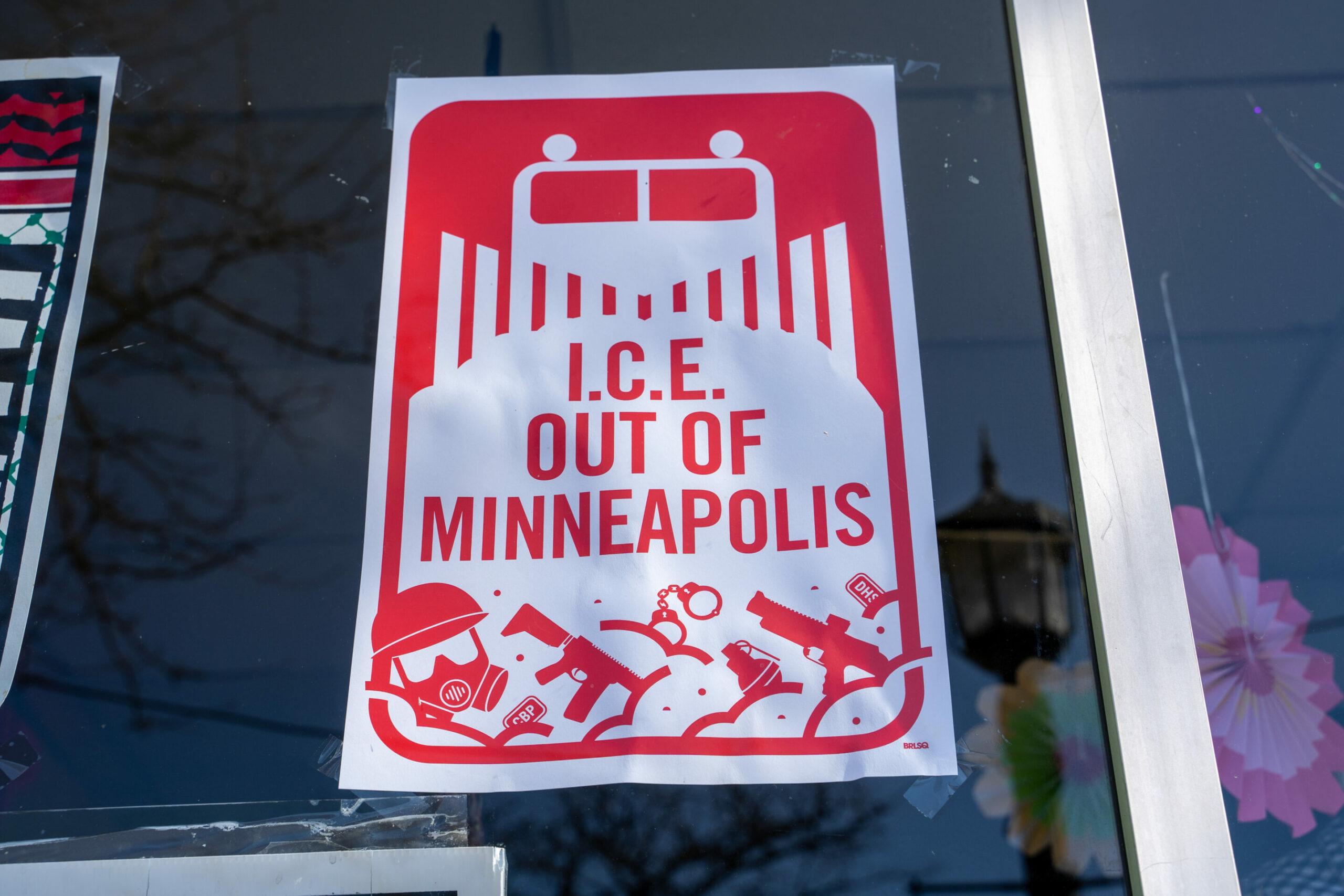
A sign on a local business across the street from where Alex Pretti died, which reads "I.C.E OUT OF MINNEAPOLIS" Credit: Vicente Torre Hovelson/ The Brussels Times.
Beyond his online presence, Edwards is a dedicated community organiser who facilitates neighbourhood support networks, ranging from grocery deliveries to filming workshops. Despite witnessing significant social division, he remains committed to fostering dialogue between residents and advocating for government accountability and compensation for those impacted.
"For me, it started when Renee Good was killed in the street. In a sense, you have an obligation to show up for the community. I’ve noticed that living in Minnesota, if you ever need help or you need something, your neighbours are there for you," Edwards said. He then started spending the majority of his free time on activism and community outreach projects.
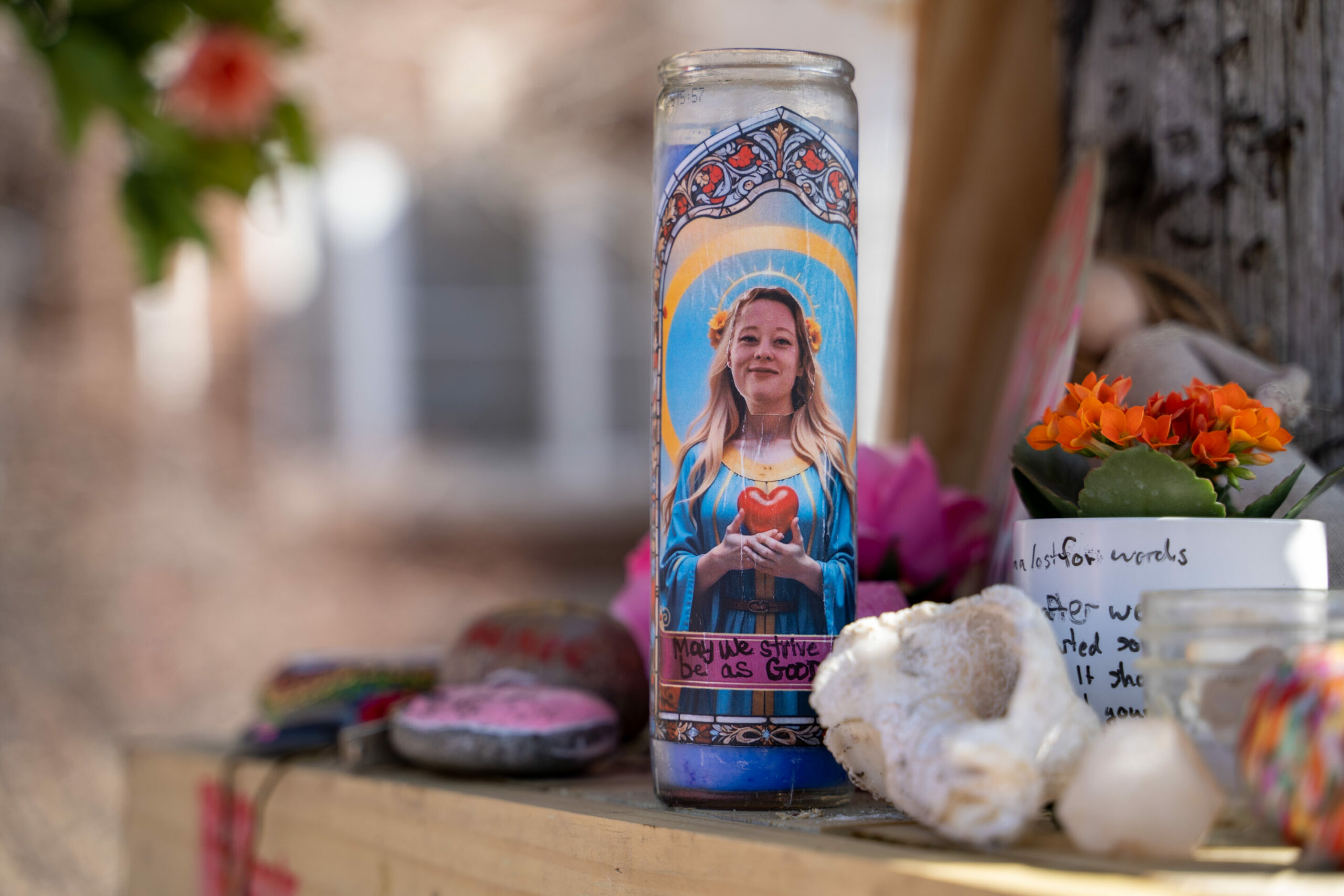
A Latin-style prayer candle depicting Renee Good as a saint at her memorial in Minneapolis, Minnesota. Credit Vicente Torre Hovelson/ The Brussels Times.
Throughout the whole ordeal with ICE in the Twin Cities, Edwards explained that he found that a majority of people were willing to help those being affected. Restaurants and other local businesses would even protect those fleeing from ICE or protesting against it.
"The day that Alex Pretti was killed, a lot of people were tear-gassed, including me. All of the businesses on the street where it happened came out to help. I was choking from the tear gas, and there were people on their front step saying, 'Come in my house'. I was in a lady's house with a bowl of water, rinsing my eyes in her sink. All of these businesses showed the same type of kindness. Some shop owners even pulled people in and locked the doors," Edwards said.
The street he was referring to has the nickname "eat street"; it consists of a bunch of local restaurants, cafes, bars, and shops. Many of the businesses had to partially shut down for days on end because of the chaos on the street.
Similar to Kim's situation, most of the businesses will not be compensated fairly for their forced closure.
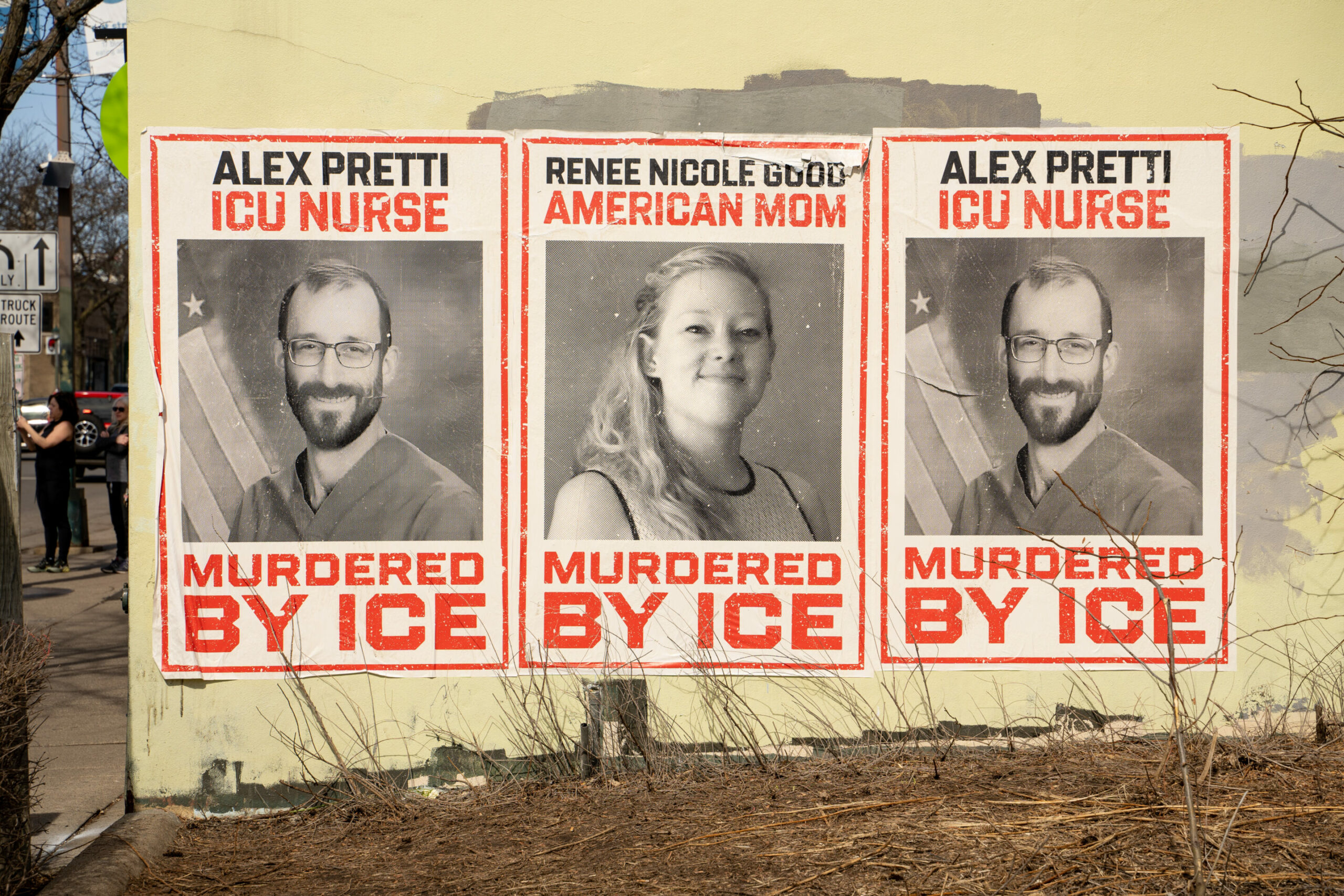
Posters with photos of Renee Good and Alex Pretti were pasted on a local business on “Eat Street” close to where Pretti was killed in an altercation with ICE. Credit: Vicente Torre Hovelson/ The Brussels Times.
"I think that we'll bounce back, because Minnesotans are great at supporting each other and those who can have been going out to eat at these places and support them and make up for their loss of clientele," Edwards commented.
How similar measures could affect Belgium
Both Edwards and Kim are examples of citizens being affected adversely by immigration crackdowns, but it also shows the costs most businesses have to bear due to Trump's immigration crackdown.
According to the government of Minneapolis, 'Operation Metro Surge' cost the city at least at least $203 million. The US Department of Homeland Security (DHS) claims that the operation led to the arrest of over 4,000 irregular migrants. That would put the cost for the city per irregular migrant at roughly $50,750, and that's before the cost of the operation itself.
The cost of a forced deportation is $18,245, but this number varies depending on other variables, according to the DHS website.
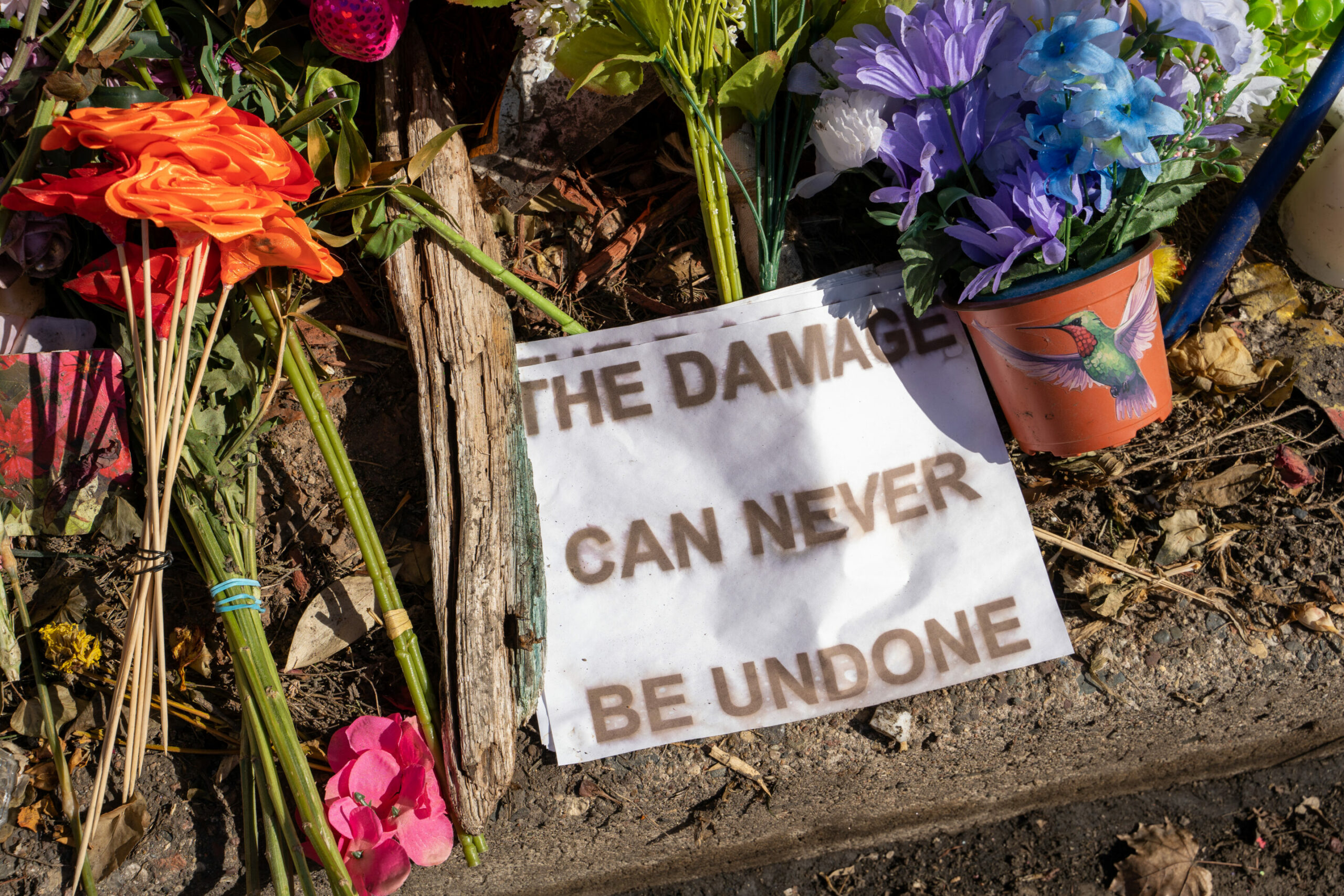
A sign at Renee Good's memorial which reads "THE DAMAGE CAN NEVER BE UNDONE." Credit: Vicente Torre Hovelson/ The Brussels Times.
The DHS also provides the option for an irregular immigrant to "self-deport" via the CBP Home app (an app designed to streamline the process by giving the authorities the location of the migrant so that they can detain them). The reward for the undocumented migrant doing that is a $2,600 "exit bonus." With that stipend included, the cost of a self-deportation is said to be $5,100.
What about Belgium
So while the US government is paying migrants to leave, the economic benefits of migration are often reasons to pursue a more open policy, particularly to fill jobs in an economy the size of the EU or in countries like Belgium.
"I believe very strongly that legal migration is quite positive for the economy to develop, so reducing the possibilities for legal migration would most likely deteriorate new economic prospects for any country," David De La Croix, a professor at the Université Catholique de Louvain and editor-in-chief of the Journal of Demographic Economics, told The Brussels Times.
According to De La Croix, due to low birth rates in Belgium, migration is crucial for our economic well-being, and tampering with the current system would have adverse effects on the economy.
One of the sticking points on this topic pertains to the benefits asylum seekers receive from the Belgian state, and the money it loses over it. De La Croix hypothesised that a way to potentially mitigate these costs would be to allow asylum seekers and undocumented migrants the opportunity to work legally.
"I think there are other ways to mitigate the cost of 'illegal' migration, it’s to allow people to work. If someone works, then that person will become integrated faster. If the same person is left off to the side, that creates a loss of human capital, a lot of skill, a loss of motivation, and then later could lead to mental health issues, which is very costly for the state in the long run." De La Croix stated.
Yet Belgium and Europe stand at a crossroads, particularly after the European Parliament approved the EU's so-called return hubs in third countries, which have been criticised as deportation camps.
The American model of "ICE" offers a vision of strict, centralised control that appeals to those who feel the current system is broken. However, the testimony from Minnesota suggests that the price of such policy is often paid by legal residents, small business owners, and social cohesion as a whole.
As the debate continues, the question remains: Can Belgium achieve "seriousness" in its migration policy without sacrificing the economic stability and human rights that define its role in the European Union?
