
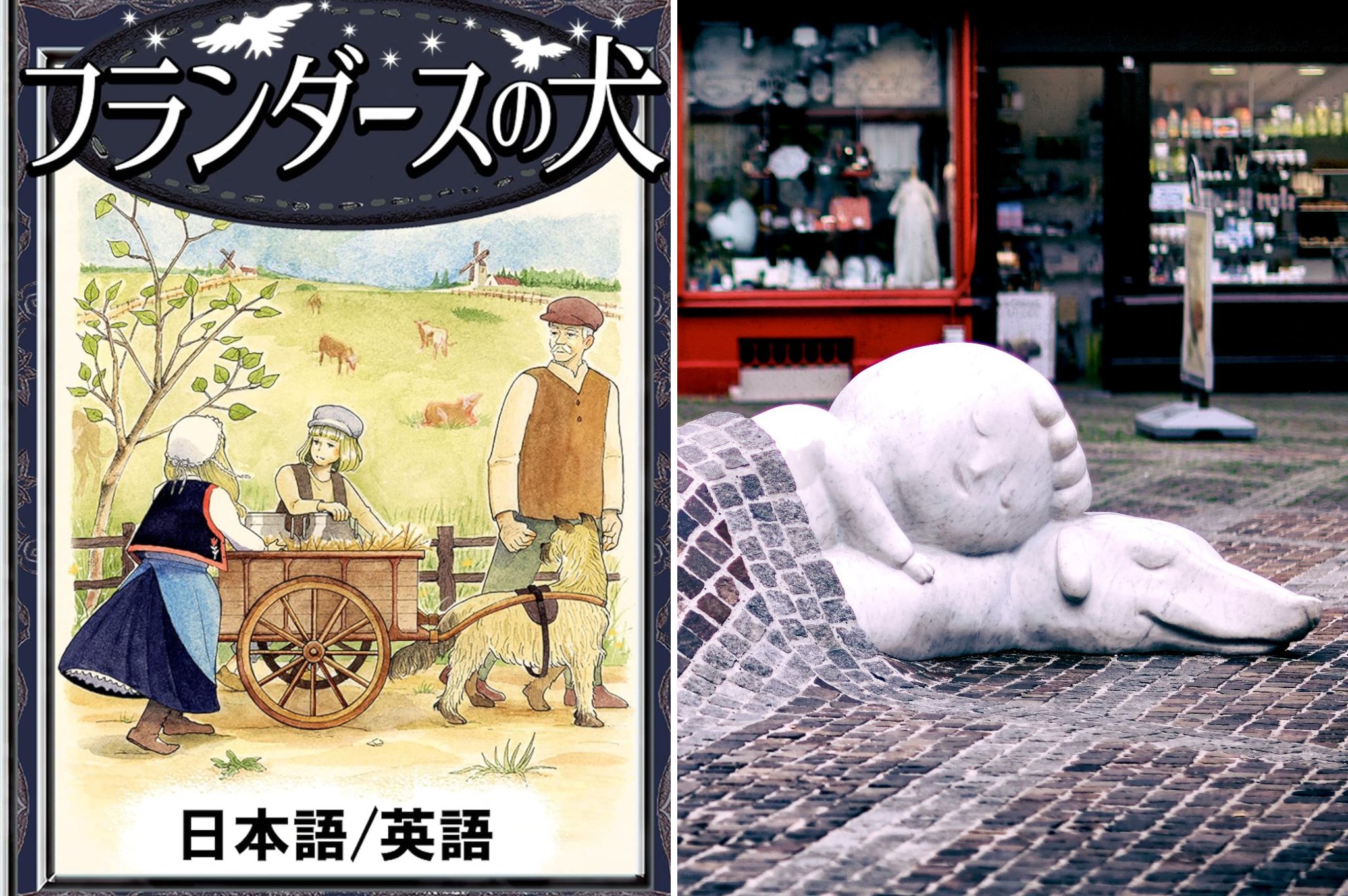
Opposite the Antwerp Cathedral, there’s a statue of a smiling boy sleeping with his dog under a blanket of cobblestones. According to legend, there is a high chance of finding Japanese tourists walking around, visibly moved by the statue and the cathedral. This often perplexes locals.
That boy and his dog are the main characters of the 1872 children's novel, Dog of Flanders, written by English author Marie Louise de la Ramée, published under her pseudonym Ouida.
Despite the smiling statue, this is a dour story of companionship, poverty and heartbreak set in 19th-century Antwerp.
This story is classically Belgian: Nello is a poor orphan from the (French-speaking) Ardennes who goes to live with his grandfather in Hoboken, a village outside the City of Antwerp, following the death of his mother.
His grandfather is old, poor, and wounded from the Napoleonic wars. He would earn a living by carrying milk from Hoboken into Antwerp to sell at the market. They were too poor to own cows, so they would earn money by transporting the milk into town from neighbouring farms.
Dogs were often used at the time to help transport things. Nello, his trusted dog Patrasche and his grandfather would often make the walk along the Maas river into town.
Indeed, the aspect of class is explored throughout the book, including through art. Nello, a talented artist, is also friends with a young girl for whom he draws pictures. However, this girl is from a rich family, and her father does not like them spending time together, belittling his talent.
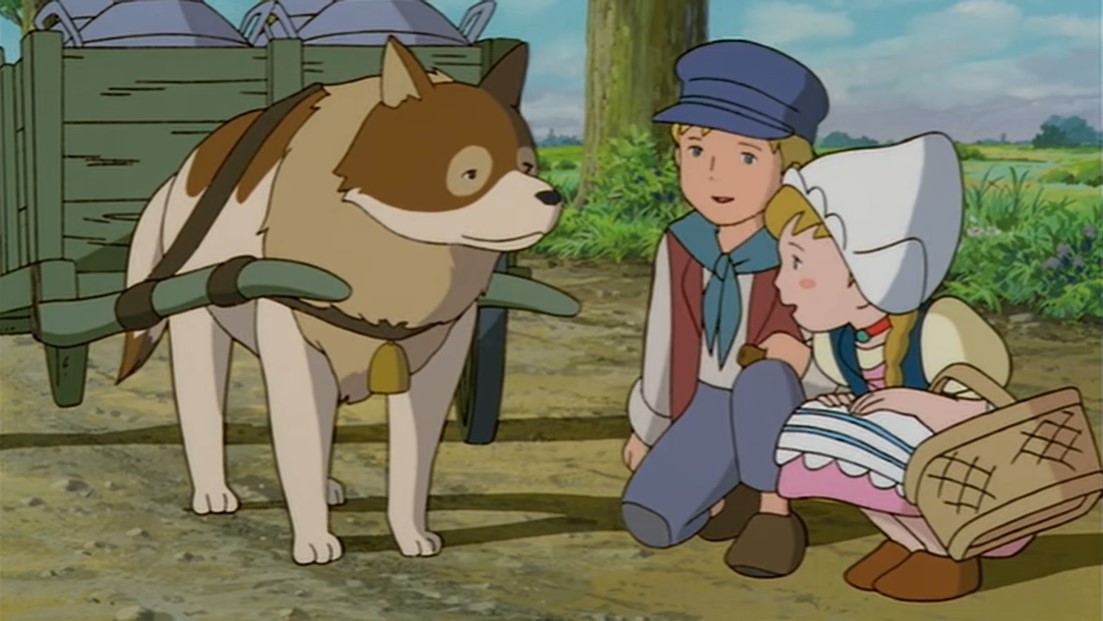
The Dog of Flanders (1997)
In the book, Nello dreamt of becoming a great painter like Rubens, having developed his skills by drawing on the back of old posters. He longed to see the Flemish master’s paintings inside the Antwerp Cathedral of Our Lady, but because of his poverty, he couldn’t afford it, as the prestigious tableaus were covered by white sheets.
The boy's artistic skills also led him to enter a drawing competition in Antwerp, in the hope of winning desperately-needed money and the opportunity to win a life-changing art scholarship.
However, he is up against the son of a rich merchant who has the latest and best painting equipment. And the rest is history.
Patrasche, too, has been through his hardships. The shaggy Bouvier des Flandres was adopted after having been found almost beaten to death by his owner – a "sullen ill-living brutal Brabantois", who overpacked the dog’s cart and whipped him for being too slow.
The author, Marie Louise de la Ramée, was reportedly inspired by the story during a visit to Antwerp, where she was appalled by the poor treatment of working dogs forced to pull heavy carts.
The practice of dog-drawn carts had been banned in the 1840s in Britain, fuelling the indignation of de la Ramée, who was a committed animal rights activist (and owner of 12 dogs) herself.
Ouida fused facts and fiction while writing about the industrialised 19th century, not shy of supporting radical politics (which she inherited from her French father), despite living an elite life, also helped by the success of her 40 novels.
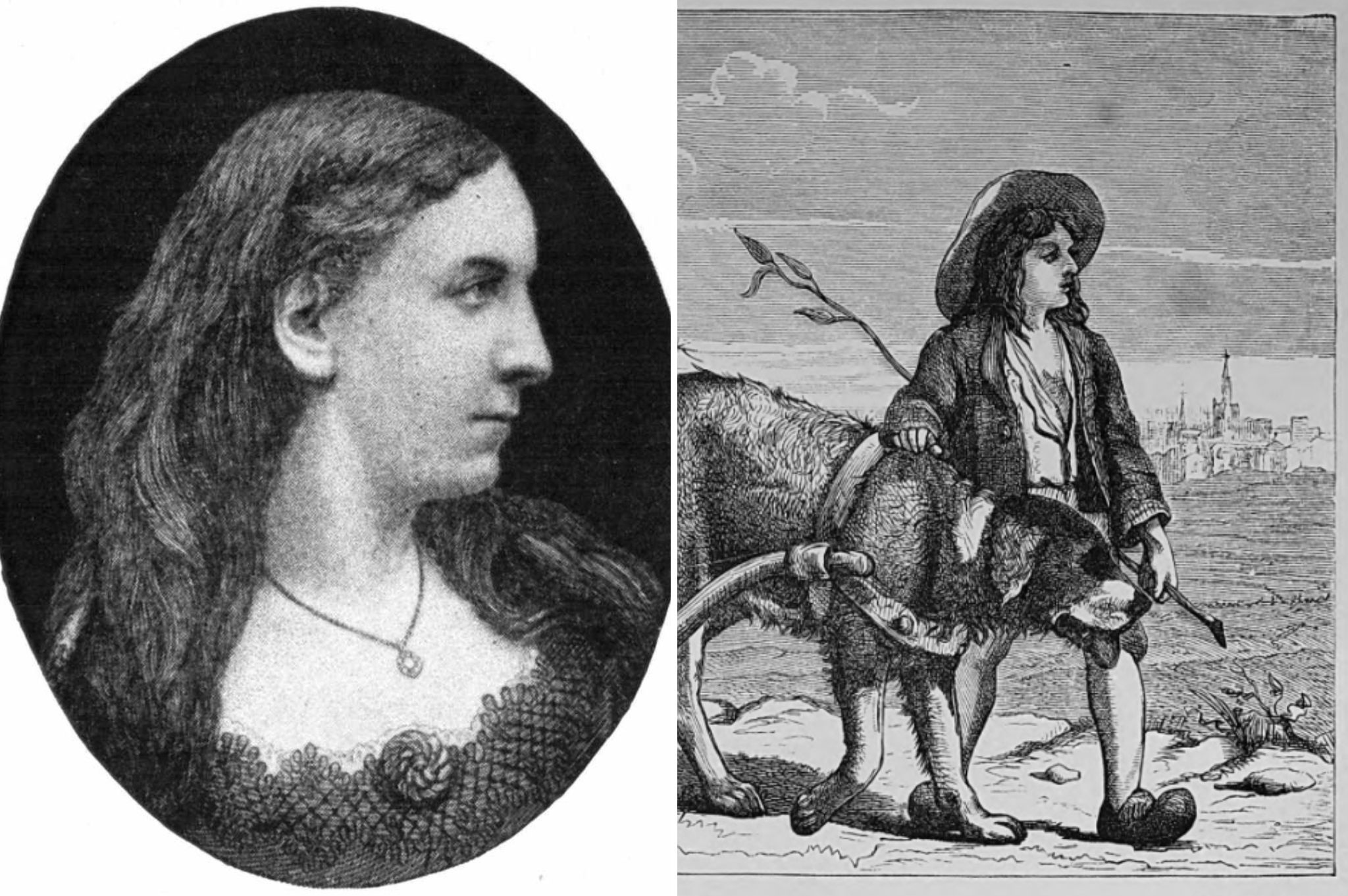
Marie Louise de la Ramée, and a 1872 illustration of Nello and Patrasche
Japan sensation
Written over 150 years ago, this story is largely forgotten, if not completely unknown, in Belgium.
But one curious thing happened: Nello's heartbreaking story made its way to Japan. Inexplicably, over the last century, it became a book that every Japanese household knows and owns a copy of.
The first Japanese translation of the book was published in 1908. The story then became obligatory literature in elementary schools in Japan.
Today, there are at least 50 different editions and translations. It has had success beyond Japan, with five Hollywood movies between 1914 and 1999.
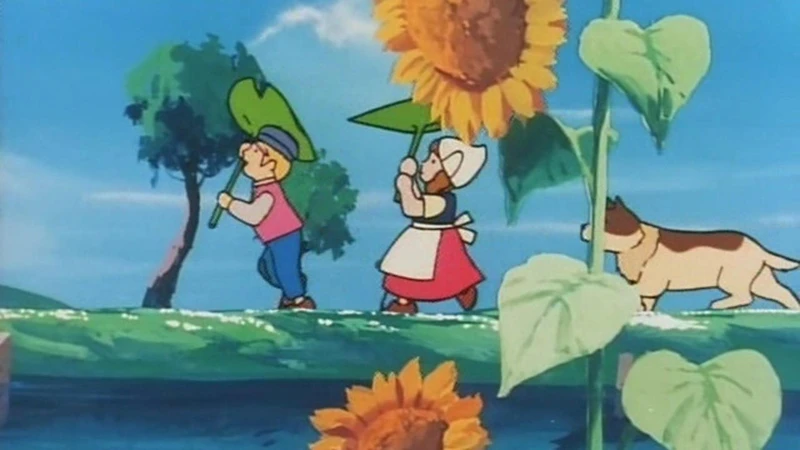
Japanese TV series 'Dog of Flanders' (1975), which contributed hugely to its modern success.
However, Japan's country-wide obsession – which made it a household name – stems from the massively popular TV series it produced from 1975. Key figures who later founded Studio Ghibli, namely Isao Takahata and Hayao Miyazaki, were involved in this production.
The animated series was viewed by hundreds of millions every night – not only in Japan, but also in places like the Philippines, South Korea and Russia.
A remake was made in 1997 with more realistic depictions of Belgium’s clothing and architecture.
So why has this particular story resonated so much with Japanese people? KU Leuven researchers Anne Marie Van Broeck and Ise De Gruyter believe it can be traced to cultural beliefs and the idea of heroism.
For them, Nello is not considered a poor, pitiful boy but a hero, since he fulfils the three typical Japanese "hero-characteristics": failure, sincerity (makoto) and self-sacrifice.
The story has helped Japanese people develop a romanticised view of rural Flanders and the city of Antwerp’s gothic charm, while also providing a stark critique of Flemish society in the 19th century.
This may explain why the story was never really popular in Belgium. Some argue this could be due to the negative depiction of Flanders: stark inequality, backwards attitudes and animal cruelty.
"The Flemish people that Ouida describes are not very attractive. In Ouida’s story, the Flemish are farmers, barbaric, stingy and essentially cowardly and traditionalistic. This is how she imagines Flanders," said An van Dienderen, a co-director of a 2007 documentary on the Dog of Flanders alongside Didier Volckaert.
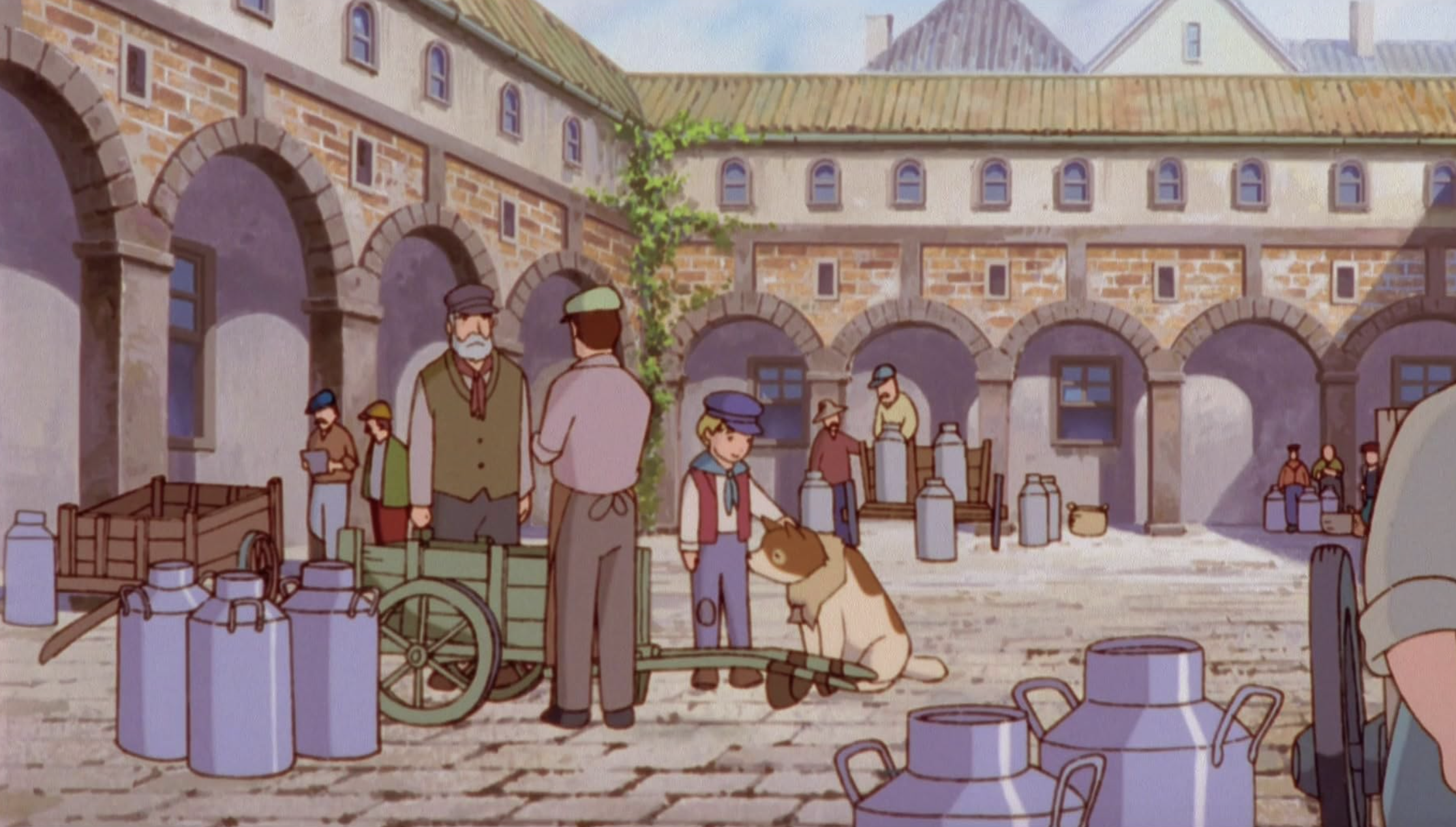
A scene in Antwerp from Dog of Flanders 1997
Tourism destination
Indeed, this may well be a pre-industrialised, 19th-century Antwerp that the city has tried to forget, but the success of the Dog of Flanders had other ideas.
Since the early 1980s, Japanese tourists have flocked to both the quiet Hoboken and Antwerp’s Cathedral of Our Lady, where the book reaches its tragic climax, in search of Nello and Patrasche.
Often, they are disappointed (or confused) not to find many references to Nello and his dog. In Hoboken, Antwerp finally introduced a small statue in the 1980s, with Japanese car manufacturer Toyota having also donated a commemorative plaque that was placed in front of the Cathedral of Our Lady.
The plaque was later replaced by the marble statue made by Batist Vermeulen, which has Nello and Patrasche wrapped in a cobblestone blanket.
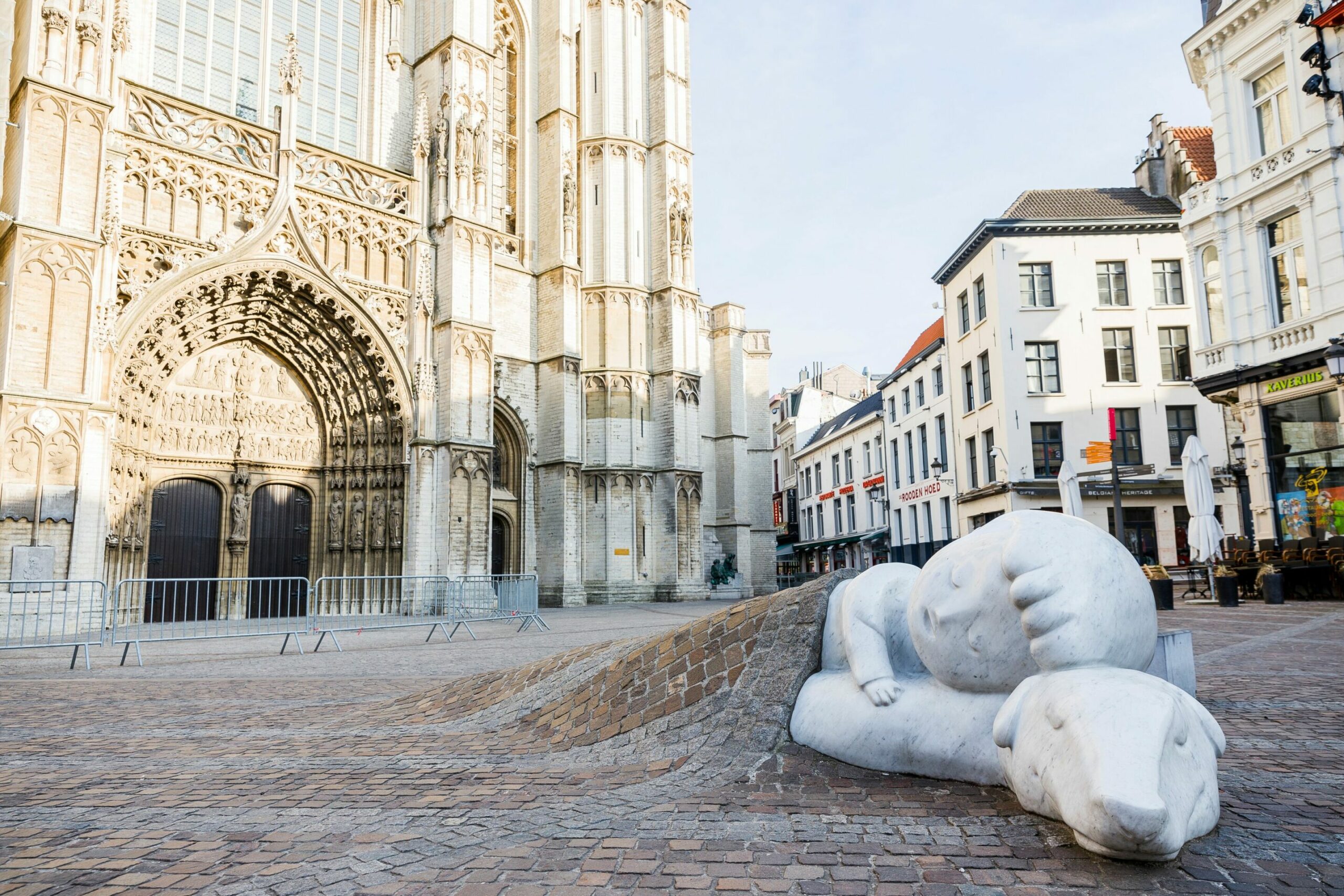
Nello & Patrasche statue in Antwerp, opposite the Cathedral of Our Lady. Credit: Visit Antwerp
Back in 2004, some 60,000 Japanese tourists visited Antwerp every year, but when they asked the city’s tourism offices about the Dog of Flanders, no one knew what they were talking about.
At the time, Antwerp did not prioritise marketing the story of Nello and Patrasche, as the Japanese tourism market "was not a priority". They sought to promote Antwerp as a "young and dynamic" city, centred on "Diamonds, Fashion, Rubens, and Water/Port", according to Van Broeck and De Gruyter, writing in 2004 about this unknown cultural phenomenon.
While some more references to Nello and Patrasche can now be found on Antwerp and Flemish tourism websites, the Visit Antwerp tourism office did not respond to The Brussels Times when asked whether the city's policy on the duo has changed since the 2000s.
This was of particular interest this year, in light of 160 years of Belgian-Japanese diplomatic relations being established after the historic Treaty of Friendship and Commerce was signed in 1866.
Just seven years later, Nello and Patrasche's story was first released in Ouida's Dog of Flanders.
