
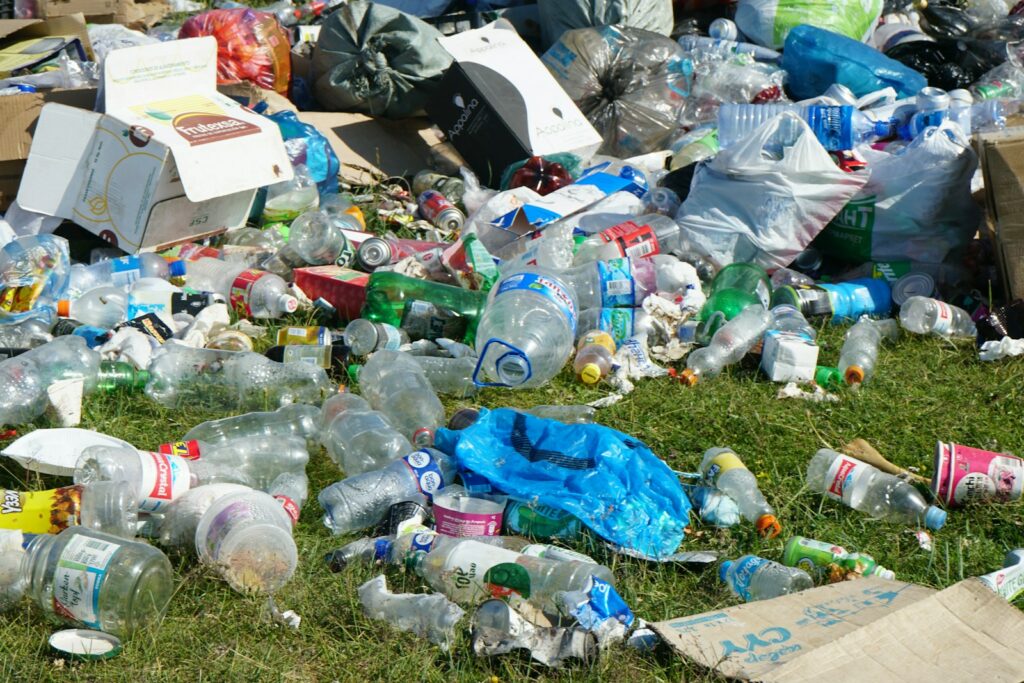
People in the EU generated an average of 517 kg of municipal waste each in 2024, up 6 kg from 2023.
That was 38 kg more per person than in 2014 — an increase of 8%, Eurostat reported on Monday.
Eurostat uses “municipal waste” to mean everyday rubbish collected by or on behalf of local authorities, including household waste.
There were wide differences between countries, with Austria recording 782 kg of municipal waste per person (2023 data), followed by Denmark at 755 kg and Belgium at 699 kg.
The lowest levels were in Romania at 305 kg per person (2023 data), Estonia at 375 kg and Poland at 387 kg.
Belgium, Czechia and Austria had the largest rises in municipal waste per person since 2014, increasing by 274 kg, 228 kg and 217 kg respectively.
The biggest decreases over the same period were in the Netherlands (down 54 kg), Denmark (down 53 kg) and Finland (down 25 kg).
Recycling: 248 kg per person on average
The EU recycled an average of 248 kg of municipal waste per person in 2024, equal to 48.1% of the total generated, Eurostat said.
That compared with 246 kg per person — 48.0% — in 2023, and 208 kg per person — 43.0% — in 2014.
