
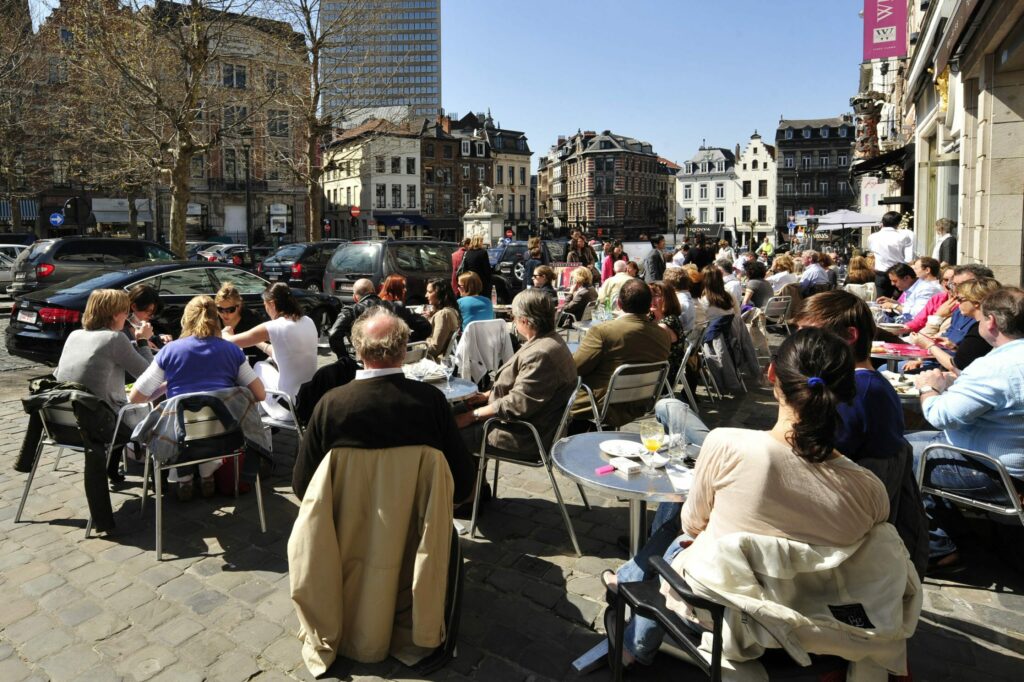
The affluent Place du Sablon is going to be redeveloped into "the most chic place in Belgium", with plans to remove the open-air car park at the heart of the square.
The City of Brussels is preparing a redevelopment of the square to transform it into a must-see hotspot, even rivalling the likes of the Grand-Place, La Libre reports.
The Sablon area is already known for its antique shops, chic boutiques, art galleries, chocolatiers and cafes which surround the square and the nearby streets between the Church of Grand Sablon and the Palais de Justice.
According to the liberals in the City of Brussels municipal coalition, the idea behind the redevelopment would be not to revolutionise the neighbourhood, but to "enhance" it.
"I’m fairly conservative on this issue. There are enough unremarkable places in Brussels to justify disruptive architectural interventions," David Weytsman (MR), president of the CPAS and leader of the liberals (MR+) on the City Council, told La Libre. "That will not be the case at the Sablon."
Parking problem
The square is currently taken up by a vast, chaotic car park which eats up public space and does not match the high-end shops which line its surroundings.
While parking spaces are an explosive subject in local Brussels politics which has divided the ruling coalition of socialists (PS), liberals (MR) and centrists (Les Engagés), a compromise solution has been found.
As part of the plans, the cars would be removed to give the square back to its residents, but this would be carried out alongside an increase in parking spaces in the nearby streets.
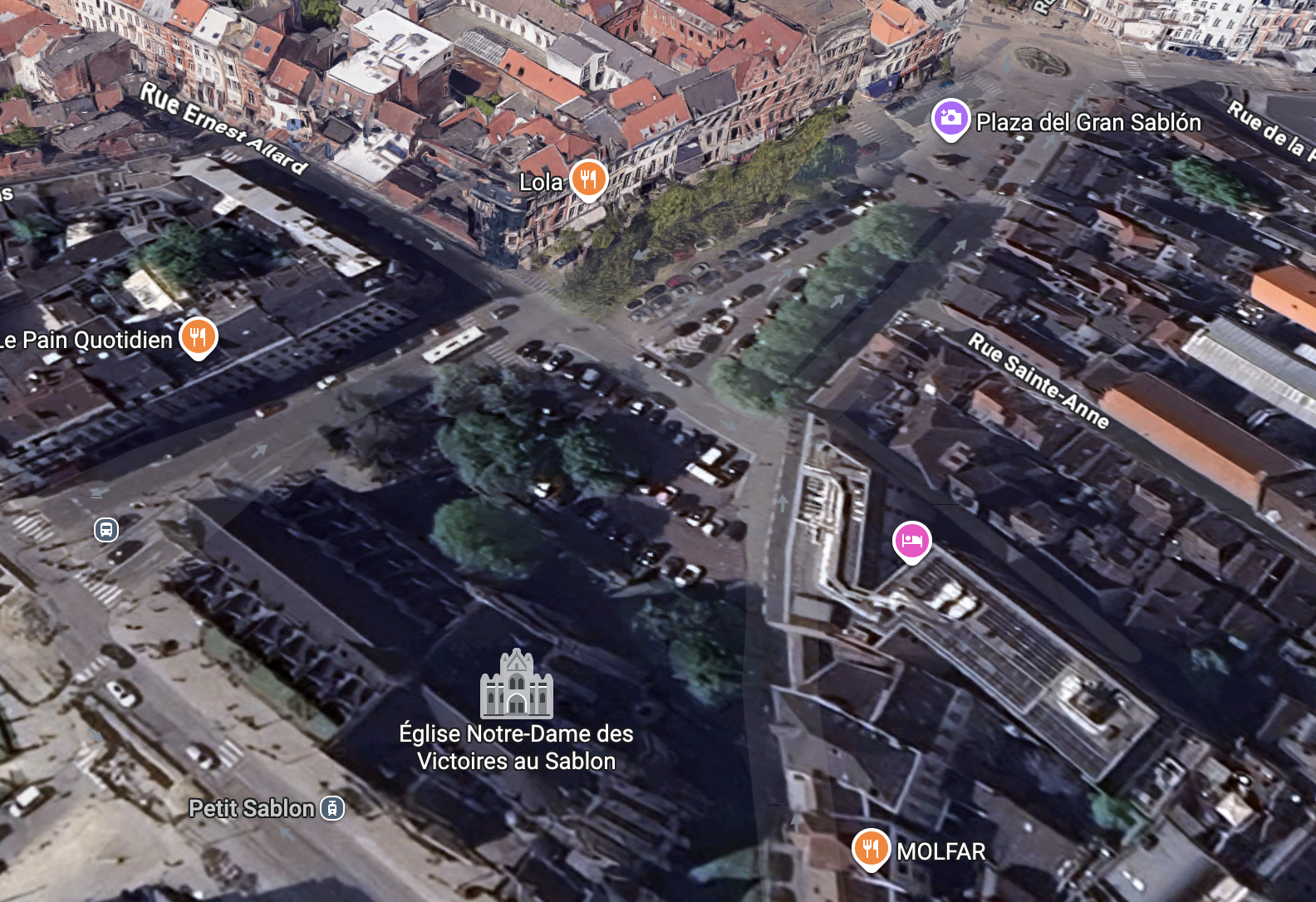
A view of the open air car park in Place du Grand Sablon on Google Maps
"We are committed to maintaining, or even increasing, the number of spaces in the surrounding area," insists David Weytsman.
The redevelopment will only begin once these compensatory measures are guaranteed – but given how dense the area is, characterised by historic buildings and narrow streets, it remains to be seen in practice.
"This sort of parking in the middle of a square is an obsolete relic of the 1980s," points out fellow councillor Frederik Ceulemans (Anders/MR+). Indeed, even the Grand-Place was a glorified car park until 1972.
Upmarket push
While there are plans for "greening" the space and extending cafe and restaurant terraces, there will be no transformation of Place Sablon into a park or full pedestrianisation.
Sablon’s iconic antiques market, a true Brussels institution, will be preserved and vehicle traffic maintained surrounding the square. The City also intends to protect the neighbourhood’s commercial identity, aiming to make the area even more upmarket.
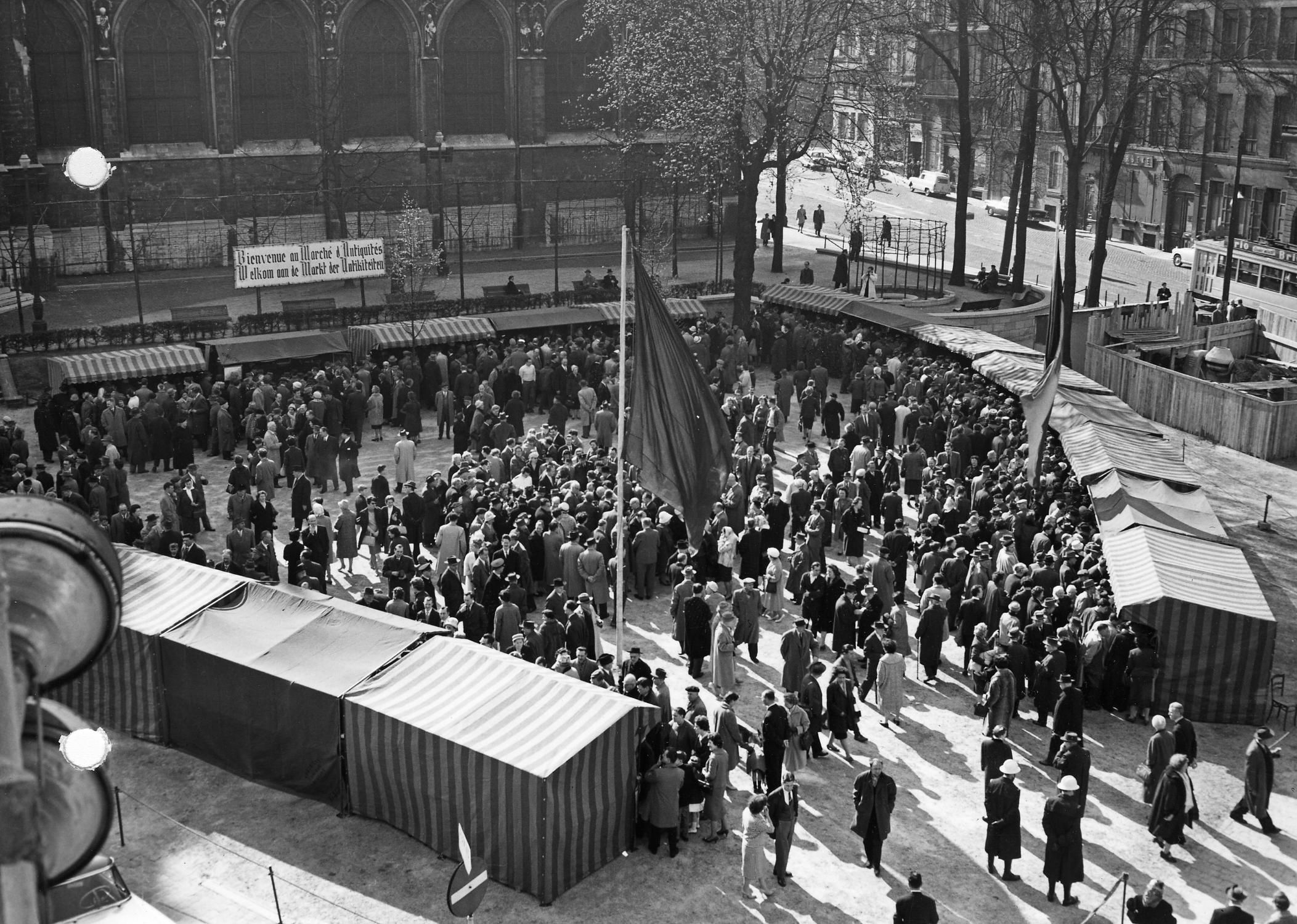
The first Sablon Antiques Market was held on 3 April 1960. Credit: Belga Archives
In this vein, Weytsman also welcomed the arrival of luxury brand Hermes, which will join the likes of Rolex and Hermès in the square, after announcing a new boutique shop.
"We oppose the opening of new fast-food outlets; there are already too many in the city centre," stated the Liberal councillor, who is also the president of Brussels social welfare centre (CPAS), which is facing enormous cuts.
Local needs
The announcement comes following a public survey carried out by the Quartier des Arts, a non-profit set up in the aftermath of the controversial demolition of the nearby Maison du Peuple in 1967.
It asked 602 people (18+) who were surveyed on Place du Sablon over 8 days. Respondents included residents, workers in the area, shopkeepers, shoppers and passersby.
Weytsman cites how 89% of those surveyed chose "preserving the heritage character of the site" as the driving force of his vision for the future of the square.
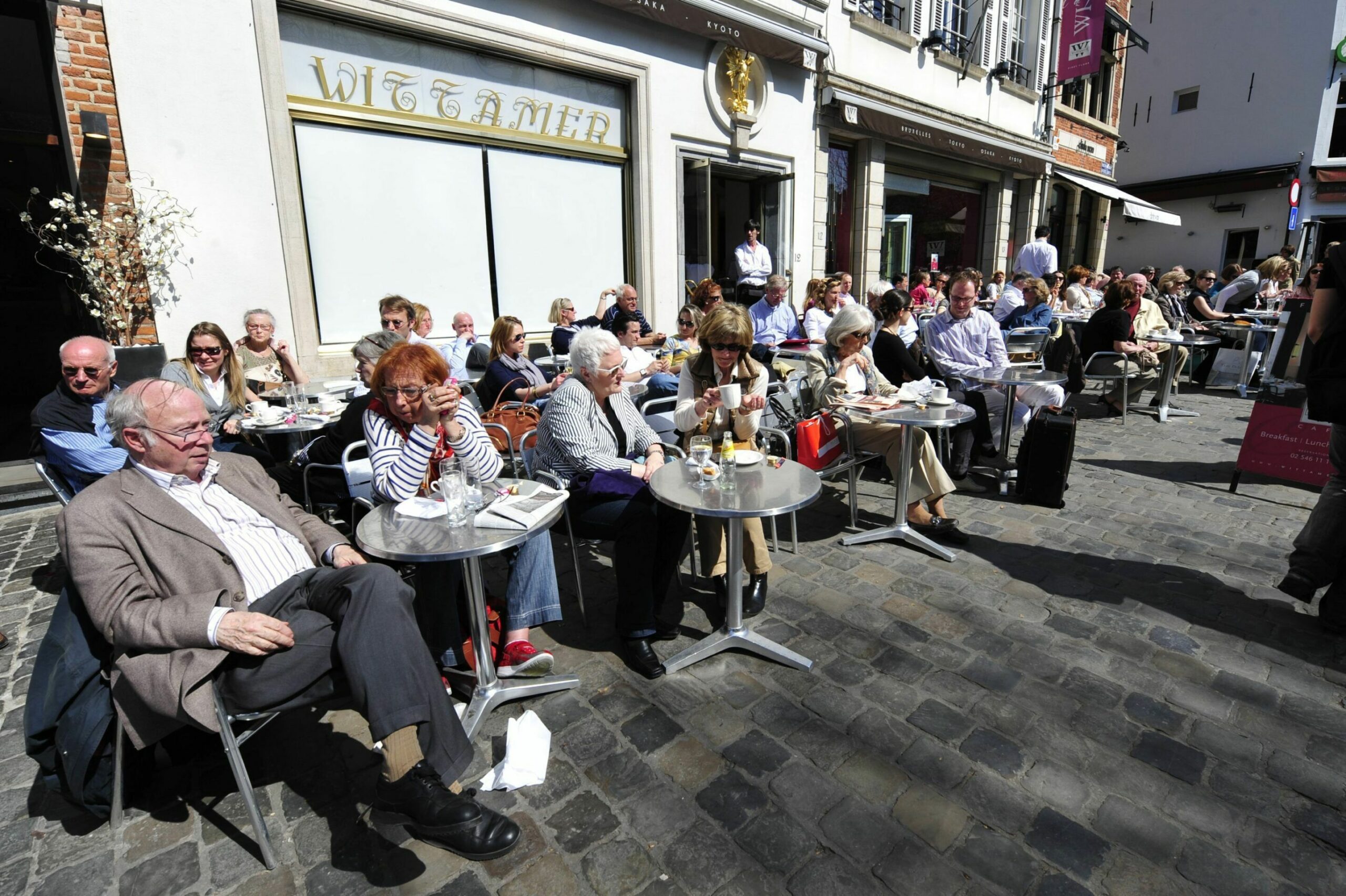
Illustration shows people enjoying the nice weather at a terrace of a cafe, Saturday 17 April 2010, in Brussels city centre, Sablon place. Credit: Belga / Johanna Geron
Cleanliness, lack of green spaces, accessibility and decaying infrastructure, including the condition of the pavements, are cited as some of the key problems.
The lack of parking was also among the areas needed for improvement, which demonstrates the divide on the issue. Indeed, whilst 53% of those surveyed want a more pedestrian-friendly environment, 25% of the clientele still rely on cars.
Looking ahead, patience will be required; the actual construction work is not expected to begin until the start of the next legislative term in 2030, as the public consultation phase will run until 2027, with final plans due in 2028.
Weytsman is currently in the running to lead MR Brussels.
