
European consumers and businesses have become heavily reliant on non-European card payment systems, with two-thirds of euro area card transactions governed by the business rules of companies based outside Europe.
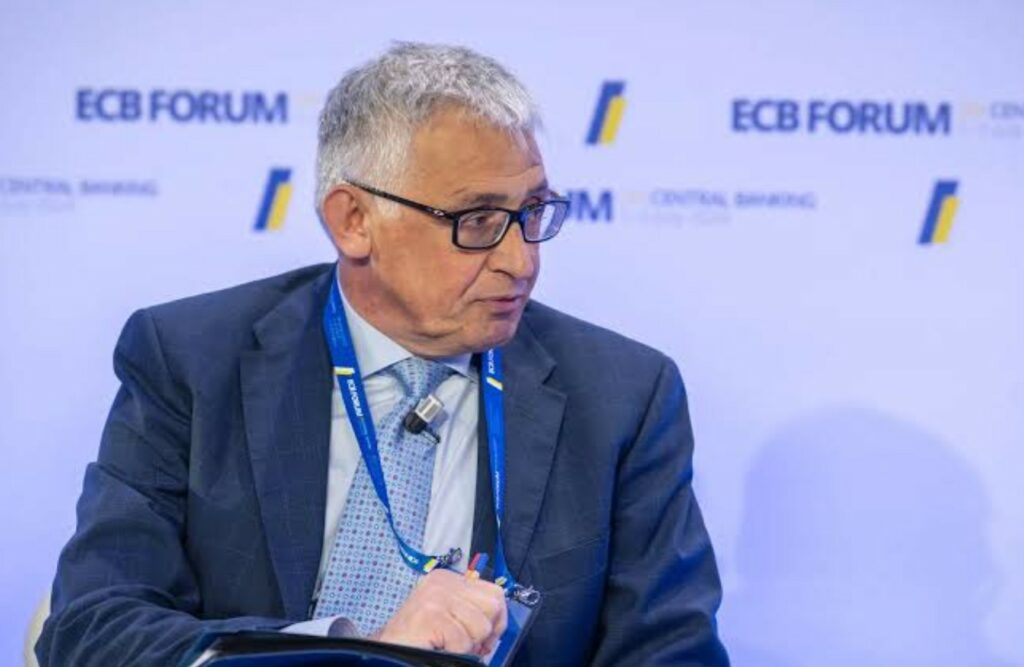
The warning came from Piero Cipollone, a member of the ECB’s Executive Board, speaking in Riga on Tuesday at an event hosted by the Stockholm School of Economics in Riga and Latvia’s central bank, Latvijas Banka, the ECB press service reported.
Dependence on payment infrastructure controlled outside Europe can create vulnerabilities ranging from the risk of being cut off from services to foreign legal decisions affecting routine transactions, Cipollone said.
He added international card schemes can set fees, technical standards and dispute resolution procedures for “hundreds of millions” of European transactions each day.
Two-thirds of euro area countries, including Latvia, Estonia and Lithuania, depend entirely on international card schemes for in-store payments, and there is currently no pan-European digital payment solution governed in Europe that covers the entire euro area.
Merchant charges for card payments in the EU almost doubled between 2018 and 2022 despite attempts to limit them.
Smaller retailers can face charges three to four times higher than those paid by larger businesses, Cipollone said.
Digital cash option proposed
Cipollone described the proposed digital euro as “a digital form of cash” that would be legal tender across the euro area and usable both online and offline, including when there is no network connection.
Offline digital euro payments would have “cash-like privacy levels”, with transaction details known only to the payer and the payee, while the Eurosystem would not be able to identify users.
The Eurosystem is the group made up of the ECB and the national central banks of countries that use the euro.
Cipollone also said the ECB would not charge scheme or processing fees for digital euro transactions.
Cipollone linked the proposal to a shift towards online shopping and away from cash.
E-commerce now accounts for more than a third of retail sales by value, while cash use in the euro area fell from 68% of day-to-day transactions in 2019 to 40% in 2025, and from 40% to 24% in value terms over the same period.
The next steps are for EU legislators to complete the legal process for the digital euro, while the Eurosystem prepares a pilot and technical work needed for issuance.
