
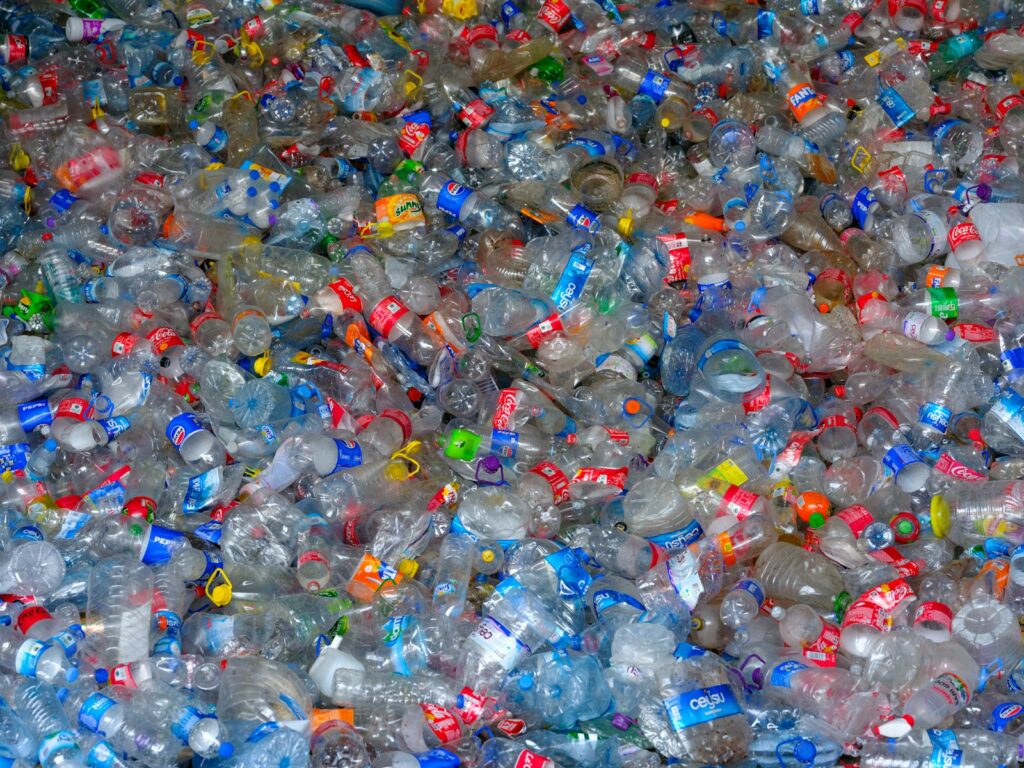
Plastic emissions into Switzerland’s environment averaged 222 grams per person in 2022, a new modelling study has estimated.
The research used a probabilistic material flow analysis, a method that tracks how materials move through production, use and disposal while accounting for uncertainty, according to a summary published on Tuesday by the European Commission’s Science for Environment Policy news alert service.
The model followed seven common plastics — including PET (often used in drinks bottles) and polypropylene (used in packaging and textiles) — across the full product life cycle, using Switzerland in 2022 as a case study.
Researchers mapped 245 potential “emission pathways” where plastic can escape into nature, from pellet loss during manufacturing to fibre shedding from textiles and littering.
Macroplastics, such as larger items and fragments, made up 82% of the estimated releases, mainly linked to post-consumer processes, packaging litter, construction materials and automotive products.
Microplastics accounted for 18%, with the largest sources linked to clothing and textiles, including agricultural and construction textiles.
Most plastic ends up in soil, not water
More than 95% of the estimated emissions went to soils, while less than 5% reached surface waters, according to the summary.
PET and polypropylene were the largest contributors overall, driven by packaging waste and synthetic textiles.
The biggest sources of macroplastic emissions to both soil and water were linked to littering of packaging — including bottles, films and bags — while clothing was the largest contributor to microplastics in both soil and water.
The researchers said the model does not include tyre wear, which is a recognised source of microplastics, and the results are specific to Switzerland, where some sources are absent, such as land application of sewage sludge and beach littering, according to the service.
Follow-up work is under way to extend the model to other European countries.
The study by D. Jiang and B. Nowack was published in the journal "Environmental Pollution" in 2025.
