
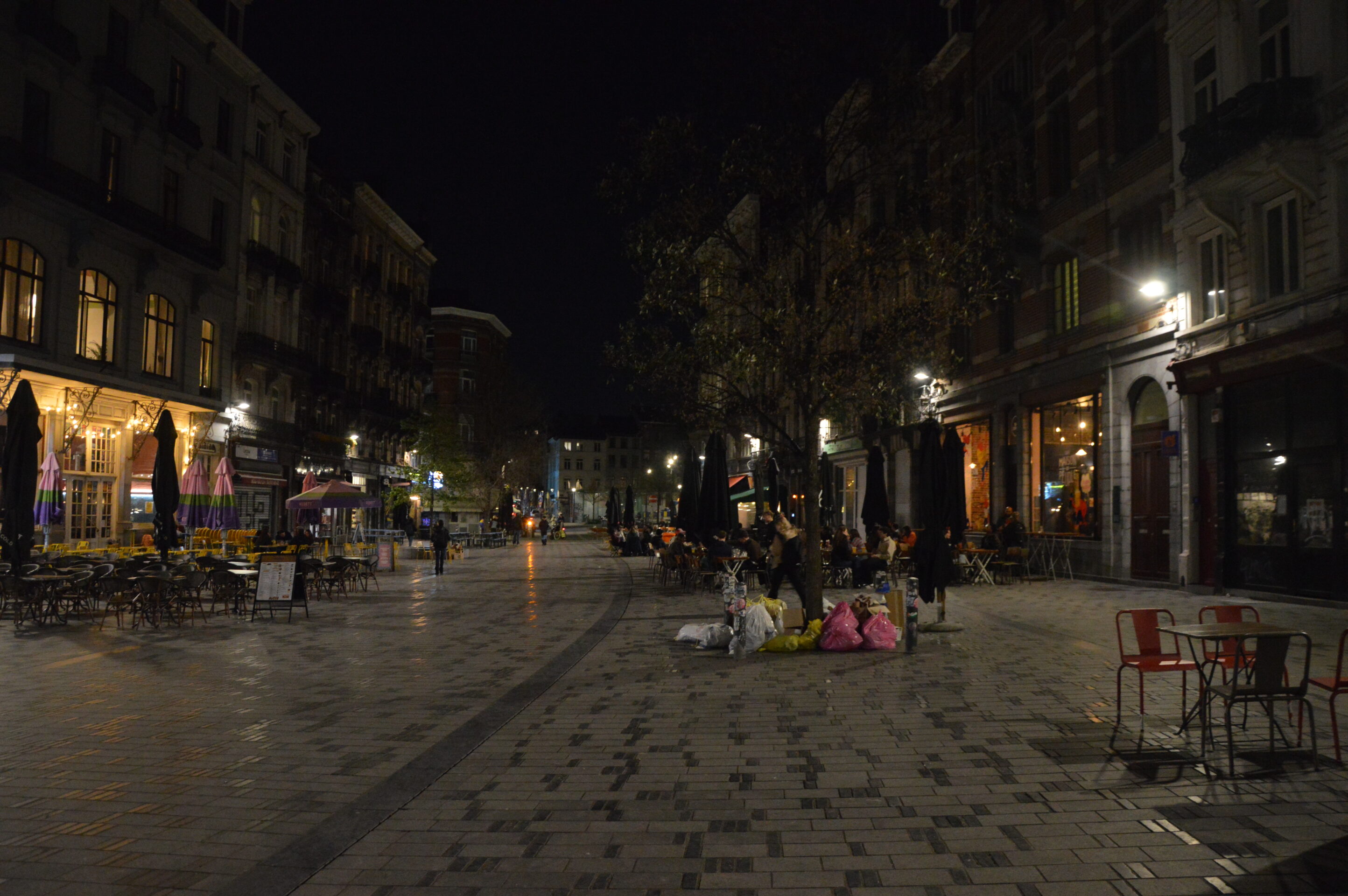
Brussels' nightlife is being squeezed from all sides, with industry representatives warning that a clash between residents and revellers could hollow out the capital's after-dark identity.
Hard Rock Café, Rock Classic, Bonnefooi, La Cabane, Spirito, Reset, to name a few, all emblematic venues in the capital, recently shut their doors.
Other nightlife clubs are gasping for air, venues like Madame Moustache have sounded the alarm and announced: "closure is imminent".
As previously reported before Christmas, public funding cuts, real estate pressure, and changes in the city's political tides are driving a once-thriving club sector to deem its future bleak.
Earlier this year, Brussels By Night Federation, a key player in preserving the nightlife industry, proposed a five-pillar plan to save "a core part of the city's urban fabric".
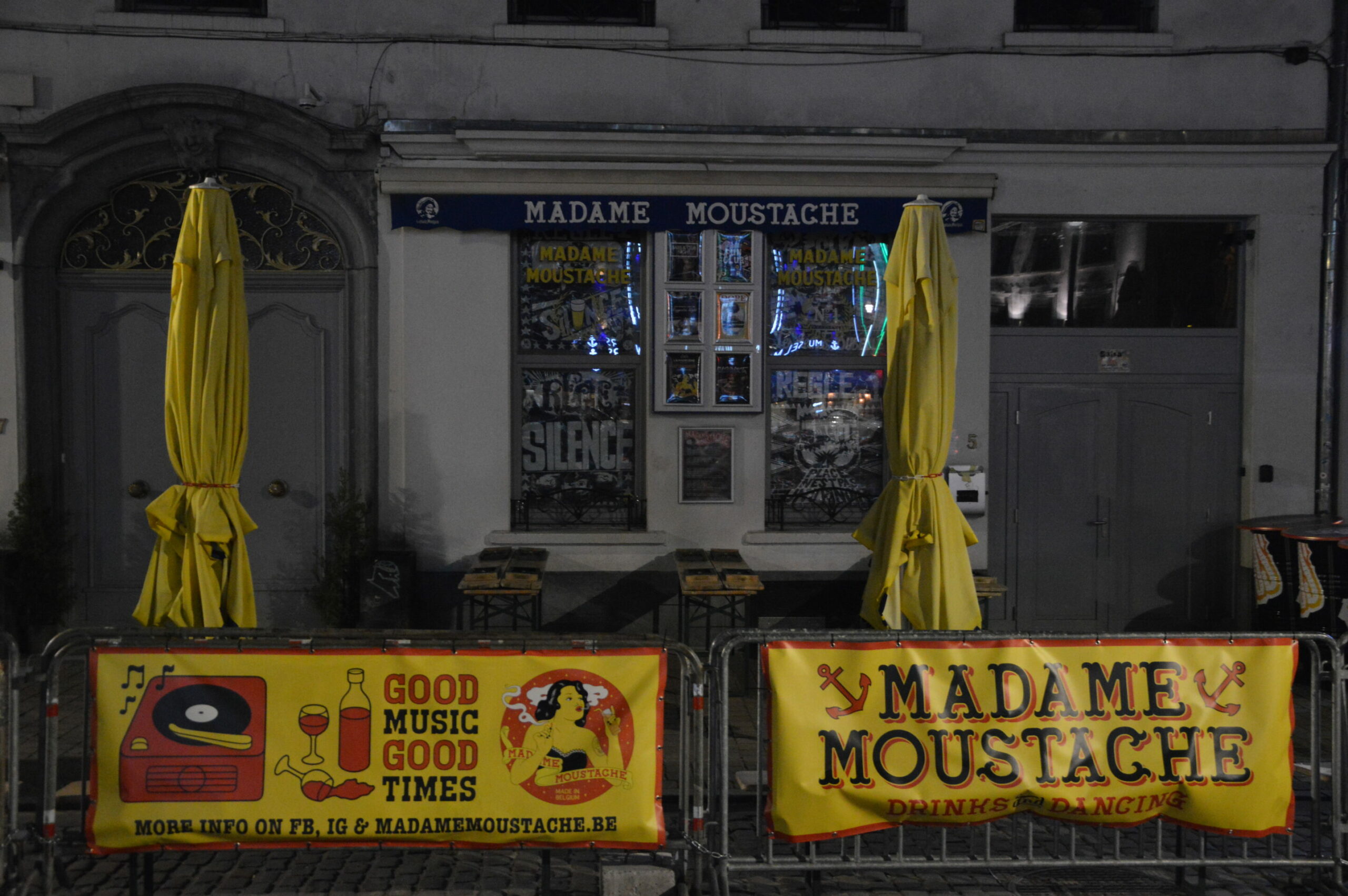
Madame Moustache café is an attraction for internationals in Brussels. Credit : The Brussels Times/ Anas El Baye
But beyond the stringent economic issues, Nathan Pujadas, Brussels By Night's manager, explained to The Brussels Times he is advocating for the introduction of a simple principle he calls the "agent of change".
Amid rising complaints from residents about noise coming from clubs, Brussels By Night wants the city to impose the principle: new residents adapt to existing venues, not the other way around.
"We are seeing a clash between the individual interests of a few residents and the collective interest of thousands of people," Pujadas said.
"More and more people are moving into lively areas without accepting the trade-offs. If you strip a city centre of its nightlife clubs, it is no longer really a city centre," he added.
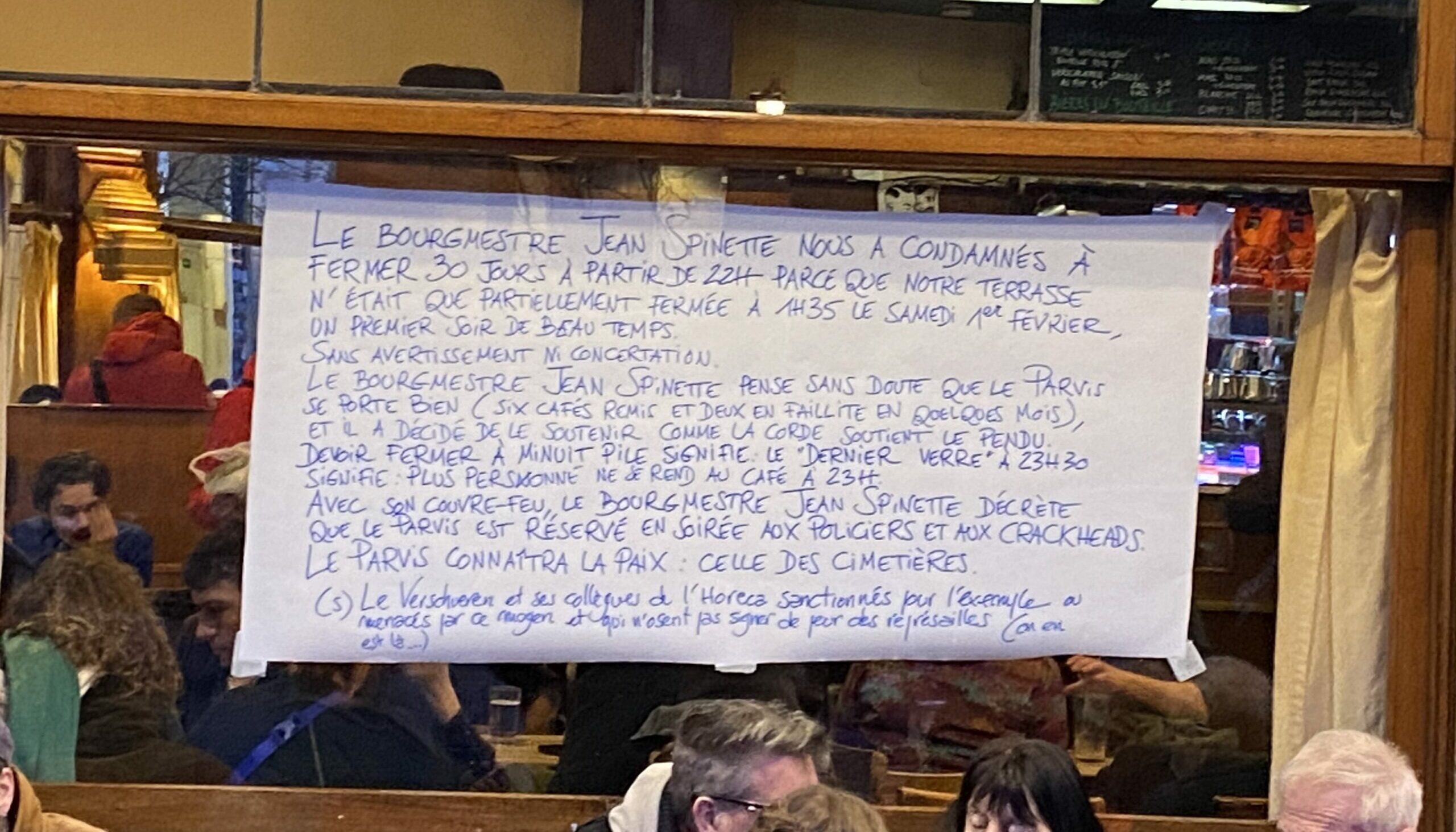
The sign hung up for Mayor Jean Spinette in Brasseries Verschueren in March 2026. Credit: The Brussels Times
As noise standards are the same across Brussels, regardless of whether an area is residential or nightlife-heavy, an imbalance between public spaces is inevitable.
The federation is denouncing not only a lack of political coordination at the regional level when it comes to nightlife management but also the abundance of supportive rhetoric, but "when venues are in trouble, no one shows up."
"Clubbing is recognised as intangible cultural heritage in Brussels; what is at stake is not just venues, but an entire cultural and artistic ecosystem." Pujadas regrets.
Terraces
The iconic Brasserie Verschueren, nestled in the lively Parvis de Saint-Gilles, was recently ordered to close early by Mayor Jean Spinette (PS) for failing to respect closing hours.
Regulations introduced earlier by Spinette require terraces to close at 01:00 and tables and chairs to be cleared by 01:30 on weekends, due to "many complaints from residents about night-time noise", Spinette told BX1.
Other cafés in the municipality, like Le Louvre and L'Amère à Boire, were also told to close early for a month, igniting fears of gentrification.
A few meters away from Brasserie Verschueren, The Brussels Times met with Café de la Maison du Peuple's manager, Martin Thirionet.
Thirionet says he is walking on eggshells to keep the lights on in his café, as there is not only pressure from noise complaints, but he also has to secure his venue.
"People high on drugs often roam the Parvis, sometimes sneaking into the café's restrooms or annoying clients," Thirionet also laments this issue that he thinks "is not dealt with properly."
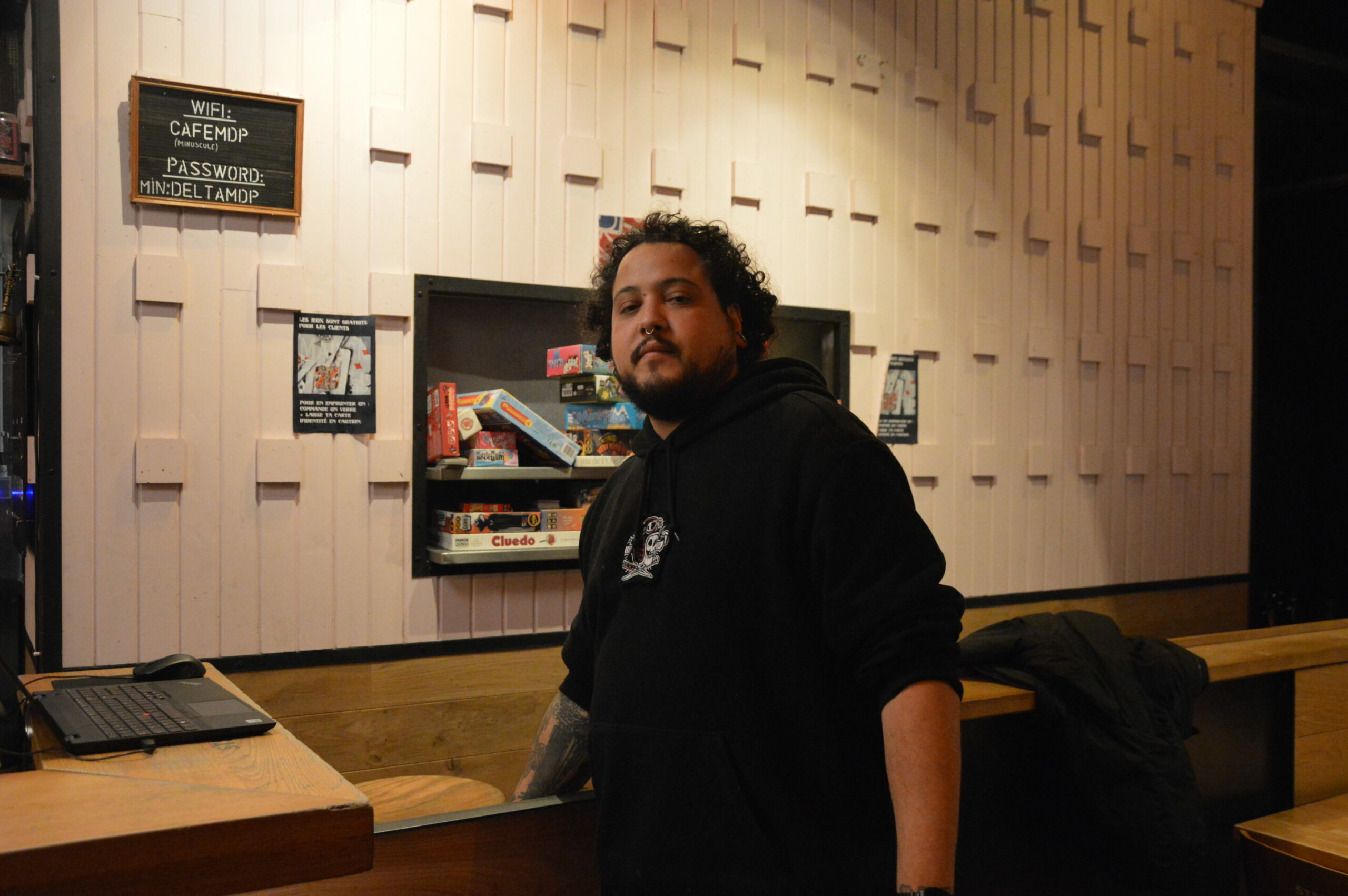
Café Maison du Peuple manager. Credit: The Brussels Times/ Anas El Baye
Café La Maison Du Peuple hosts in-house DJs on Fridays and Saturdays, and with early time closing of terraces, party-goers "think the café is closing."
"So you end up with a DJ playing to themselves for 10 people. I have three students behind the bar, doing nothing. On top of that, no one is enjoying themselves, and we are paying for an extra hour for nothing." Thirionet added.
Nonetheless, Spinette stands firm on his decision; he tells BX1 that closing terraces at midnight during the week aims to strike a balance between café activity and residents' quality of life.
"We must reconcile a lively commune with residents' right to rest," he argued.
Ixelles
Ixelles, another lively municipality, shares similarities with Saint-Gilles: high density of restaurants, festive atmosphere and is a "destination municipality." It recently tightened its grip on terraces as of 1 April, the date when the "Ixelles By Night" plan took effect.
"It is a compromise," Ixelles Mayor Romain De Reusme (PS) told The Brussels Times. "We are trying to respond to hospitality sector operators who want to stay open later on weekends, while ensuring tranquillity for residents."
On top of that, the municipality wants more police presence around bars to curb anti-social behaviour, as well as reducing risks of sexual violence, mainly in highly-frequented student areas such as Cimtière d'Ixelles.
"Hospitality sector operators have their own interests, and it is normal for them to highlight these concerns," the Mayor said, adding that venues can still operate indoors. "If people want to continue their evening, they can do so inside."
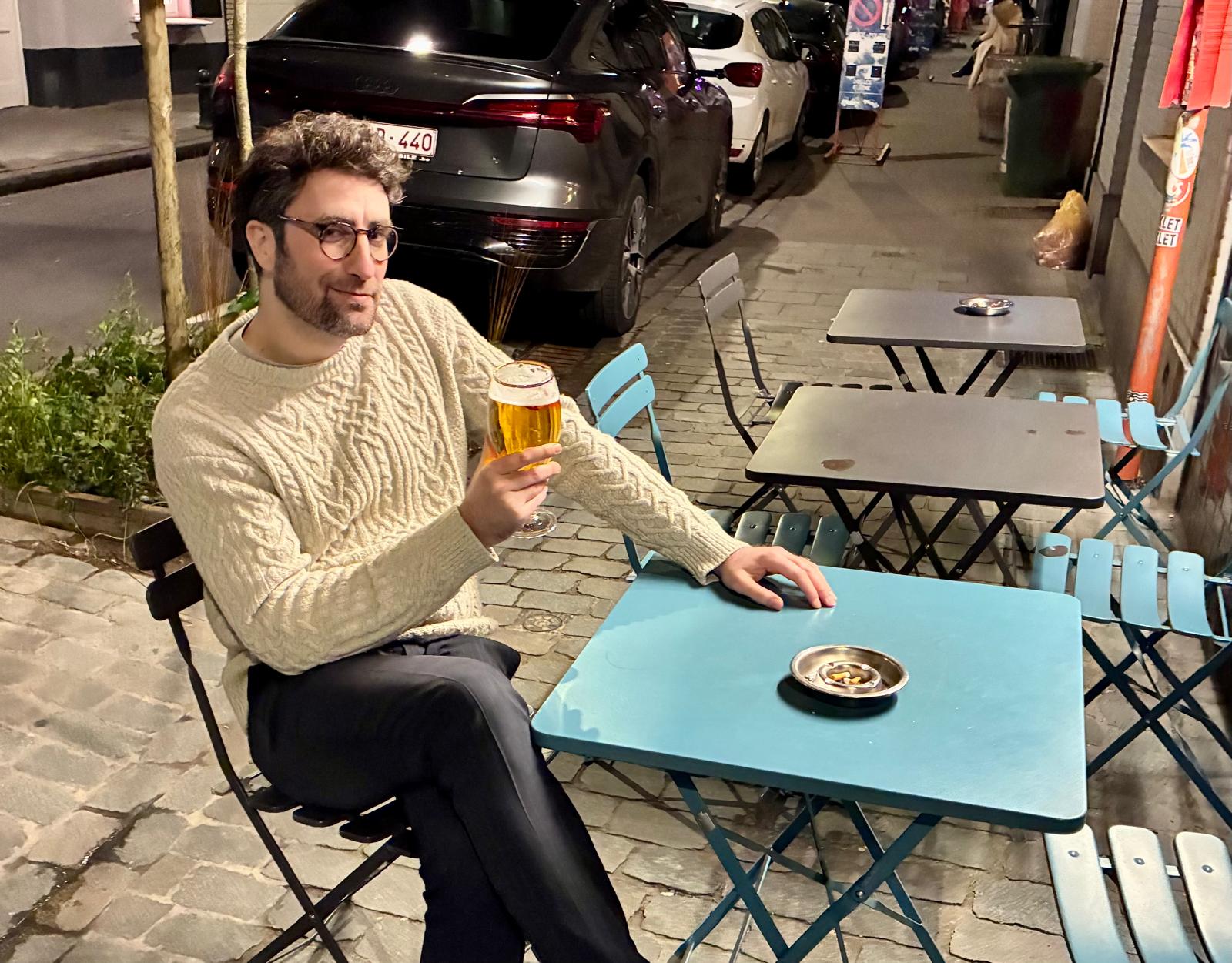
"Ixelles is not a retirement home, it's part of the capital of Europe, and terraces give the commune its atmosphere and identity," Stéphane said. Credit: The Brussels Times/ Anas El Baye
"During Covid, everything was quieter. Some residents became used to that calm." De Reusme explained. "Now that activity has resumed, the return of noise can feel more difficult."
Frenchman and long-time Ixelles resident Stéphane rents a flat close to the rather busy Boniface quarter. He completely disagrees with the rules and finds them "absurd".
He tells The Brussels Times that these rules are being set by people who want to live in a bland city.
"Ixelles is not a retirement home. Terraces give the city its atmosphere, something everyone saw after Covid: cities need life," he added. Stéphane cherishes moments spent in late hours bonding with strangers in terraces after a grim period of lockdowns and social distancing. As he raises his pint, he winks: "Let people enjoy themselves."
