
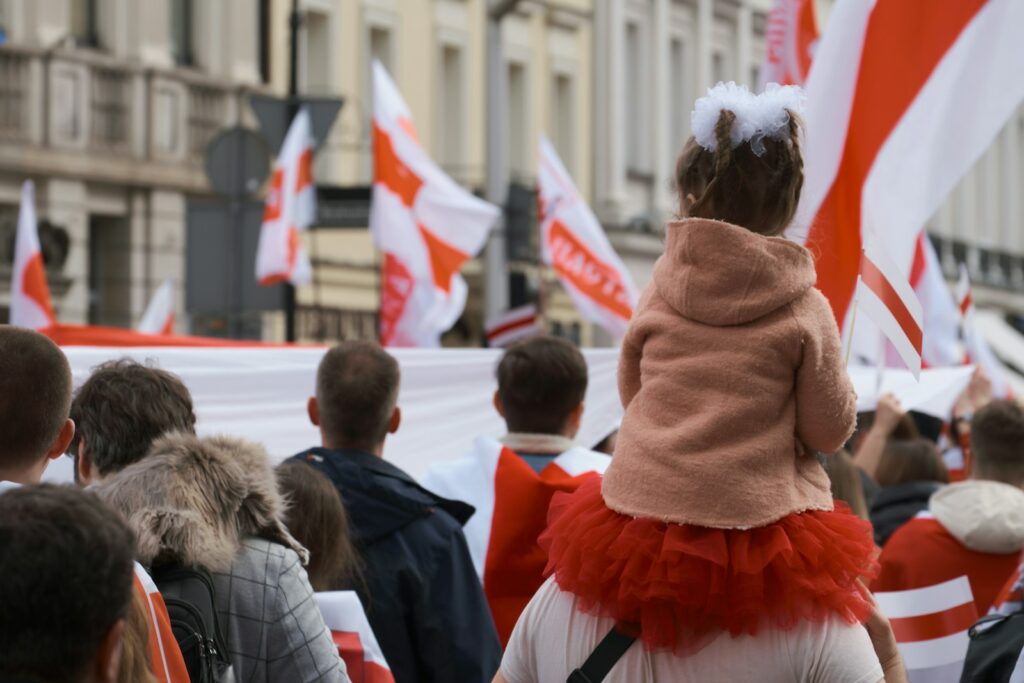
Belarusian democratic forces in exile and civil society groups met international partners in Warsaw to present work on equality and non-discrimination carried out over the past two years.
The meeting took place under a joint European Union — Council of Europe programme and brought together Belarusian political leaders in exile, civil society representatives and international partners, the CE press service announced on Thursday.
The Council of Europe’s Director of programme coordination, Claus Neukirch, said the organisation and the EU were working with Belarusian democratic forces and civil society to “create solutions” on equality and anti-discrimination.
Pavel Latushka, Deputy Head of the United Transitional Cabinet, said the objective was “a democratic Belarus” where laws, public policies and institutions adhere to European human rights standards and provide equality and protection for all.
New tools and future work
A “Statement of principles on non-discrimination” adopted by the Coordination Council in February 2026 was presented as a key outcome of the work, the Council of Europe said.
Artsiom Brukhan, Speaker of the Coordination Council, said the statement set out a common position across the democratic movement and a commitment to inclusive and participatory policymaking in current political work as well as future reforms.
Other outputs presented included a concept law on equality and non-discrimination, a Belarusian-language glossary of equality and non-discrimination terminology, and online training courses covering anti-discrimination principles, equality bodies and anti-racism.
Ekaterina Deikalo of the Belarusian Helsinki Committee said civil society helps design frameworks aligned with European standards and supports practical application by engaging communities, supporting victims and advocating for inclusive policies.
Participants also discussed challenges faced by vulnerable groups, including Belarusian LGBTI people in exile, and heard an outline of a future study on their situation.
The Council of Europe said the conference was part of its Contact Group on cooperation with Belarusian democratic forces and civil society, set up to maintain links with European legal and policy frameworks after cooperation with Belarusian national authorities was suspended in 2022 over their support for Russia’s full-scale invasion of Ukraine.
A new list of activities for 2026 — 2027 under the Contact Group was welcomed at the meeting, including work on anti-discrimination, human rights protection, hate speech, transnational repression and support for vulnerable groups.
