
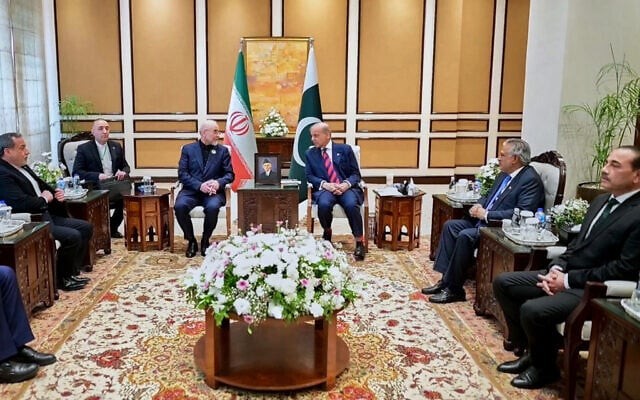
The talks between the US and Iran in Islamabad, Pakistan, ended on Sunday morning without any agreement and both sides blaming each other for the collapse.
“The bad news is that we have not reached an agreement, and I think that’s bad news for Iran much more than it’s bad news for the United States of America,” commented US Vice President JD Vance, who headed the American delegation. He claimed that the Americans were “negotiating in good faith”.
“We need to see an affirmative commitment that they will not seek a nuclear weapon, and they will not seek the tools that would enable them to quickly achieve a nuclear weapon. That is the core goal of the president of the United States, and that’s what we’ve tried to achieve through these negotiations,” he said.
Vance, without any diplomatic experience, was reportedly sceptical about the launch of the US-Israeli strikes on Iran and did not believe that they would lead to regime change. “You know I think that this is a bad idea, but if you want to do it, I’ll support you,” he reportedly told President Trump at a meeting before the strikes.
Even as the negotiations continued on Saturday, Trump said that a deal was not necessary. “We’re negotiating, whether we make a deal or not makes no difference to me, because we’ve won.” After the collapse of the talks, he accused Iran of “world extortion” for closing the Strait of Hormuz, and threatened that the US Navy would begin its own blockade of the route.
The Iranian delegation was led by the Parliamentary Speaker, Mohammad Bagher Ghalibaf, a former commander of the Islamic Revolutionary Guard Corps (IRGC) with no diplomatic experience. After the killing of Ayatollah Ali Khamenei and most of the former leadership, Iran is believed to be ruled by hardliners in the IRGC.
“Before the negotiations, I emphasiced that we have the necessary good faith and will, but due to the experiences of the two previous wars, we have no trust in the opposing side,” he commented. “My colleagues on the Iranian delegation raised forward-looking initiatives, but the opposing side ultimately failed to gain the trust of the Iranian delegation in this round of negotiations.”
“There were mood swings from the two sides and the temperature went up and down during the meeting,” a Pakistani source was quoted in media. Both delegations have by now left Islamabad but neither side are believed not to have ruled out another round of talks.
The two sides agreed last week on a two-week long ceasefire until 21 April. It was hardly likely that the talks would result in an agreement on the thorny issues dividing them already after one day. Their starting positions, as expressed in their plans and conditions, were too far from each-other from the very start to be bridged in only one day.
But the sudden collapse came as a surprise and was bad news for those who hoped for a diplomatic solution of the conflict.
“Diplomacy is key to resolve all outstanding issues,” EU’s High Representative for foreign affairs, Kaja Kallas said in a statement on behalf of the EU said before the start of the talks. “Parties should continue engaging in good faith in efforts to reach a sustainable agreement on all areas of concern. The EU will contribute to all diplomatic efforts in this endeavour, taking into consideration its full range of interests and concerns, in coordination with partners."
It is unclear what the EU could do to contribute to the talks and a successful outcome.
While the ceasefire with Iran still holds, it never included Lebanon, where the war continues. However, direct talks between Lebanon and Israel are expected to start on Tuesday in Washington. The negotiations will focus on the disarmament of Hezbollah and the establishing of peaceful relations between the two countries.
If the talks would lead to an immediate ceasefire, Hezbollah would be disconnected from Iran which would increase the chances for a quick resumption of the US-Iran talks.
