
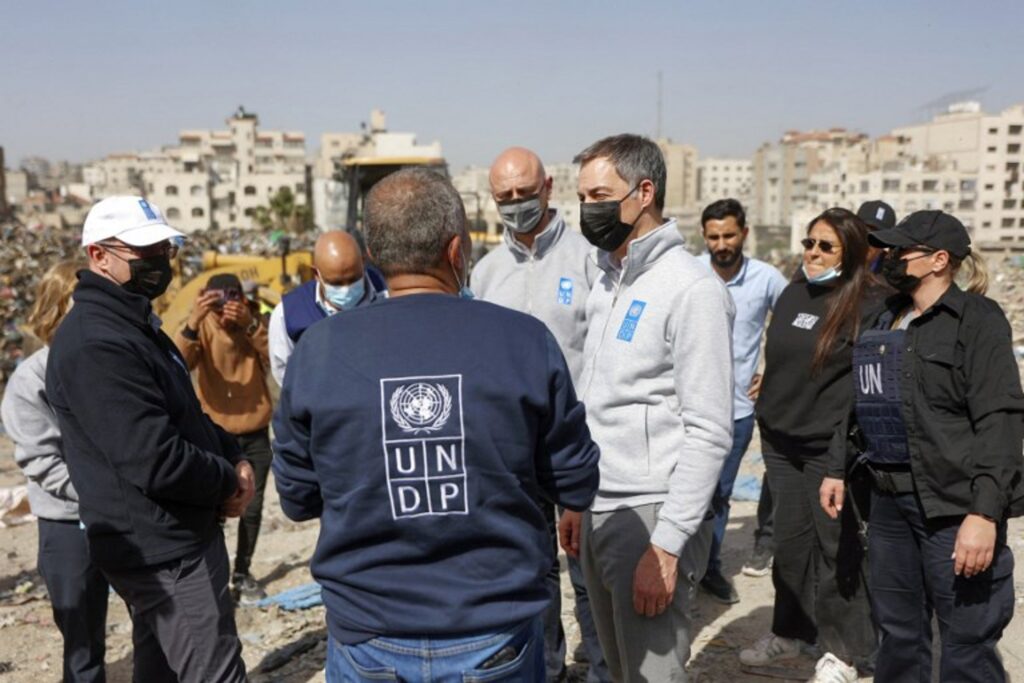
The ongoing war in the Middle East, which began in late February, could drive 32 million people across 162 countries into poverty, according to a report released Monday by the UN Development Programme (UNDP).
The analysis highlights that the most severe impact is felt in countries directly affected by conflict or in proximity to it. However, the long-term repercussions could expand significantly to nations further afield.
Despite a ceasefire announced overnight from Tuesday to Wednesday, the six-week-long war has moved from an "acute" phase to a "protracted" phase.
The UNDP warns that the longer this phase persists, the greater the risk of poverty escalation. The worst-case scenario predicts severe consequences for countries in the Gulf, Asia, sub-Saharan Africa, and small island nations.
Alexander De Croo, UNDP chief and former Belgian Prime Minister, explained that escalating conflicts disproportionately affect nations with limited financial buffers to absorb rising energy and food prices.
He emphasised that these countries are now faced with a stark choice between tackling immediate inflation or funding critical services like healthcare, education, and employment.
To mitigate the impact, the UNDP recommends targeted and temporary cash transfers to safeguard vulnerable households. Implementing such measures effectively would require an estimated $6 billion, depending on the scenario.
Broad energy subsidies, on the other hand, are discouraged. According to the UNDP, such measures primarily benefit wealthier households and are not financially sustainable in the long term.
The UNDP’s analysis, is based on models from the Global Trade Analysis Project (GTAP), assessed the economic consequences of various conflict scenarios, ranging from short-term disruptions to prolonged shocks lasting up to eight months.
