

As the Trump administration leads the world in slashing global health aid—with nations like the UK following suit—a more predatory architecture is rising in its place. But the resource now being taken is no longer just gold or lithium; it is the clinical and genetic data of an entire continent.
After over a year of devastating USAID cuts, the Trump administration is offering a lifeline: In exchange for billions in critical support, Washington is demanding vast amounts of infectious disease data—on malaria, HIV, and more—including biological samples and private patient information. They are also being pressed to increase domestic health spending, often beyond fiscally sustainable levels.
Historically, US development aid has come with narrow conditions focused on transparency, anti-corruption and reporting. But the new agreements being advanced under Trump’s America First Global Health Strategy are instead Faustian bargains—forcing African governments to choose between sovereignty and lifesaving prevention and care.
Already, nearly half of Africa’s 54 countries have reportedly signed such deals. Others have resisted. Zimbabwean negotiators walked away, warning the terms would reduce the country to a supplier of raw health data, with no guarantee of access to resulting treatments or innovations. Zambia also pushed back, rejecting a proposal that would have tied $1 billion in health funding to a decade of access to medical data, alongside a parallel arrangement granting U.S. firms access to mining assets.
Danger of unequal health bargains
This is the deeper danger of bilateral bargaining. By negotiating country by country, Washington is sidelining institutions like the African Union and the Africa Centres for Disease Control and Prevention (Africa CDC)—bodies which could use collective leverage to negotiate better terms for the continent.
What Africa needs instead is medical sovereignty: a credible path built on collective negotiation through regional institutions, and on the infrastructure to manage, secure, and use health data on African terms.
Of course, that is easier said than done. Decades of lopsided investment have shown that sovereignty depends on capable institutions, long-term financing, and shared systems that reduce reliance on external powers.
Still, there are signs of progress. In January, the Africa CDC launched a new Central Data Repository intended to strengthen the collection, coordination, and stewardship of heath data, with support from the Global Fund. Expanding such a program across a continent facing immense and uneven health pressures will be a formidable undertaking, demanding sustained investment, political commitment, and trust.
This is why European governments and institutions should work with African counterparts to help build secure, sovereign public-health infrastructure, providing the technology, financing, and institutional support needed to make that independence possible. For example, advances in AI and genomics could reduce the cost of managing health data, strengthen surveillance, and improve pandemic prevention.
The European Commission has already backed frameworks for secure, AI-enabled health data management and analysis, designed to support earlier outbreak detection and more coordinated public health responses.
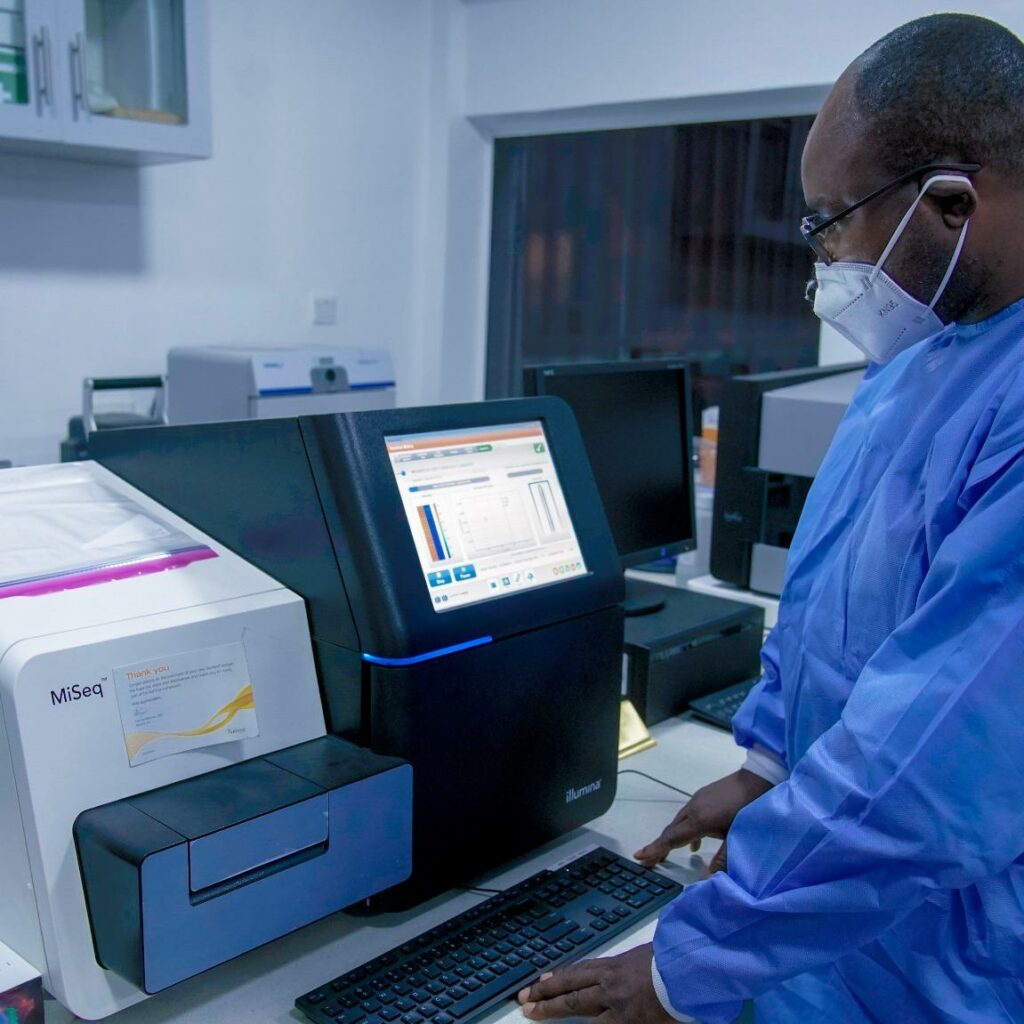
There are already tools that show what a more sovereign model could look like. Whole-genome sequencing (WGS)—the analysis of a pathogen’s complete DNA—can now distinguish between bacterial strains with extraordinary precision, revealing transmission patterns within hours, or even minutes.
UK-based Genpax, led by Sufyan Ismail and Dr Nigel Saunders, is among the first to offer AI-driven pathogen sequencing platforms that allow governments to map outbreaks such as tuberculosis, HIV, and malaria in real time. Its IDEM platform enables genomes to be compared against global datasets, and used well, such tools could help public health teams assess risk faster and make better-targeted decisions on prevention and containment without heavy reliance on external sources.
Scaling capabilities such as these across Africa could transform public health and help break the cycle of reactive crisis management. Research shows that proactive genomic surveillance can prevent 400 infections a year in a typical hospital, slashing costs and saving lives. Scale that to the continental level, and the Africa CDC could bridge major gaps left by USAID.
The 2025 USAID cuts have already gutted humanitarian services across Africa, fueled conflict, and contributed to hundreds of thousands of preventable deaths, many linked to infectious disease and malnutrition.
But the new deals, for all their dangers, make one thing clear: American funding will not last.
In the meantime, Africa cannot afford to hand its citizens’ most intimate health data to systems designed and governed elsewhere. It must invest instead in infrastructure that enables research and collaboration without surrendering control.
With Africa CDC already advancing sovereign data frameworks, Europe faces a narrowing window: partner with African institutions to build durable public-health infrastructure or stand by as a new extractive model takes hold.
