
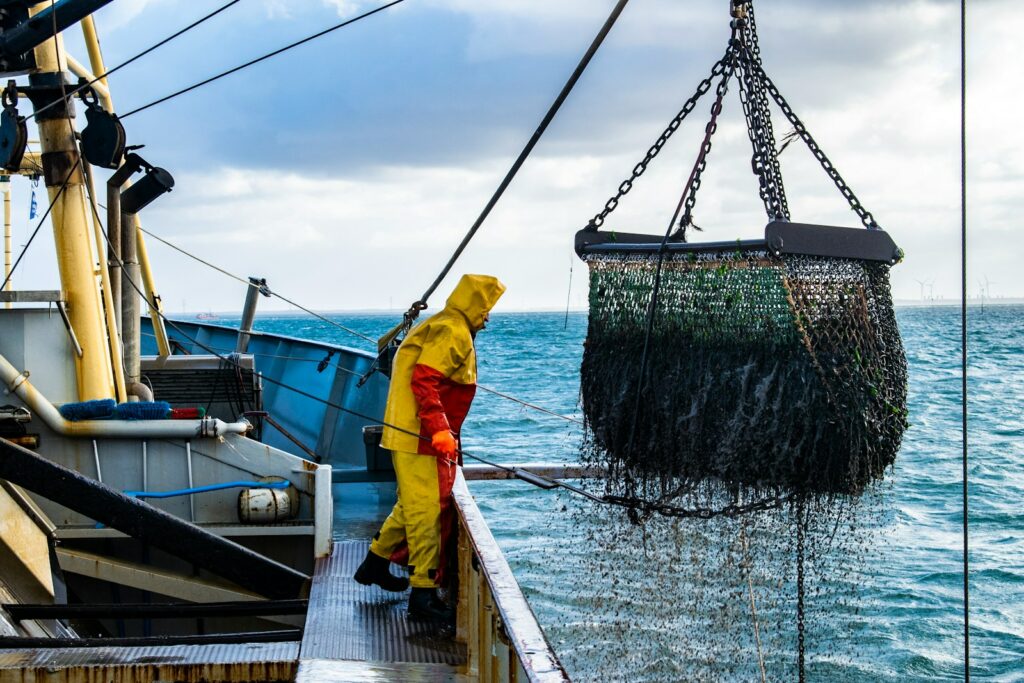
The European Commission has activated an emergency funding mechanism to let EU countries compensate parts of the fisheries and aquaculture sector hit by knock-on effects from the conflict in the Middle East.
The move allows member states to provide financial support to fishers, aquaculture producers, processors and retailers whose livelihoods have been disrupted, with the measure applying retroactively from 28 February 2026, the Commission said in a statement on Thursday.
Support will come from each country’s existing allocation under the European Maritime, Fisheries and Aquaculture Fund (EMFAF) for 2021–2027, with the EU co-financing part of eligible spending.
Member states can choose whether to offer the support and will be responsible for administering payments to operators directly.
Around €760 million of the initial €1.3 billion set aside for emergency support within the 2021–2027 EMFAF programme remains immediately available.
Hostilities in the Middle East have driven up the price of energy and raw materials, increasing operating costs and squeezing profit margins across the EU’s fisheries and aquaculture sector.
Part of the EU fishing fleet has already stopped operating due to reduced profitability, and aquaculture and processing are also affected.
What support can be offered
Under the mechanism, Member States may grant financial compensation for income foregone and additional costs linked to the current market disruption, including higher energy prices, the Commission said.
They may also provide “storage aid” for fishery producer organisations that use an EU market tool allowing products to be temporarily stored in order to stabilise prices.
The crisis mechanism is temporary, and support can cover expenditure incurred until the end of 2026.
The Commission said the situation since 28 February 2026 has disrupted global energy and commodity markets, citing attacks on energy infrastructure and the closure of the Strait of Hormuz, which it said drove up oil prices and disrupted trade flows between the region and the EU.
A similar EMFAF crisis mechanism was activated in 2022 following Russia’s invasion of Ukraine.
