

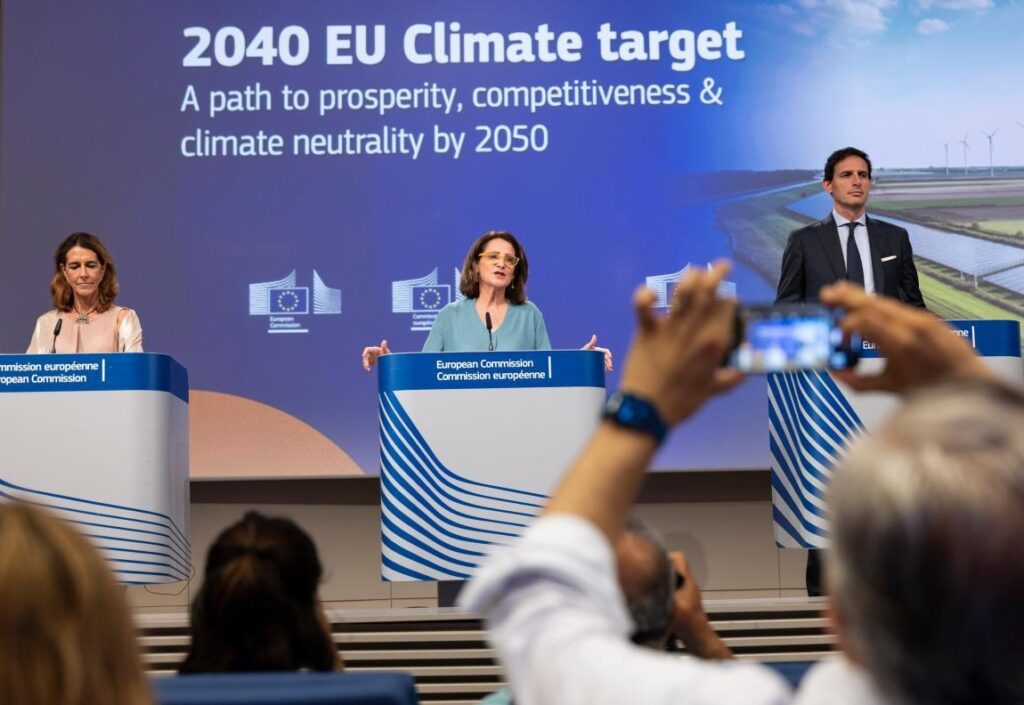
Europe is entering a decisive period for carbon markets, removals, and climate finance, with the European Commission currently seeking expert opinions on which tools should contribute to its 2040 target and national climate pathways.
At this pivotal moment, the biggest risk is that the path forward becomes overly restrictive, shaped by false binaries that narrow the field of credible solutions instead of expanding it.
This concern is most apparent in the debate over “permanence.” In simple terms, permanence asks how long carbon stays out of the atmosphere once it has been stored or removed before being re-released. That is a legitimate and important question.
But too often, the debate hardens into a simplistic binary: either a solution stores carbon for centuries or longer, or it is treated as a “temporary” solution that is less credible from the outset. If that logic is applied too rigidly, Europe risks sidelining nature-based solutions before they have been fairly assessed on their real climate value, their safeguards, and their role in a broader strategy.
The EU’s Carbon Removal Certification Framework (CRCF) is the clearest example of this playing out in practice. It is the first EU-wide voluntary framework for certifying carbon removals, carbon farming and carbon storage in products, aimed at setting quality standards and reducing greenwashing.
It currently classifies nature-based credits as “temporary” — because trees can die or be cut down, for example - and engineered credits - from things like direct air capture — as “permanent”. If this distinction takes root, it will influence expectations among policymakers, standard setters, advocates and corporate buyers - not only in Brussels, but beyond the European Union.
Not only is this argument oversimplified and ignores viable and robust risk mitigation solutions available, it is extremely worrying for its potential consequences. Nature-based solutions are not peripheral to the climate challenge; they are essential to any credible path to global net zero, and represent one of the most practical, scalable and affordable climate mitigation solutions available.
Nature-based solutions, particularly forest protection and restoration, could close a substantial share of the emissions gap in the immediate period ahead, and the IPCC itself notes that it is difficult to identify another viable path to reducing an additional 4 to 6 gigatonnes by 2030.
They can also help lower the overall cost of climate action when included in a broader portfolio. Excluding nature protection, restoration and improved management would not only shrink the climate mitigation toolbox; it would sideline one of the few realistic ways to finance restoration and conservation at scale. The case for nature, in other words, is environmental, economic, and strategic.
This is a reason businesses, NGOs, and other stakeholders keep insisting that nature must remain in the conversation. It is not a special pleading. It is because nature is necessary at the global level, and because excluding it creates negative impacts in the real world. Europe should design frameworks that allow high-integrity nature-based solutions to compete on performance and credibility, rather than being ruled out by design.
This is not an argument against technology-based removals. We should absolutely continue to champion innovation and investment in engineered solutions and help bring them to scale. But policy should unlock options, not reduce them.
The central question is not whether Europe should focus on nature-based solutions or technology-based solutions. Nor is it whether policy should prioritize cutting new emissions at the source or removing carbon already in the atmosphere. The real question is how to build a climate strategy that uses each of these approaches where it adds the most value.
The right way is a portfolio approach: keep all credible solutions on the table, judge them by integrity and performance, and use them for the roles they are best suited to play. A portfolio approach is more practical and more resilient than betting on a single pathway. No single climate solution can do the whole job on its own. Good policy should reflect that reality.
The design principles for policymakers are straightforward. They should replace today’s overly binary approach with a more practical framework that supports a balanced portfolio of nature-based and engineered removals across different durability timeframes, each with clear rules, safeguards, and eligibility criteria.
That means requiring strong risk-management tools such as buffer pools and insurance, strengthening MRV through investment in advanced monitoring technologies and domestic expertise, and aligning standards across jurisdictions and international initiatives to reduce fragmentation and improve interoperability.
At the same time, policy frameworks should recognize and reward the broader co-benefits that high-integrity nature-based solutions can deliver — including biodiversity, water, resilience, and social value — while ensuring that public incentives and market rules help scale credible solutions now and build long-term capacity over time.
Europe needs a “both-and” strategy: nature and technology, public and private finance, near-term action and long-term durability. Nature alone cannot do the whole job. But that is not the real question. The real question is whether Europe can afford to leave nature out.
