
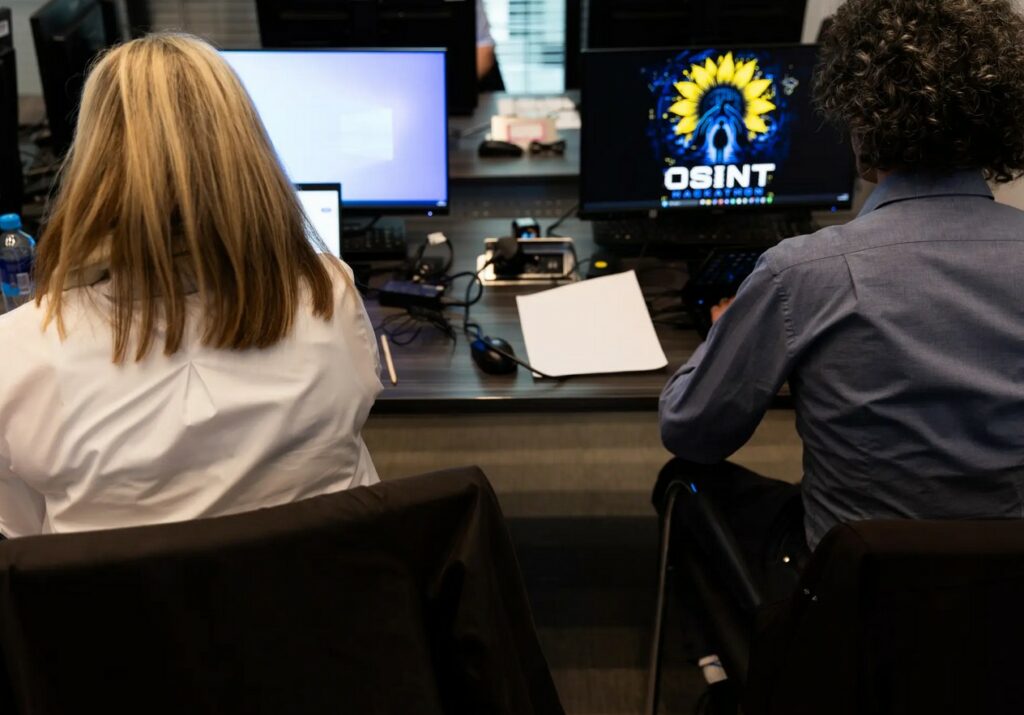
Europol and the Netherlands said investigators using online research methods had uncovered information on 45 Ukrainian children believed to have been forcibly transferred or deported to occupied parts of Ukraine, Russia and Belarus.
The two-day effort, held on 16 and 17 April at Europol’s headquarters in The Hague, brought together 40 specialists from 18 countries alongside the International Criminal Court and several non-governmental groups, Europol announced on Monday.
The participants produced 45 reports and shared them with Ukrainian authorities to support ongoing investigations.
The reports included details that could help identify where children are, such as transport routes taken during relocations, facilities the children may have been taken to, and online platforms showing photos of children who may have been deported.
They also gathered information about people and organisations potentially involved in the transfers, including directors of children’s orphanages, individuals who received children, and military units that may have assisted in deportations.
What investigators looked for online
The work was carried out using OSINT — open-source intelligence — meaning information gathered from publicly available sources online and elsewhere, Europol said.
Europol described the event as an “OSINT hackathon”, using the term for a short, intensive collaborative exercise to solve a specific problem using digital tools.
Ukrainian authorities have documented the alleged forced transfer or deportation of an estimated more than 19,500 children from occupied territories to Russia or Belarus.
Some of the children have been adopted by Russian nationals, while others are being held in re-education camps or psychiatric hospitals.
Europol said this was the third event of its kind and the second focused specifically on tracing Ukrainian children who were forcibly transferred or deported from their usual place of residence — an offence that may constitute a war crime under international legal frameworks.
