
The city of Ghent estimates the impact of the Middle East conflict and the Strait of Hormuz blockade on its finances at €20 to €25 million.
This is an initial assessment by municipal services, based on currently available data.
Key factors include accelerated wage indexation, rising energy prices, and growing inflation.
The City Council stresses that these figures are a snapshot, and the final amount could change, depending on international developments.
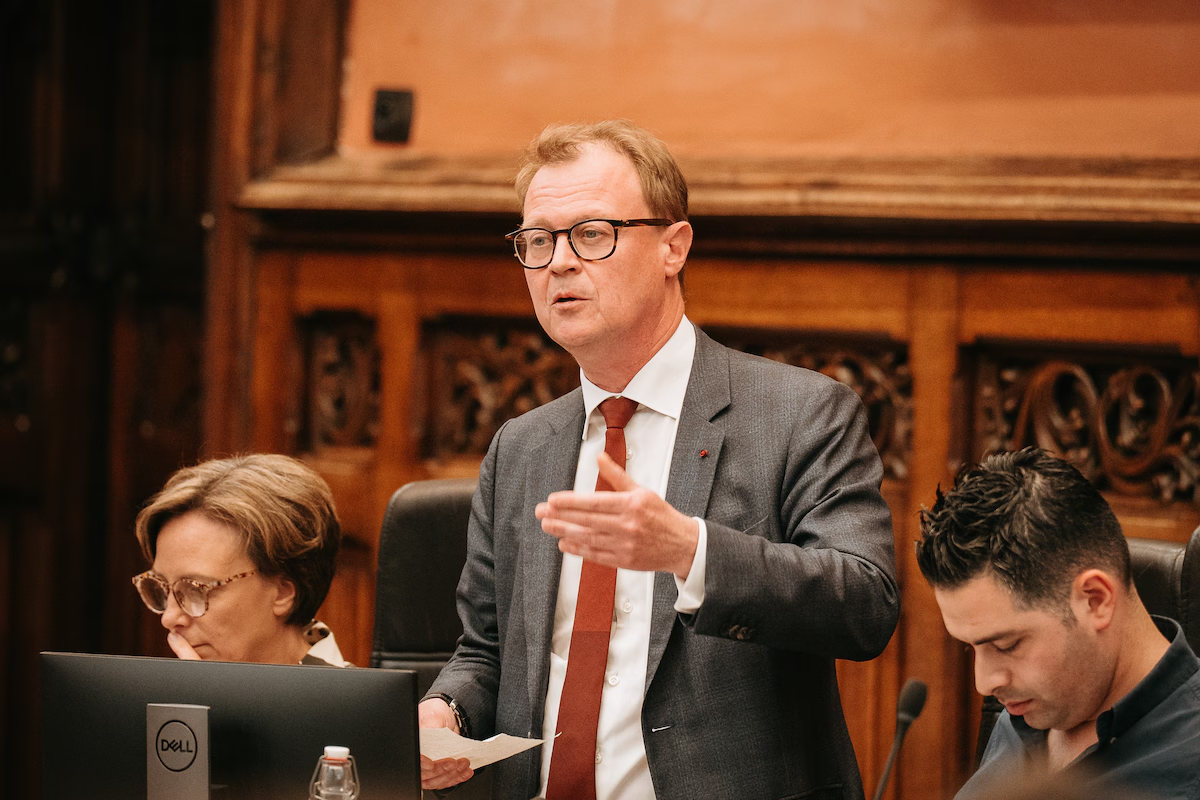
City Finance Councillor Christophe Peeters (Anders) pointed to the global uncertainty in energy and financial markets.
“We do not know whether the situation will stabilise in a few days or drag on for months or years,” Peeters said. This volatility requires constant budget monitoring and adjustments, he added.
According to Peeters, the additional costs can be temporarily absorbed using reserves outlined in the multi-annual plan, although these will need to be tapped sooner than expected.
On Monday evening, he criticised international political leaders for decisions that fuel economic uncertainty, complicating budget planning for local governments.
The opposition has questioned the city’s financial resilience. Councillors from the Christen Democratisch en Vlaams (CD&V) party raised concerns about the adequacy of the financial buffers given that Ghent was already facing budgetary challenges before this crisis.
Opposition members are demanding greater transparency regarding the city’s financial health and plans to address the additional expenses.
Nieuw-Vlaamse Alliantie (N-VA) added further criticism, highlighting the City Council’s commitment to what it saw as costly policy priorities despite calls for caution.
In recent days, the city announced the expansion of free healthy meals to more nursery schools and free public transport for all young people up to 18 years of age.
Opposition members argue that these new measures conflict with the need for spending restraint.
