
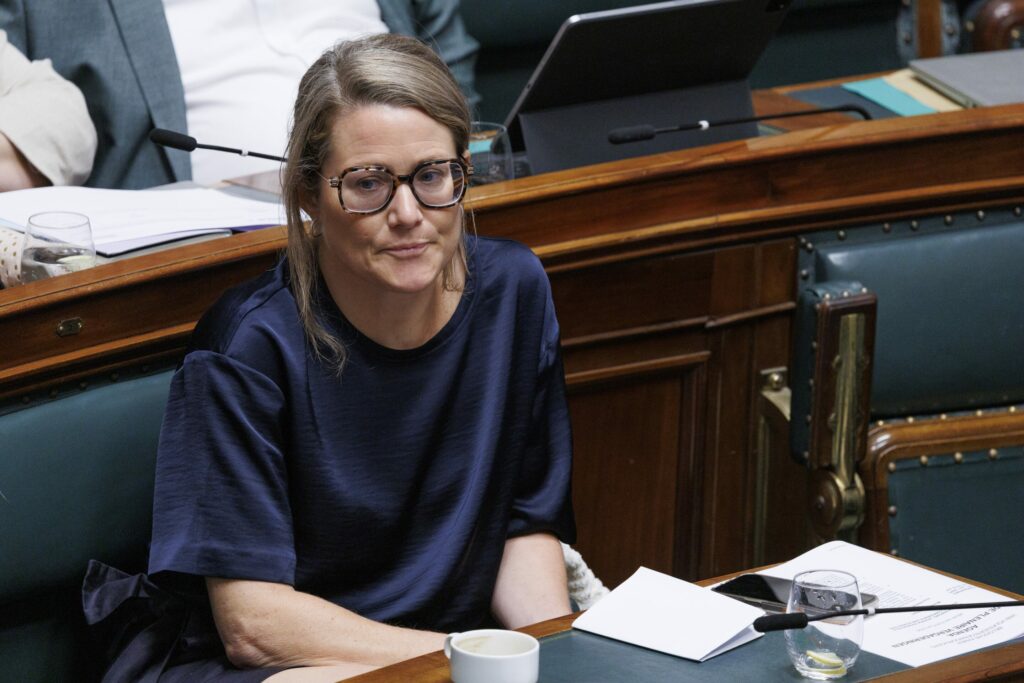
The debate over a proposed reform of Belgium's Council for Alien Law Litigation continued on Tuesday in Parliament’s Home Affairs Committee, with Asylum and Migration Minister Aneleen Van Bossuyt facing a barrage of questions from legislators.
The government had fast-tracked a bill aimed at overhauling the Council’s procedures, but a key provision concerning “confidential documents” sparked criticism from legal organisations nationwide.
Under the current rules, classified documents such as those issued by State Security are not accessible to judges.
Access to confidential materials
The reform would change this, granting judges in asylum and immigration cases access to confidential materials used by agencies such as the General Commissioner for Refugees and Stateless Persons, CGRA, or the Immigration Office.
These agencies would be able to request that sensitive materials be treated as confidential, meaning they would not be available to other parties.
The rationale is to prevent individuals challenging a decision — such as a refusal of asylum or an order to leave the country — from seeing intelligence about themselves, particularly if they are suspected of involvement in terrorism.
To safeguard the individual’s right to defence, the bill would permit their lawyer to review the confidential documents. However, the lawyer must obtain a security clearance from the National Security Authority, a process described as lengthy, intrusive, and bureaucratic.
Sharp criticism from legal associations
Lawyers with clearance would be granted access to classified information but prohibited from sharing its content with their clients.
This mechanism, expected to affect only about 15 cases annually, has drawn sharp criticism from legal associations.
Avocats.be and the Order of Flemish Bars sent a joint letter to the committee's chairperson last month, raising numerous concerns about the changes.
They emphasised that the changes would lead to the unequal treatment of cases, since access to classified documents would apply only to cases related to protection-status decisions, and not to other appeals handled by the Council.
They also argued that this differentiation could violate the Constitution.
Committee R calls for more clarity
Additionally, the lawyers question why restricted access is granted only when deciding whether a document should be treated confidentially and not during the substantive examination of the case.
The organisations also doubt the system’s practicality, stressing that lawyers would face formidable hurdles in obtaining security clearances.
The process could reportedly take up to a year, involve high costs, and require lawyers to consult classified materials in secure locations without the ability to take notes, they charge. Such conditions, they argue, are incompatible with effective legal advocacy.
The Council for Intelligence Oversight (Committee R) shares these reservations. In its assessment of the bill, the Committee flagged unresolved practical issues surrounding restricted lawyer access to classified documents, and called for further clarity.
Opposition objections
Legal associations had proposed an alternative framework based on rules used for trade secrets, but Minister Van Bossuyt admitted that this option had been dismissed during discussions.
Opposition parliamentarians voiced strong objections during Tuesday’s session.
Parti Socialiste (PS) legislator Khalil Aouasti criticised what he described as the government’s disregard for the concerns raised by legal bodies, calling it a departure from standard practice.
Valid concerns not addressed
Green MP Matti Vandemaele accused the majority of rushing the bill, a charge denied by Minister Van Bossuyt’s Nieuw-Vlaamse Alliantie (N-VA) party.
Even liberal parliamentarian Sandro Di Nunzio (Anders), supportive of the reform in principle, expressed surprise over the absence of adjustments to address valid concerns, including vague terminology and redundant articles.
The article-by-article debate, expected to remain contentious, resumes on Wednesday.
