
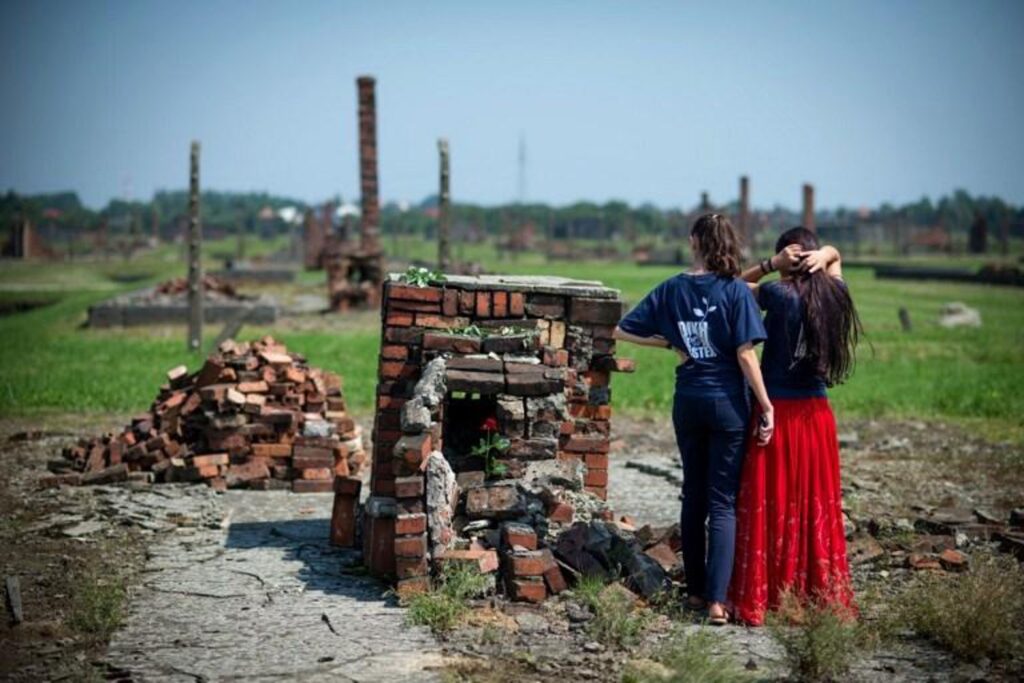
A memorial honouring the Roma people persecuted under Nazi rule will be built in Vienna, the Austrian fund for compensating victims of National Socialism announced on Thursday.
The fund said it was necessary to give proper recognition to a group of victims that had remained largely invisible in public awareness for decades.
Emmerich Gärtner-Horvath, head of the Roma Advisory Council, stressed that official remembrance must clearly acknowledge the persecution and murder of the Roma minority while addressing Austria’s role in these crimes.
A call for project submissions is set to begin this autumn.
The persecution of Roma was codified as early as 1935 in the Nuremberg Laws, which classified the group as belonging to “impure races.”
Around 4,000 Austrian Roma were deported to Lackenbach, where 237 died due to cold, disease, and physical abuse. Many others were sent to extermination camps such as Chelmno and Auschwitz in Nazi-occupied Poland.
Only 10% of the 11,000 Austrian Roma and Sinti, longstanding communities in Western European societies since the Middle Ages, survived.
At a European level, official recognition of the Roma genocide emerged slowly, beginning in the 1980s, driven by post-war activists. It was not until 2015 that 2 August was established as the 'European Holocaust Memorial Day for Roma.'
