
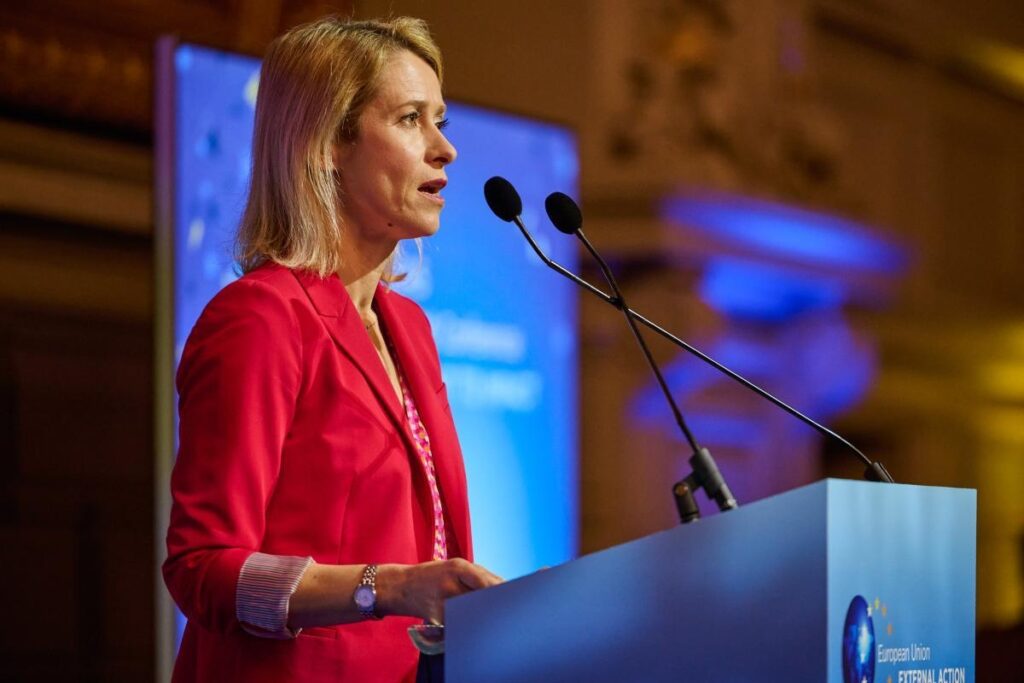
The European Union is considering a 21st package of sanctions against Russia that may cross previously established red lines, revealed European diplomacy chief Kaja Kallas on Friday.
Speaking on the second day of an informal EU summit in Nicosia, Cyprus, Kallas emphasised the need to re-evaluate restrictions that had previously blocked certain sanctions. She suggested exploring additional measures to increase pressure on Russia.
European leaders are largely supportive of advancing the new set of sanctions, said Kallas, following their discussions on bolstering support for Ukraine. The move aims to signal to Moscow that Ukraine matters deeply to the EU and that its commitment to backing Kyiv remains firm.
Over recent years, Hungary – under outgoing populist Prime Minister Viktor Orbán – secured exceptions to key sanctions, including an exemption from the EU’s embargo on Russian oil delivered via the Druzhba pipeline. Orban also succeeded in removing names from sanction lists, such as Patriarch Kirill of Moscow, leader of the Russian Orthodox Church.
Hungary’s longstanding resistance has shaped EU sanction decisions, but Orban lost re-election ten days ago. He skipped the Cyprus summit, marking his absence at a key EU event, and his successor, Péter Magyar, is expected to assume office before the next June summit in Brussels.
Related News
- Energy crisis and Ukraine top agenda at EU Council summit
- EU approves €90b loan for Ukraine as 2026 funding conditions emerge
Latvian Prime Minister Evika Siliņa highlighted the EU’s ability to achieve consensus and results despite complex and prolonged discussions. She stressed this as significant during challenging geopolitical times, sending an important message to the world, EU members, and the Union’s citizens.
Polish Prime Minister Donald Tusk noted a historical turn, observing that, for the first time in years, no Russian delegates were present at the summit. Tusk also referenced reports alleging that Hungary’s foreign minister, Péter Szijjártó, had previously shared sensitive EU information with Russia.
EU leaders see a unified sanctions front as critical to demonstrating strength and determination in the face of Russia’s aggression.
