
A European Commission statement marking 40 years since the Chernobyl disaster set out the EU’s long-running financial support for nuclear safety work in Ukraine.
Chernobyl’s reactor accident began in the early hours of 26 April 1986 during what was meant to be a routine test at the nuclear power plant, with design flaws and human error contributing to an explosion that released large amounts of radiation, the Commission noted in a release on Friday.
About 350,000 people were displaced in the years that followed, while around 600,000 men took part in containment operations.
The EU and Ukraine have worked together on nuclear safety since Ukraine became independent in 1991, with the EU financing more than €1 billion of nuclear safety activities in Ukraine since then, according to the Commission.
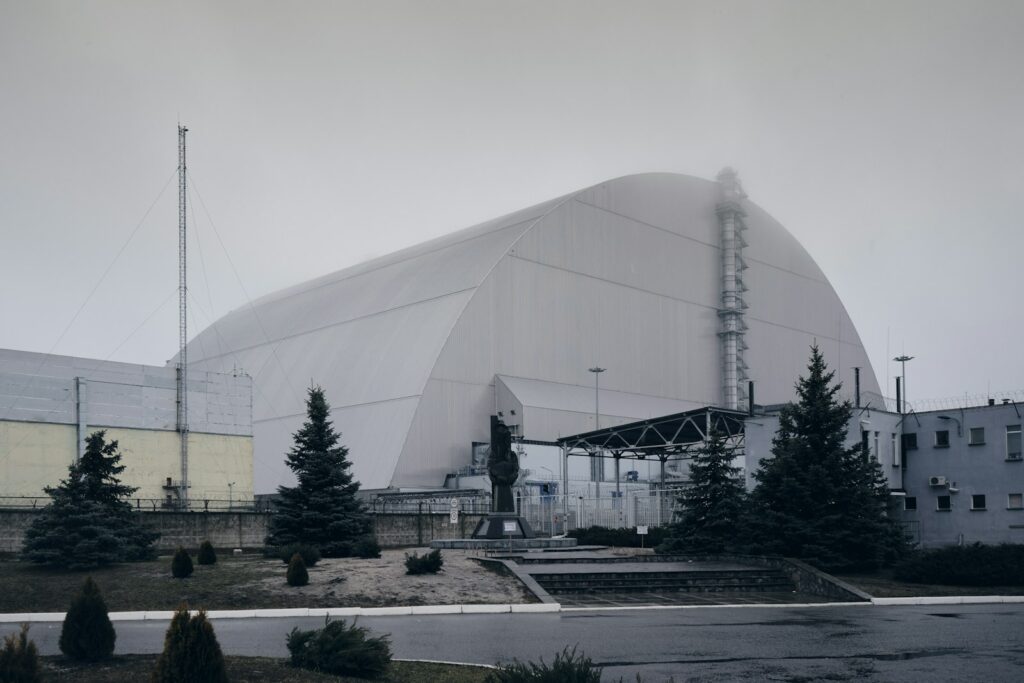
One of the largest contributions was €423 million for the New Safe Confinement — a giant arch built over the destroyed Unit 4 to prevent radioactive material leaking.
Repairs after drone strike
The New Safe Confinement was badly damaged by a Russian drone strike in February 2025, and the European Commission has allocated a further €37 million for restoration work, with the structure due to be returned to full functionality by 2030, it said.
The Commission also pointed to EU backing for the Industrial Complex for Solid Radwaste Management at Chernobyl, which treats, prepares and stores solid radioactive waste that is currently kept on the site.
Separately, the EU’s external assistance programme for nuclear safety, the European Instrument for International Nuclear Safety Cooperation (INSC) for 2021–2027, supports work on nuclear safety culture and the management of radioactive waste, as well as nuclear safeguards — measures designed to ensure nuclear material is used appropriately.
