
The decrease in the number of new Covid-19 infections recorded in Belgium has slowed down after dropping rapidly for weeks after the peak of the fifth wave was reached at the end of January.
Between 26 February and 4 March, an average of 6,066 new coronavirus infections were identified every day, a 9% decrease on the previous seven days, according to the figures published by the Sciensano Public Health Institute on Tuesday morning.
The Omicron variant currently accounts for just half of all cases in Belgium, down by 15% since last week, while the Omicron BA.2 variant is accounting for the other half.
The average number of PCR tests taken per day in the same period declined by 15% to 32,571.4. The positivity rate now sits at 20.5%, meaning around one in five tests have a positive result.
During the same week, an average of 18.1 Covid-19 patients died on a daily basis, down by 26% since last week. The total number of deaths in Belgium since the start of the pandemic amounts to 30,296.
The official death statistics also include people who died of another cause of death, but who happened to be infected, meaning they are an overestimate of the deaths caused by the virus.
Situation in hospitals
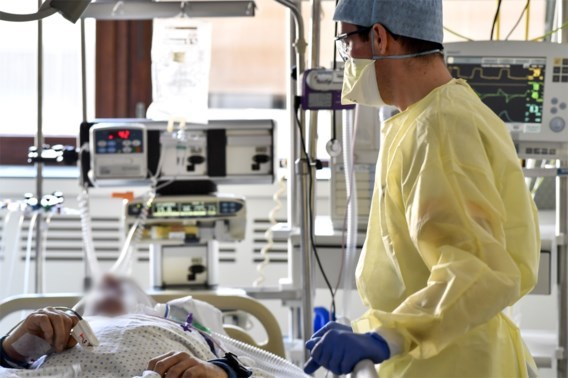
Between 1 and 7 March, an average of 141.3 patients suffering from Covid-19 were admitted to hospitals each day – a decrease of 1% on the seven days previous.
This number reflects how many people end up in hospital specifically because of the virus, not those who are admitted with another condition and then test positive for the coronavirus.
Related News
- CST and face masks: These rules change
- No more PLF: Belgium changes travel rules from 11 March
- Brussels starts offering booster doses to teenagers today
On Monday, a total of 2,069 people were in Belgian hospitals due to an infection, 89 more than on Sunday, of whom 206 were being treated in intensive care (-2) and 91 (-1) patients were on a ventilator.
This number covers all patients who tested positive for Covid-19, including those who were first admitted with a different condition.
On Monday, several coronavirus measures were dropped in Belgium as a result of the “favourable evolution of the epidemic conditions,” including the Covid Safe Ticket (CST) requirement and the face mask mandate.
Reproduction rate, incidence, and total vaccinations
The reproduction rate (Rt) has surpassed 1 again for the first time since the start of February. This figure represents the average number of people that contract the virus from each infected person, and when it is above 1, it means that the epidemic is gaining ground in Belgium.
The incidence (the number of new cases per 100,000 inhabitants) is continuing to drop and now sits at 772 over the past 14 days.
As of Sunday, almost 9.1 million people are fully vaccinated – 89% of Belgium's adult population and 79% of the total population.
Meanwhile, more than 7.04 million people have received a booster dose of a coronavirus vaccine, representing 75% of over-18s and 61% of the entire population. The majority of adults should have had the opportunity to get a booster dose by March 2022.
A study from the United Kingdom's Health and Security Agency (UKHSA) showed that booster vaccinations are estimated to have prevented 105,600 people from ending up in hospitals following a Covid-19 infection since mid-December.
