
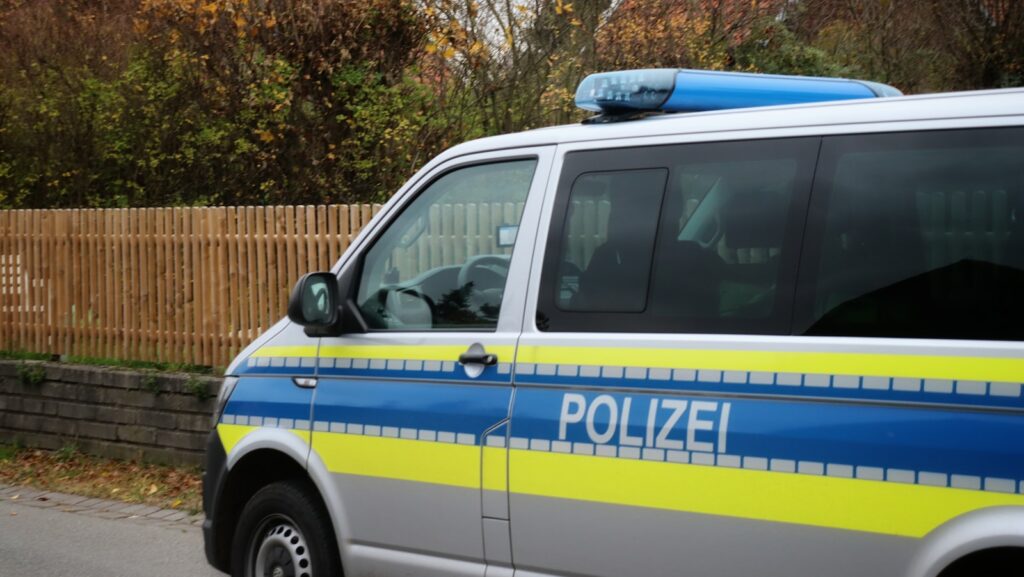
Swiss and German police have arrested 10 suspected members of the Nigerian criminal organisation known as Black Axe in coordinated raids across several Swiss cantons.
House searches were carried out on 28 April in the canton of Zurich and five other cantons, with residential and storage facilities among the locations searched, Europol informed on Tuesday.
Those detained include the group’s alleged “Regional Head” for Southern Europe.
The investigation was led by the Public Prosecutor’s Office II of the canton of Zurich alongside Zurich Cantonal Police and Zurich City Police, with support from other cantonal forces. Most of those arrested are of Nigerian origin.
The suspects are accused of offences including romance scams — fraud in which criminals build relationships online to extract money — and other cyber-enabled frauds that investigators say caused “millions of Swiss francs” in damage, as well as money laundering.
What Europol says about Black Axe
Black Axe is formally linked to the Neo-Black Movement of Africa and is described by Europol as a structured, hierarchical group with a global presence.
It divides its territory into about 60 zones in Nigeria and 35 abroad, with roughly 200 members per zone, giving around 30,000 registered members in total.
Europol said the network is known for involvement in cyber-enabled fraud, drug trafficking, human trafficking and prostitution, kidnapping, armed robbery and “fraudulent spiritual practices”.
Its annual criminal proceeds are estimated to be in the billions of euros, generated through many small-scale operations.
The Swiss investigation was conducted with Europol’s support as part of cross-border cooperation, including information analysis and a “data sprint” held in Madrid.
The operation was supported by the EU-funded @ON Network project led by Italy’s Antimafia Investigation Directorate.
