
Goeiemiddag, bonjour everyone!
Maïthé Chini here, ringing in another week of TBT's Belgium in Brief newsletter.
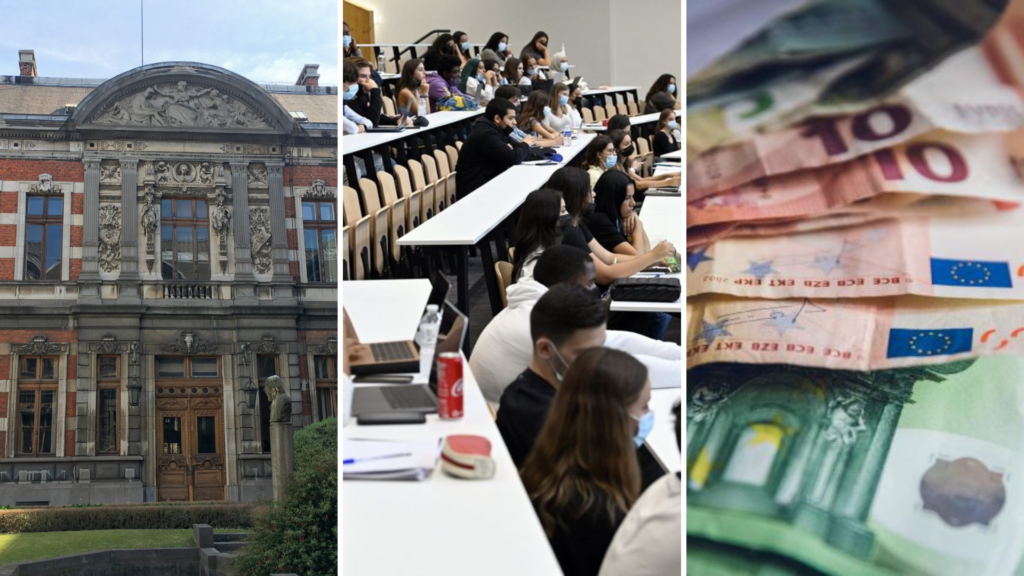
How much are you willing to pay for a good education? And what about if you had to move to Brussels from outside the EU for it? As a result of budget cuts by the Flemish Government, tuition fees for some students in the European capital will soar from next school year.
For students from outside the European Economic Area (non-EEA) coming to study at the RITCS arts school for audiovisual art, drama, theatre and sound in Brussels, fees are rising to €17,500 per year.
As a result, there is a real risk that talent from outside Europe will be deterred from pursuing an arts education in Brussels. In fact, two students who were recently admitted are now in danger of being unable to start their studies.
Therefore, the school is starting a crowdfunding campaign to raise €50,000 to keep the coming two years affordable for those already selected. More information on the cuts and their impact, as well as the crowdfunding, can be found here.
Today, we also have an overview of the rights and obligations for asylum seekers coming to Belgium.
The country's ever-evolving asylum policy has been back in the news after the European Court of Human Rights condemned the Federal Government for failing to provide shelter to asylum seekers. Reza Farsi Madan tells you more about asylum seekers' rights beyond the issue of accommodation.
You may have missed it over the long weekend, but our reporter Kosmos Khoroshavin went exploring the Brussels municipality of Forest – slightly under the radar, but with a little spice to it.
While the municipality in the south of Brussels is often overlooked in favour of nearby Saint-Gilles or even Ixelles, Kosmos found that it boasts large parks, charming architecture and a high quality of life. Additionally, it is also developing a quirky artistic core.
Also over the weekend, our reporter Léa Huppe reported on an unexpected initiative hiding behind a discreet courtyard just a few hundred metres from the bustle of Avenue Louise, in a quiet side street in Ixelles.
Behind the doors of the Anglican church on Rue Capitaine Crespel, the charity Community Kitchen prepares thousands of meals every week for people in need across Brussels. You can read Léa's reporting here.
Lastly, a new month started while you were hopefully enjoying the sun on Friday – meaning a number of new measures and rules are coming into force across Belgium. Take a look at what's changing.
And as always, if you have any comments, tips or suggestions to improve our coverage, drop me an email at m.chini@brusselstimes.com.
Have a good one!
Maïthé Chini
Belgium in Brief is a free daily roundup of the top stories to get you through your coffee break conversations. To receive it straight to your inbox every day, sign up below:
1. Tuition fees for non-EU students set soar to ‘unaffordable’ levels at Brussels universities
"Talented students are dropping out. Not because they are not good enough, but simply because they cannot afford it." Read more.
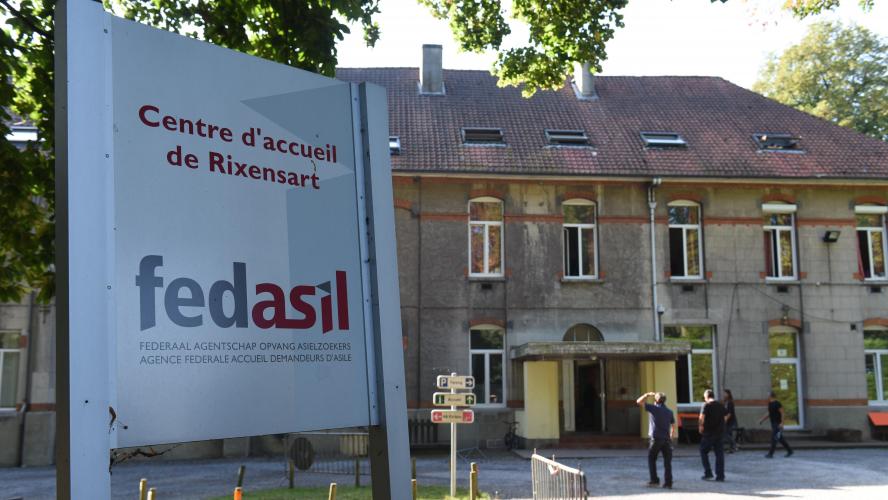
2. What are the rights and obligations of an asylum seeker coming to Belgium?
The European Court of Human Rights recently condemned Belgium for failing to provide shelter to asylum seekers. Read more.
3. Belgium lags behind EU average in women’s employment rate
Across Europe, the employment rate of women now stands at 71%. Read more.
4. Small country, big surprises: A guide to Belgium’s overlooked treasures
Weekend Break writer Angela Dansby walked 1,000 kilometres and visited nearly 100 destinations for her new book. Read more.
5. Driver who killed 7 people at Walloon carnival faces up to 30 years in jail as trial begins
In March 2022, Paolo Falzone drove his BMW at over 170 km/h into a folk parade, killing seven people and injuring dozens. Read more.
6. No blockades at Bpost for the first time since the start of the postal strike
All distribution centres, including those in Brussels, are now functioning without disruptions. Read more.
7. Liège synagogue reopens behind closed doors, almost a month after terrorist attack
The synagogue had been closed to the public since the explosion in early March. Read more.
