
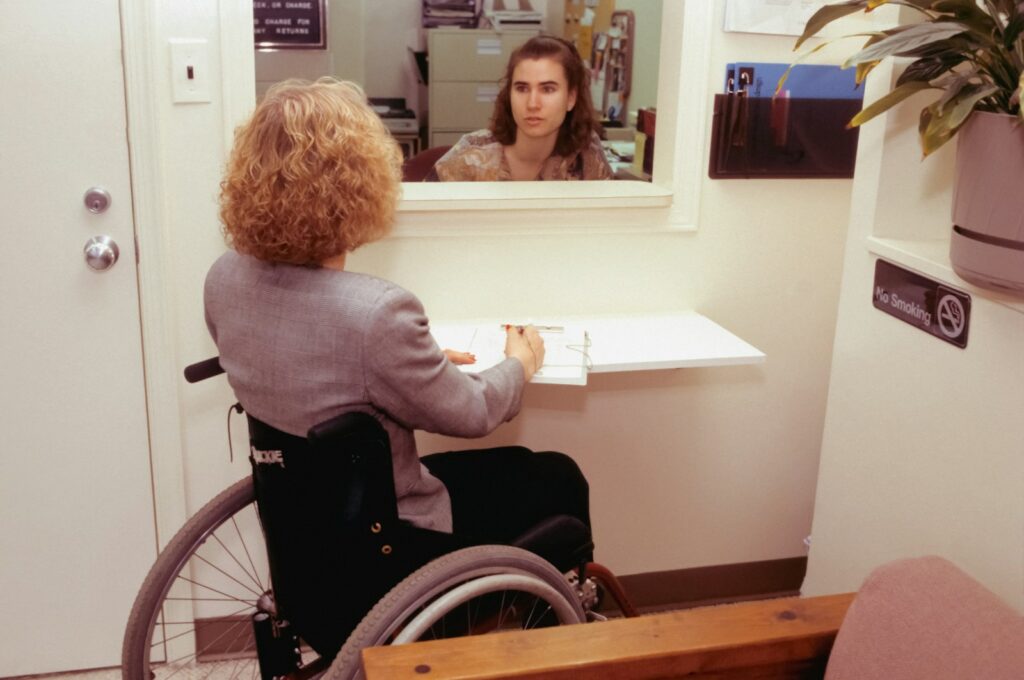
People with disabilities in the EU were more than twice as likely as those without disabilities to say they felt discriminated against when dealing with administrative offices or public services in 2024.
In 2024, 9.4% of people aged 16 or over with disabilities — defined as having an activity limitation — reported discrimination in contacts with administrative offices or public services, compared with 4.0% of people without disabilities, Eurostat informed on Monday.
The gap was also reported in other everyday situations, with 8.2% of people with disabilities saying they felt discriminated against when looking for housing, compared with 5.2% of people without disabilities.
In public spaces, 5.0% of people with disabilities reported feeling discriminated against, compared with 3.0% of people without disabilities. In education institutions, the figures were 4.1% and 2.3% respectively.
Differences between EU countries
Across all EU countries, the share of people with disabilities who said they felt discriminated against in administrative offices and public services was higher than among people without disabilities, Eurostat said.
The highest reported rates among people with disabilities were in Estonia (14.6%) and Spain (14.5%) in 2024, followed by Belgium (12.8%), the Netherlands (12.5%) and Sweden (12.3%).
The lowest shares were recorded in Cyprus and Italy (both 3.1%), Croatia (4.3%) and Hungary (4.5%).
Eurostat said the figures were published to mark the start of EU Diversity Month.
