
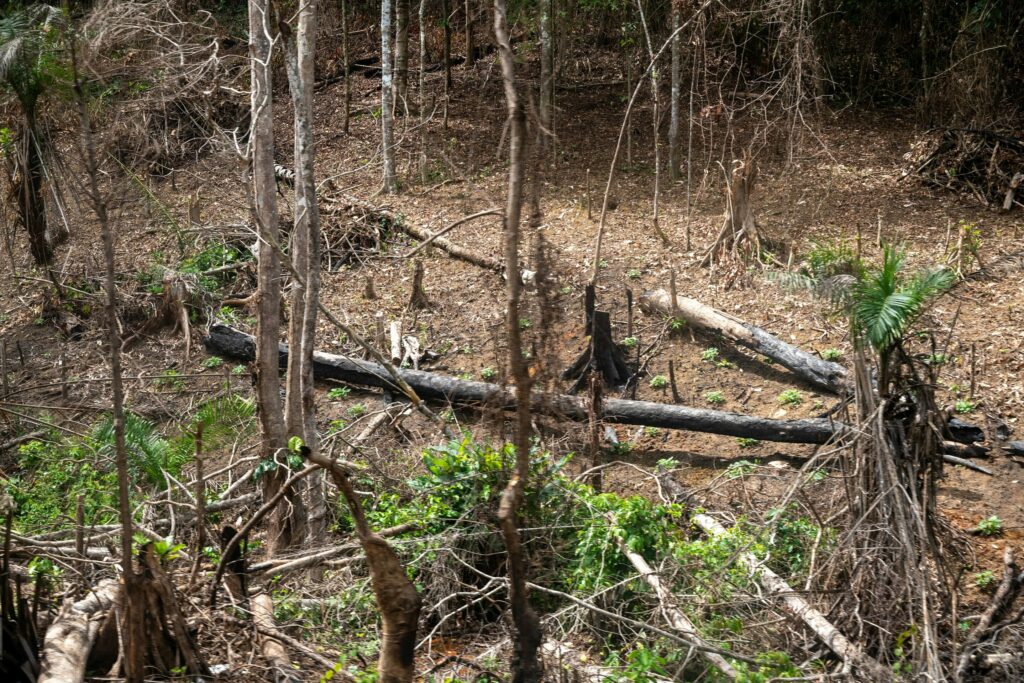
The European Commission has proposed changes to the EU's deforestation law by excluding certain products such as leather, drawing criticism from environmental organisations.
The law requires importers of soya, beef, cocoa, coffee, and related products to prove that their supply chains do not contribute to the destruction of the world's forests.
Originally planned to take effect at the end of 2024, it has faced multiple delays and is now scheduled to be effective from late 2026 for large companies and from 30 June 2027 for smaller firms.
On Monday, the Commission took a step forward by releasing a report aimed at simplifying the regulation and outlining measures for its smooth and effective implementation.
The proposal suggests excluding products like leather, coated tyres, and certain packaging materials from the regulation’s scope. However, items such as palm-oil-based soap and instant coffee are recommended to fall under the law’s provisions.
Greenpeace and WWF expressed relief that the law could still come into force by the end of this year but strongly criticised the proposal to remove leather and related products linked to deforestation from its coverage.
Greenpeace accused the Commission of yielding to pressure from fashion industry lobbyists, while WWF called the decision “worrying,” stating that it sends a signal that products posing significant environmental risks are being overlooked.
Leather is intimately tied to the livestock sector and contributes notably to deforestation, particularly in the Brazilian Amazon, Greenpeace argued.
Between 2001 and 2022, the expansion of grazing areas for livestock accounted for 42% of global agricultural deforestation, destroying a forest area equivalent in size to Spain.
