
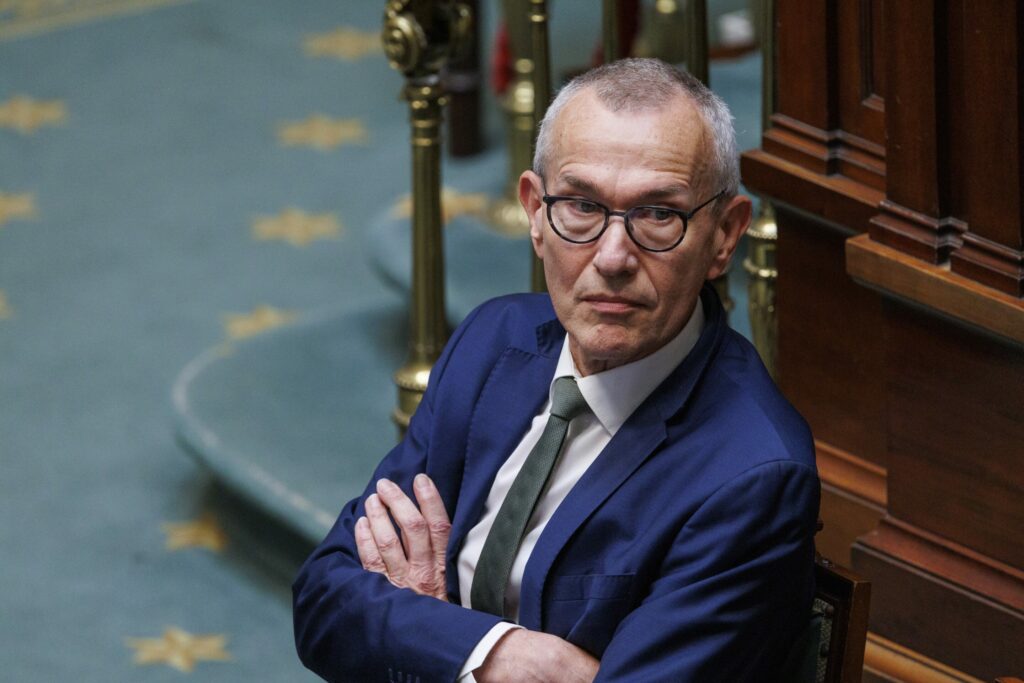
Belgium's Federal Minister for Social Affairs Frank Vandenbroucke (Vooruit) finalised a new anti-poverty plan.
The plan is intended to address reforms such as the time limit on unemployment benefits, which "could have a short-term impact on the income of people who have been living on benefits for a long time," he said. "We do not want to gloss over that fact."
At present, around one in ten people in Belgium is at risk of poverty. Vandenbroucke's plan, which was also reported by De Morgen on Tuesday, focuses primarily on activation, because "work is the most powerful way out of poverty".
Therefore, not only the long-term unemployed but, from now on, all those on social assistance will be entitled to a GPMI (Individualised Project for Social Integration) – in other words, individual support towards employment.
The Public Welfare Centres (CPAS/OCMW) will receive additional funding for this. An extra €50 million will also be allocated each year to the social economy for people with a work disability.
A second key focus is the debt sector. Here, Vandenbroucke aims to limit collective debt mediation to five years. Currently, according to the National Bank, such a process takes between six and nine years for a large group of debtors in Belgium – a relatively long time compared to neighbouring countries.
By shortening the term, people can make a fresh start more quickly, according to the minister. Households in debt must also receive better support to gain a clear picture of their financial situation.
The Child Maintenance Agency which helps parents facing difficulties in receiving child maintenance payments (DAVO) is being reformed so that the agency will, from now on, intervene automatically in the event of problems rather than only on request.
There is no scope for measures that cost a lot of money. "The budgetary margins are tight," said Vandenbroucke, adding that the government will not touch the indexation of the lowest wages and benefits or the minimum pension for vulnerable elderly people.
