
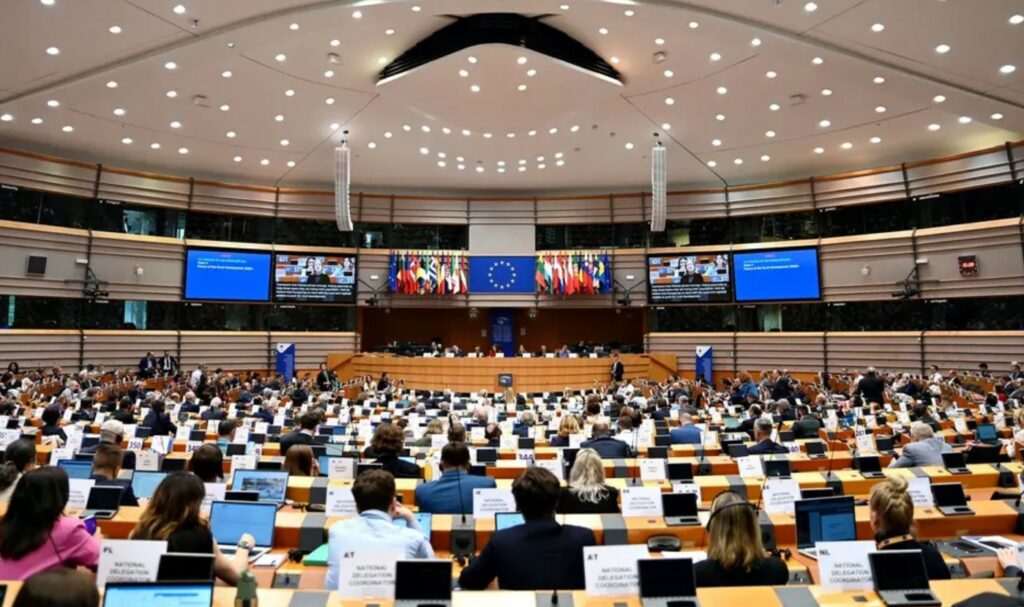
Local and regional leaders in the European Committee of the Regions have called for EU cohesion funding after 2027 to remain predictable and available to all regions, warning against reforms they say would centralise decisions in national capitals.
The Committee of the Regions (CoR), an EU advisory body representing local and regional authorities, adopted three opinions unanimously on proposals linked to the EU’s next long-term budget for 2028 to 2034, the CoR said in a statement on Wednesday.
They respond to European Commission ideas that include creating a single large fund merging cohesion, agricultural, fisheries and other programmes, to be managed through National and Regional Partnership Plans (NRPPs).
The committee said member states should be required to consult regions and cities while preparing NRPPs, through what it called “multilevel governance assessments”. Where this does not happen, regions and cities should be able to trigger a new “subsidiarity clause” — notifying the European Commission so it can reject what the committee described as overly centralised plans.
It also called for cohesion policy to have defined allocations for all categories of regions — less developed, in transition and more developed — rather than being limited to poorer areas.
Opposition to a ‘single pot’ approach
The Committee of the Regions rejected the idea of turning NRPPs into a “single pot of money” controlled by Member States, arguing instead for clearly allocated budgets for existing EU funds, including the European Regional Development Fund and the Cohesion Fund, according to the statement.
It said the European Social Fund should remain part of cohesion policy with its own dedicated allocation.
The committee also proposed that at least 20% of cohesion policy, rural and fisheries allocations should be spent through “integrated territorial development strategies” — including tools such as community-led local development and LEADER, an EU scheme that supports local rural projects — to keep investment focused on local needs.
On proposals to simplify how EU spending is monitored, the organisation said it supported the objective but called for safeguards, including a cross-cutting “do no harm to cohesion” principle requiring EU policies not to undermine territorial cohesion.
The committee also raised concerns about a proposed shift in cohesion policy towards payments based on achieving milestones and targets rather than reimbursing eligible costs, warning of complexity if both systems run in parallel.
Vasco Alves Cordeiro, a co-rapporteur on the NRPP fund regulation opinion, said the committee wanted legally binding guarantees on consultation and subsidiarity, including dedicating 20% of relevant funding to “bottom-up instruments”, according to the statement.
Emil Boc, another co-rapporteur, said cohesion policy should remain “a policy for all regions.”
