
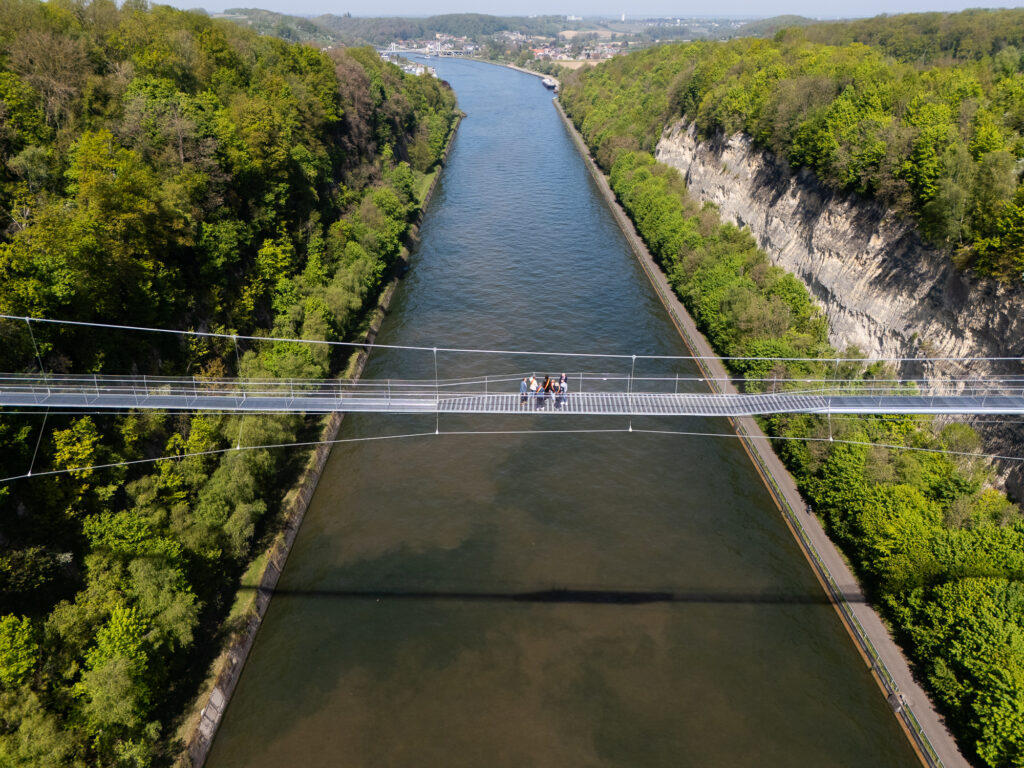
La Passerelle de Caster, or Caster footbridge, in the Walloon city of Liège, is now finally open to the public. Spanning the Albert Canal between Bassenge and Visé, it is the tallest footbridge in the Benelux, offering spectacular views across the horizon.
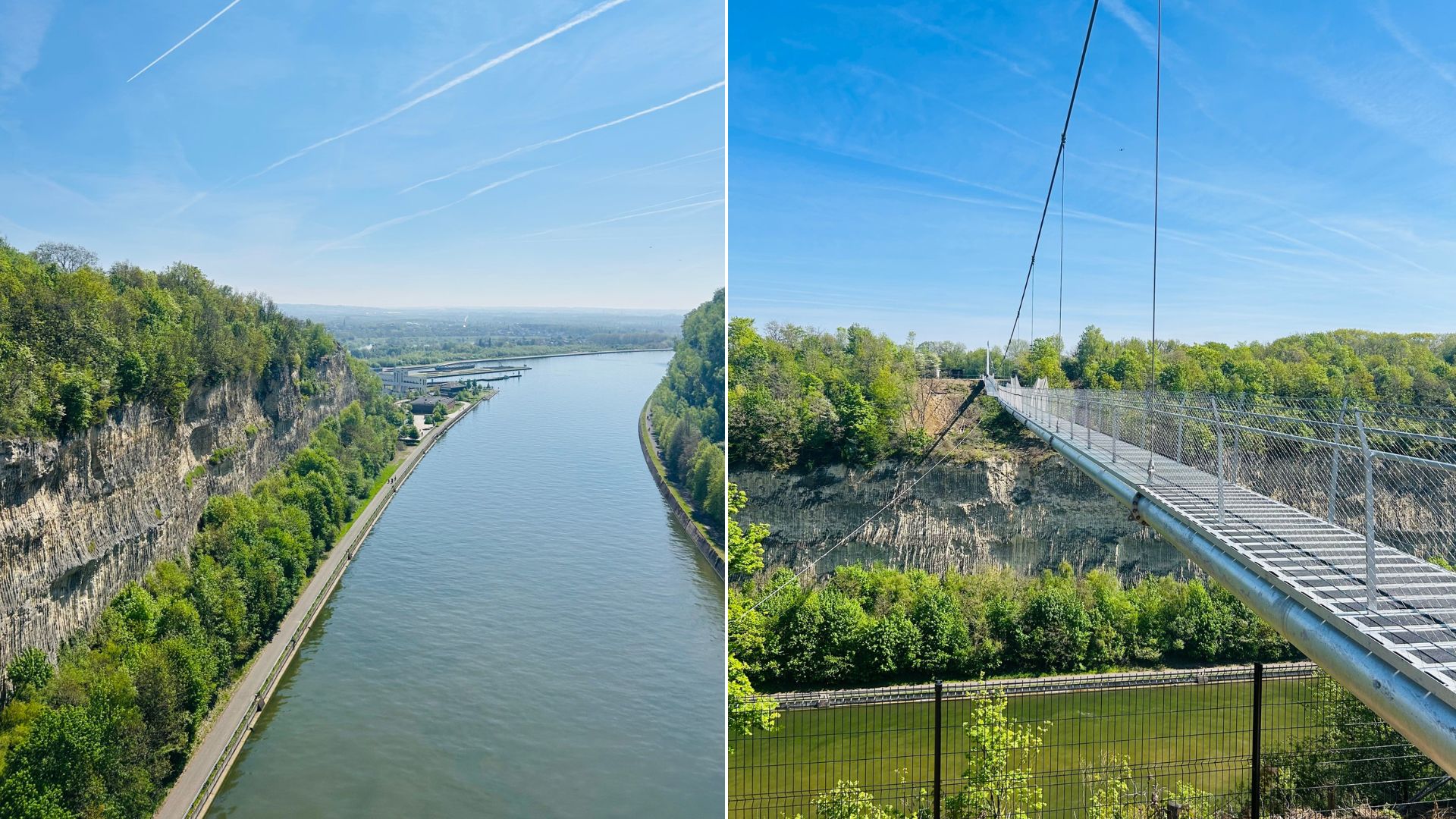
Set against a breathtaking backdrop, a stroll along the Caster footbridge offers a stunning 360° panoramic view of the green valleys of the Geer & Meuse Border Park and is the best way to discover new hiking routes in the province of Liège, So Soir reports.
Non-profit Vialta, which launched the initiative, said that defending and protecting nature is at the heart of the project.
"The Caster footbridge is a structure designed to connect regions, communities and countries whilst protecting and preserving the exceptional natural environment, fauna and flora found on the Caster plateau and in the Montagne Saint-Pierre nature reserves," Jérôme Vandermaes, who runs the non-profit, told The Brussels Times.
"The Caster footbridge is not an attraction in itself but should be seen as a link between major tourist sites in our region," he added, citing Fort Eben-Emael, the ENCI quarry and the Lanaye spawning ground.
Measuring 50 metres in height and 195 metres in length, the bridge is a "feat of engineering", according to Vandermaes, and has been named the tallest walkway across Belgium, the Netherlands and Luxembourg. It is supported by a single suspension cable connecting its two pylons, with a walkway in the centre that widens from 1.2 metres to 2.5 metres.
A hiking haven
The footbridge connects Bassenge and Visé, which were previously separated by the Albert Canal, which until then had divided the Montagne Saint-Pierre hiking area. Now, new hiking routes which use the footbridge cross this part of Wallonia and extend into Flanders, all the way to the Netherlands.
"The Caster footbridge is not a destination in its own right but should be included as part of a wider tour of the region. That is why we have created four new circular walking routes that include it," Vandermaes said.
"We invite all visitors to enjoy the region and even to spend several days exploring it. Our border park is brimming with treasures that are far too little known."
Credit: LiègeTogether
The Caster footbridge was designed to serve as a hub for a wider network aimed at revitalising the region. Only one 6.5 km circuit is currently available and accessible, but three more will be available by the end of May. Cars and other vehicles cannot use the bridge; it is reserved only for pedestrians.
Crossing the suspension bridge costs €3, and the number of daily visitors is limited to a maximum of 1,000 people. Another ticket is also required when returning via the bridge.
"By paying the €3 entry fee, each visitor helps fund the maintenance, conservation and expansion of the natural areas of Montagne Saint-Pierre," Vandermaes said. To date, just over 10,000 people have crossed the bridge.
