
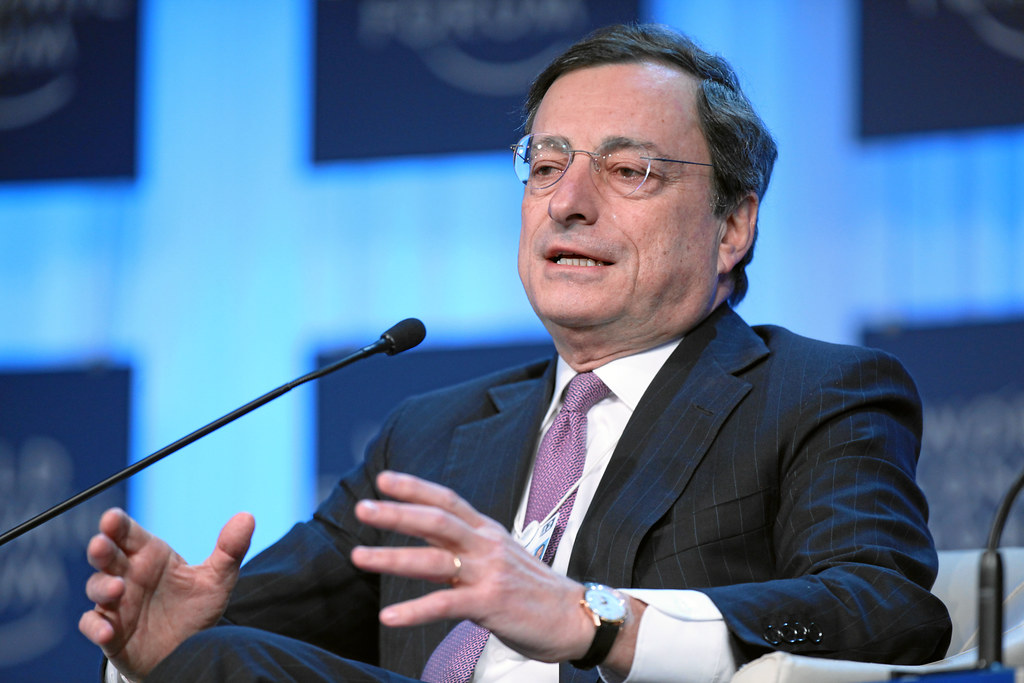
Mario Draghi, the former president of the European Central Bank, received the Charlemagne Prize in Aachen on 14 May for his role in supporting European unity.
Draghi is best known for leading the ECB from 2011 to 2019, during the eurozone debt crisis, and for pledging the institution would do “whatever it takes” to preserve the euro, the ECB said.
He previously served as governor of the Bank of Italy from 2006 to 2011, after earlier work as an economics professor and roles at the World Bank and Goldman Sachs, according to background details published alongside the award announcement.
After leaving the ECB, Draghi became Italy’s prime minister in 2021 and served for around 20 months before resigning after losing parliamentary support.
From central banker to Italian prime minister
In 2024, Draghi published a report on the European Union economy containing 383 recommendations, including measures related to cross-border collaboration, investment in technologies such as artificial intelligence and semiconductors, and closer integration of capital markets.
The International Charlemagne Prize of Aachen has been awarded almost every year since 1950 to an individual or institution recognised for contributing to European unity.
Previous recipients have included Winston Churchill, Helmut Kohl, Angela Merkel and Ukrainian President Volodymyr Zelenskyy and the Ukrainian people.
Congratulated by Lagarde
European leaders must strengthen the EU’s institutions to match today’s geopolitical and economic pressures, ECB chief Christine Lagarde said in a speech honouring Draghi in Aachen.
Speaking at a dinner ahead of the Charlemagne Prize ceremony, Lagarde praised Draghi’s role in European policymaking — from helping to negotiate the Maastricht Treaty as Director General of the Italian Treasury to leading the ECB during the sovereign debt crisis.
Draghi’s 2012 pledge to do “whatever it takes” to preserve the euro, within the ECB’s mandate, proved a turning point during the crisis, Lagarde said.
The euro is the single currency used by 21 EU countries, while the ECB sets monetary policy for the euro area.
She stated the period after that intervention “bought Europe time” to reinforce fiscal rules, create new crisis mechanisms and begin building a banking union.
‘The work unfinished’
Lagarde said more recent shocks have tested Europe’s existing framework, citing the pandemic’s impact on supply chains, Russia’s invasion of Ukraine and Europe’s exposure to energy supply disruption, as well as rising industrial and geopolitical competition between the United States and China.
She pointed to a Draghi report on European competitiveness — referenced in connection with the Charlemagne Prize — which she said highlighted weaknesses including an incomplete single market, fragmented energy markets, segmented capital markets and defence industries split along national lines.
Draghi can identify the problems and “concentrate minds”, but building missing European institutions is the responsibility of Europe’s political leaders, Lagarde said.
She urged them to act on that diagnosis, adding that leadership alone is not enough without institutions that endure.
