
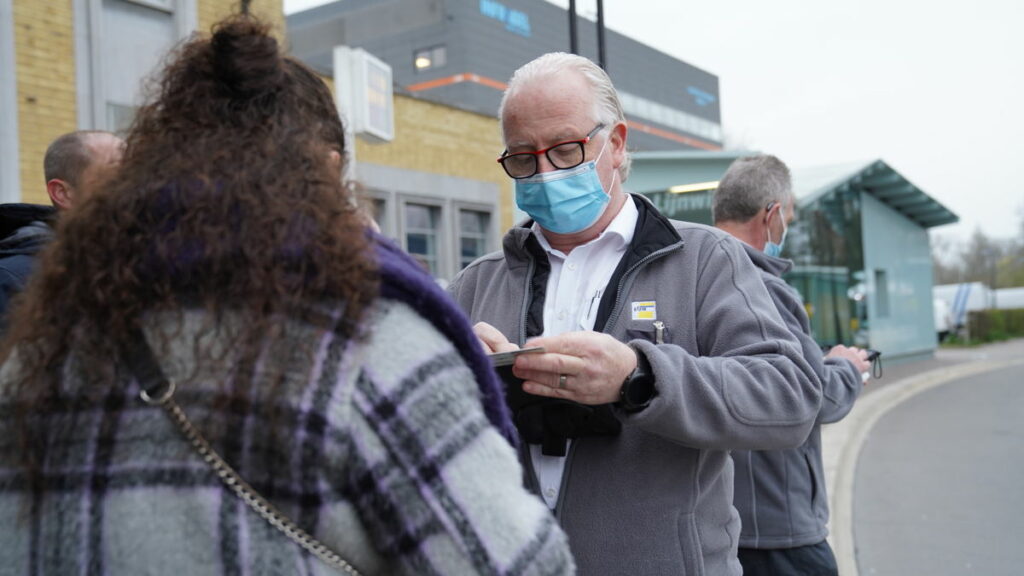
Flemish public transport operator De Lijn has announced it will be cracking down on people who ride its buses or trams without paying the fare, citing an increasing number of violations on its transport routes.
During the pandemic, when Covid measures on public transport were at their most strict, the number of checks being carried out decreased, resulting in the number of passengers riding on buses and trams for free reaching a record high, and De Lijn seeing its income decrease.
"We have noticed that some of our passengers see boarding at the back as a reason not to pay. Fare dodging reduces our revenue and thus our quality. With an extra campaign and more checks, we are now making a fist: undeclared riding is anti-social behaviour," Ann Schoubs, general manager of De Lijn, said in a statement.
Extra controls
During previous checks in urban areas, inspectors found that up to half of all travellers did not pay for their journey correctly. In rural areas, this number is slightly lower but still higher than before the pandemic started, up to 10-15%.
"The figures on unpaid fares are absolutely unacceptable. De Lijn will therefore increase its checks in the coming weeks. That way, we want to reduce unpaid journeys and thank the travellers who pay correctly," Flemish Minister of Mobility and Public Works, Lydia Peeters, stated.
Related News
- Highest numbers of STIB passengers since Covid-19 outbreak
- STIB to step away from using word 'black' in terminology for fare-dodgers
From the Easter holidays onwards, the company will drastically increase the number of checks it carries out to tackle the issue. Driving without a valid ticket can result in fines, varying from €50 to €400.
De Lijn also launched a campaign earlier this month to make it clear that a valid ticket must be purchased before starting the journey, that it should always be validated, and that the passenger must keep the ticket until the end of the journey. Tickets can be purchased via an electronic card, through the De Lijn app, or by text message.
