
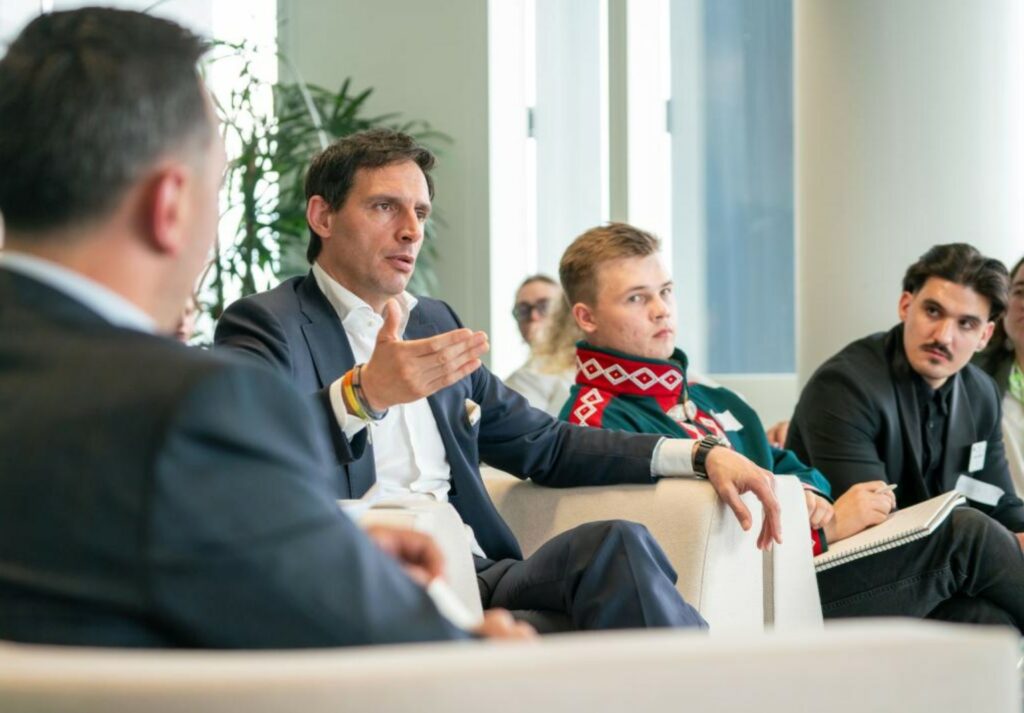
Seventeen young people from across Europe met two European Commissioners in Brussels on 7 May to discuss climate resilience and preparedness.
The discussion brought together Wopke Hoekstra, Commissioner for Climate, Net Zero and Clean Growth, and Glenn Micallef, Commissioner for Intergenerational Fairness, Youth, Culture and Sport, alongside participants from fields including farming, engineering, research and climate advocacy, the European Commission reported in a release on Monday.
Attendees shared accounts of climate impacts affecting their communities, including changes in the Arctic and pressure on coastal ecosystems and farming livelihoods.
“My farm has been in my family for a long time. We don't own the resources — we borrow them. We need to pass the world on to the next generation,” participant Jens Bartens from Norway said.
Hoekstra stated people tend to respond more readily to threats that feel close in distance and time, adding: “The cost will be higher if we do nothing.”
The participants also raised concerns about a gap between climate goals and the capacity of farmers to invest in resilience, and discussed nature-based solutions and vulnerabilities in Europe’s energy distribution networks.
Education, disinformation and political engagement
The conversation later turned to climate education, reaching people who are not yet engaged with climate action, and countering disinformation, the Commission said.
Some participants described young people losing optimism and being afraid to engage with climate politics.
“We need not only to do advocacy work, but also to take a step back and find ways to make young people engage more in the first place,” said participant Maria João Monteiro Marques from Portugal.
Micallef told the participants it was political leaders’ responsibility to ensure young people do not lose hope, and encouraged them to run for office and use available platforms.
“Youth should be around the table. We young people should inherit a world that is made by young people,” he said.
The Commission noted the dialogue would feed into work on a European Integrated Framework for Climate Resilience, expected to be adopted in the second half of 2026.
The framework is described by the organisation as an effort to embed resilience across EU policies and address the needs of those most vulnerable to climate impacts.
