
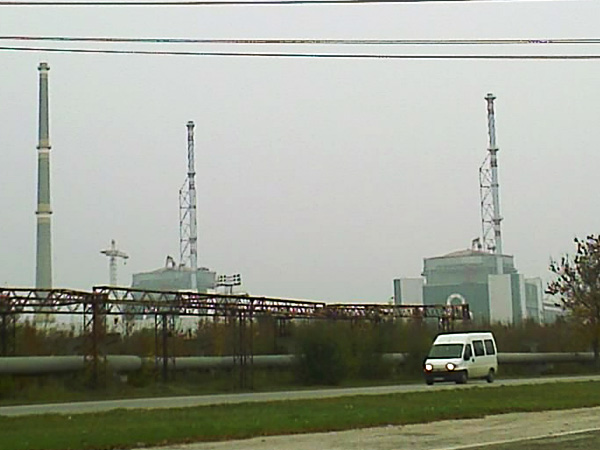
Nuclear power plants produced 23.3% of the European Union’s electricity in 2024, with generation up 4.8% compared with the previous year.
Nuclear reactors are currently operating in 12 EU countries: Belgium, Bulgaria, Czechia, Spain, France, Hungary, the Netherlands, Romania, Slovenia, Slovakia, Finland and Sweden.
Slovenia’s plant is co-owned with Croatia, the European Commission noted in a release issued on Tuesday.
France and Slovakia had the highest reliance on nuclear power for electricity in 2024, at 67% and 62% respectively.
The Commission said EU countries decide their own energy mix, but all have committed to phasing out fossil fuels.
Waste, safety and what “fusion” means
A person using only nuclear-generated electricity over a lifetime would account for about 2 kg of spent fuel and up to 100 kg of radioactive waste, the Commission said.
It added that spent fuel and high-level waste — 0.2% of radioactive waste by volume — require disposal deep underground in geological formations.
Finland’s Onkalo repository is located more than 400 metres underground in bedrock.
The EU’s legal framework for nuclear safety and safeguards is based on the Euratom Treaty and related legislation, the Commission said, covering areas including nuclear safety, radiation protection, security and non-proliferation.
It stated all EU nuclear reactors underwent safety “stress tests” after the Fukushima accident in 2011, to assess resilience against extreme natural hazards and other risks.
The Commission also pointed to ongoing work on nuclear fusion — a different process from today’s nuclear fission reactors — describing it as combining atoms rather than splitting them.
The EU is the biggest contributor and host of ITER, a large experimental fusion project under construction in southern France, which aims to show that a large-scale fusion reactor can produce more energy than it consumes.
