
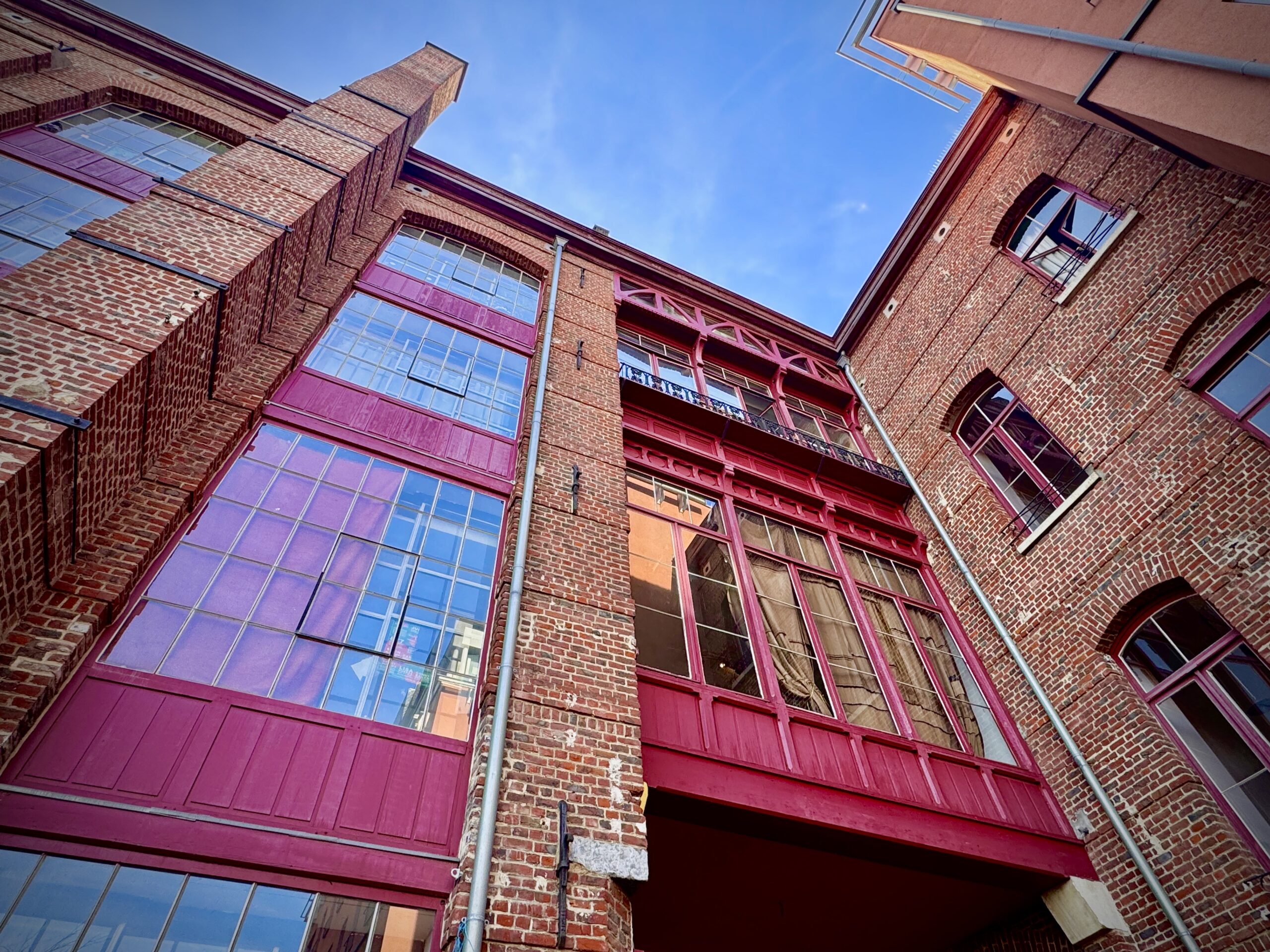
From the street, one sees only the red brick facade of an ordinary Belgian townhouse, its large wooden gateway giving little hint of what lies beyond. Yet Rue de la Charité, an unassuming street just off the small ring, in Saint-Josse-ten-Noode, and the surrounding neighbourhood were once known as the Montmartre of Brussels, a nod to the Parisian district that housed artists such as Monet, Renoir and Van Gogh.
Stepping through the carriage gate of number 37, a narrow alley, the Impasse de la Palette, cluttered by bicycles and various odds and ends from wood lats to flowerpots, opens up. It leads to a picturesque garden alongside three towering industrial buildings visibly steeped in history.
Some 30 artists currently live and work here as part of the Ateliers Mommen, the only surviving artist housing complex in Belgium and one of the last of its kind in the world: 3,000 square metres of artist social housing in a former factory dedicated to creators of all disciplines.
Residents range from those who have spent several decades on site to younger ones, such as Eloise Lega Breyssens from the Walloon countryside, who moved in less than a year ago. The 29-year-old’s work, which has been shown at Botanique and Aachener Kunstverein, encompasses engraving, photography, video, sound and sculpture, exploring the notion of absence and the passage of time.
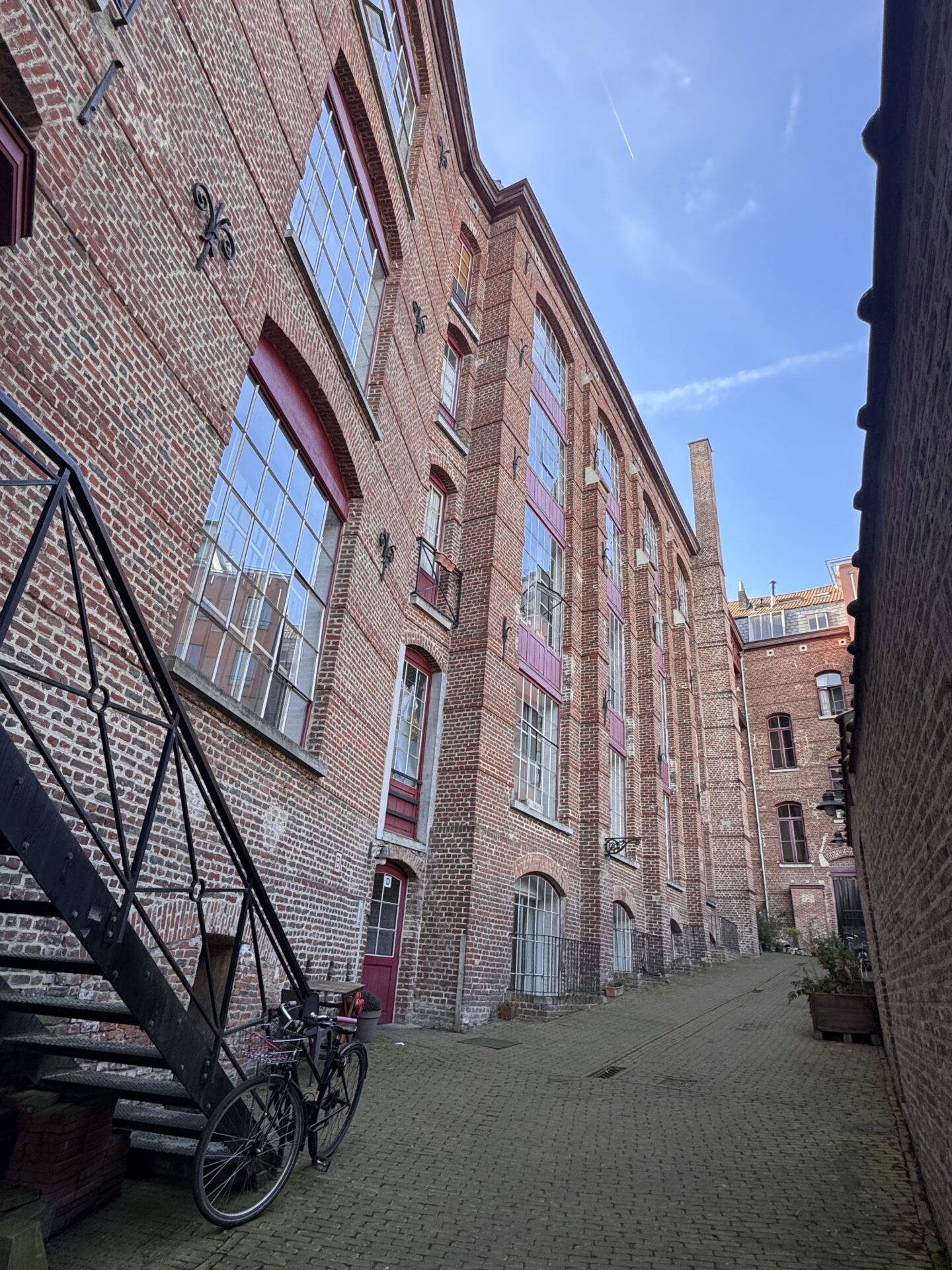
Ateliers Mommen in Saint-Josse, Brussels. Credit: Sarah Schug
Her loft-style apartment-slash-workplace stretches over 120 square meters, featuring a living as well as an art studio area, surrounded by large windows that let the light flood in: just ideal for an artist’s needs. “It allows me to pursue my projects without worrying about storage space or having to move,” she says. “I can unpack my bags and claim a space without thinking about the next step. It gives me a wonderful peace of mind. It’s paradise.”
Through the gate, another world
Indeed, being able to work in long-term, stable conditions has become a luxury for artists. In Brussels, as pretty much everywhere, most artist studios are ephemeral and have an expiration date, set up in defunct buildings awaiting renovation. Plus, they are an additional expense to one’s apartment - one that many artists just cannot afford.
“I was looking for a studio that wasn’t temporary,” says Guillemette Ridet, 29, a French visual artist who found her home at Ateliers Mommen more than two years ago. Here, she has the space to explore her practice at the crossroads of editorial and sculptural forms, investigating disappearance and what remains. There’s even enough room for three large machines: an office printer, a paper-cutting machine, and a cardboard cutter.
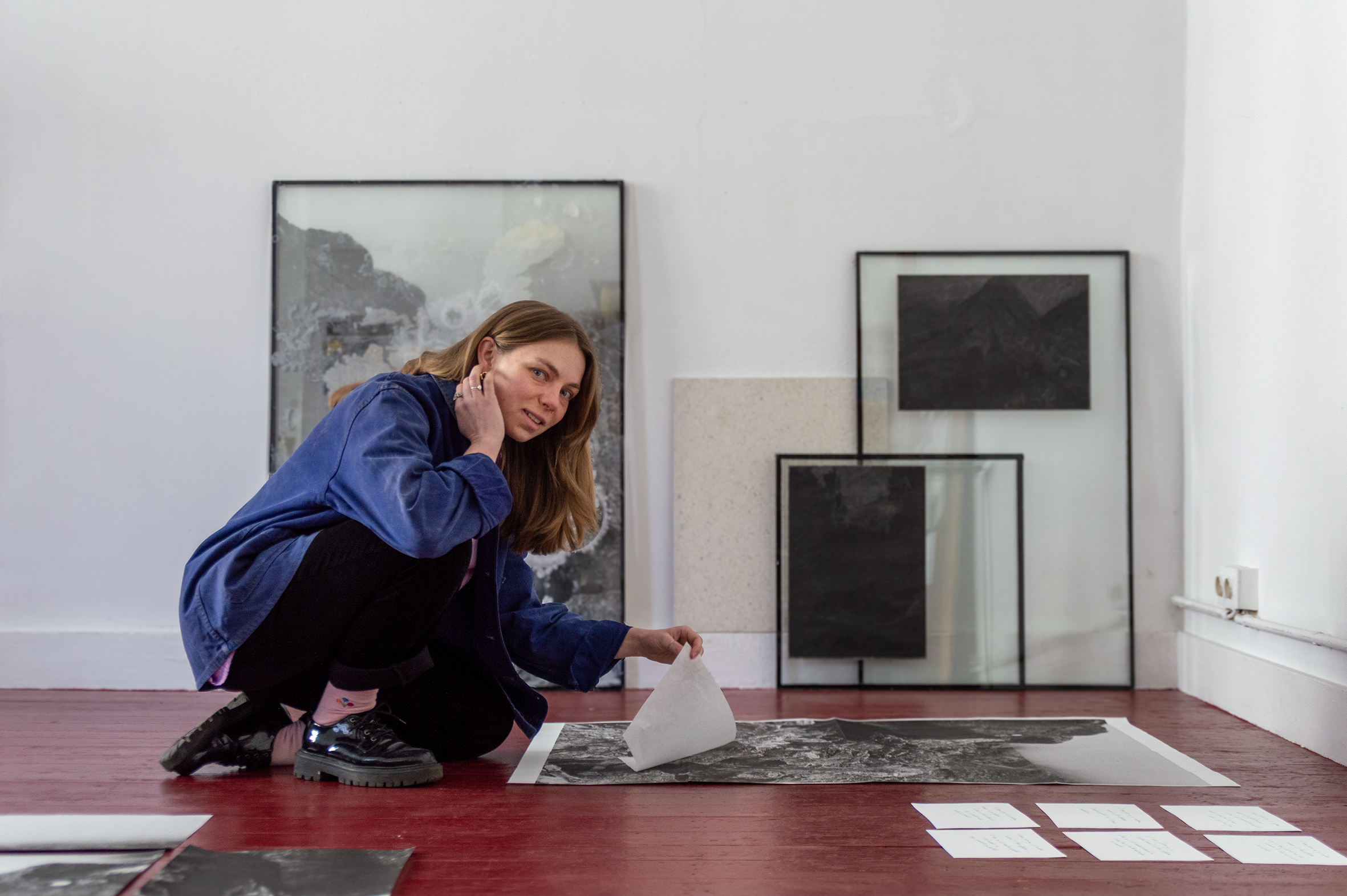
Artist Guillemette Ridet. Credit: Sarah Schug
“It’s complicated in Brussels to find studios for artists that are accessible to our budgets, because as artists we don’t have big financial means,” she says. “Plus, those temporary spaces often have no heating, no internet, and sometimes not even electricity.”
This kind of precarity is typical for artists. Studies by both the Flanders Art Institute and the Wallonia-Bruxelles Federation paint a dire picture: over 40% of visual artists hold a non-art-related job, and only roughly one in ten can sustain themselves solely through their artistic activity. Many earn very low incomes from their work: half of self-employed visual artists report net annual earnings under €12,000.
Across Europe, the situation is comparable. In Germany, more than 90% of artists earn less than €20,000 a year. In Ireland, headlines such as ‘Will the housing crisis kill the Irish Art Scene?’ made clear how precarious conditions were, prompting the introduction of a state-supported artist salary – the only such scheme in the world. A report by Creatives Unite estimates that fewer than 10% of young European artists make a living from their art.
With widespread housing crises and rising rents, artists, who historically struggle socio-economically, find themselves in an even more difficult situation, one that doesn’t just affect them personally but can have ripple effects for an entire art scene. When affordable work and exhibition spaces are scarce, art practices and the public display of art suffer.
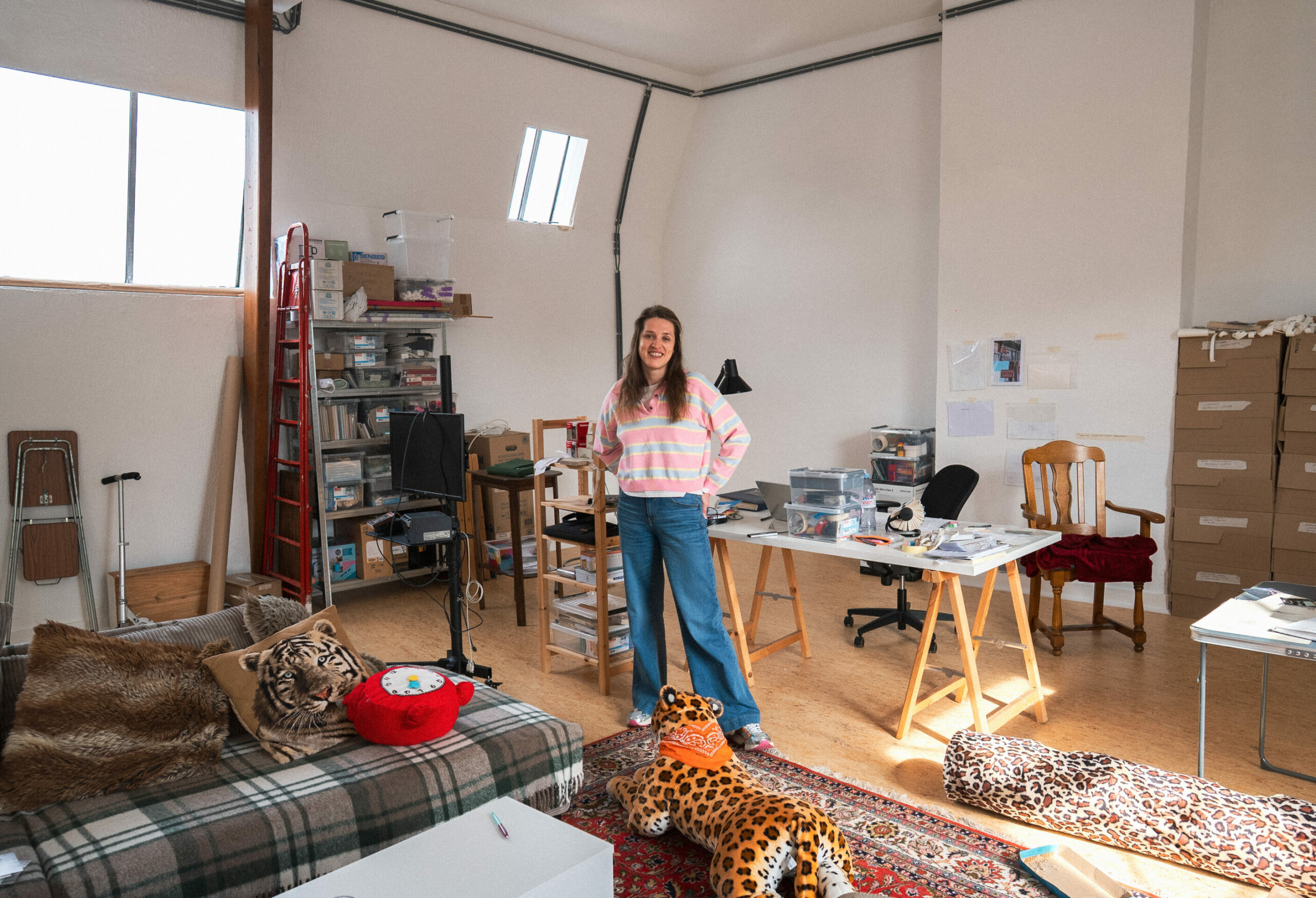
Artist Eloise Lega. Credit: Sarah Schug
Against this backdrop, places like Ateliers Mommen can make a difference, offering a combination of workspace and home, for an extended period of time and at modest prices.
There are only a few examples left worldwide. Montmartre aux Artistes in Paris offers a similar model for artists with small incomes, claiming to be the largest in Europe. In the United States, Westbeth Artist Housing, developed in the late 1960s in New York, is considered the earliest example of affordable artist housing in the country. Still, they never quite sparked a widespread emergence of the model.
The luxury of permanence
This ethos of providing a place for artists to find refuge and thrive goes back to the very beginning of the Ateliers Mommen’s history, specifically to the man who gave the project its name: Félix Mommen. He hired Belgian architect Ernest Hendrickx to build the house, where he lived with his family, and the first workshops in the back in 1874.
Over the years, Mommen set up a successful business specialising in making frames, canvases, stretchers and pigments, also offering restorations, packaging and transport of works. Not only artists, but also museums, academies, international fairs, and the Belgian state were among his clients.
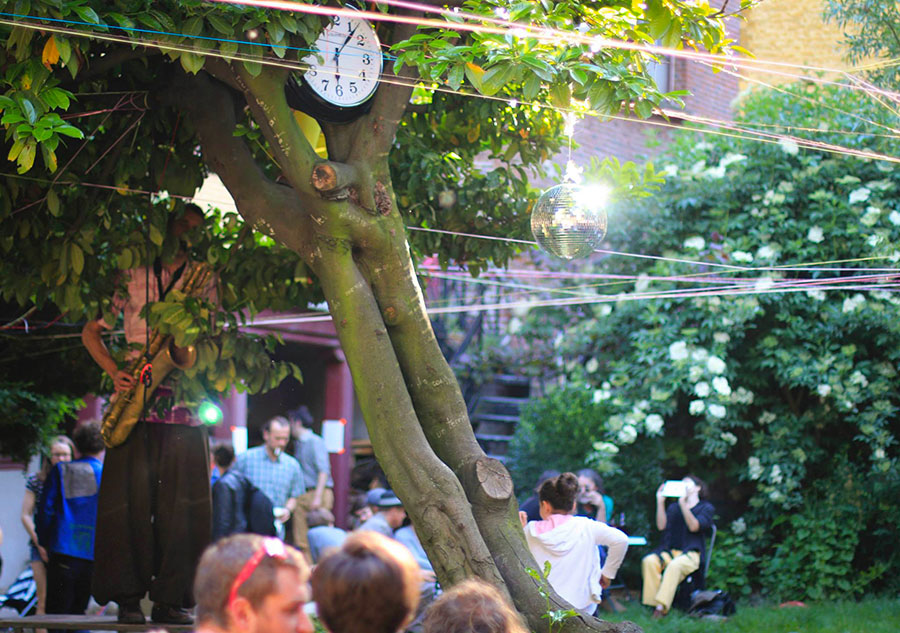
A party at Ateliers Mommen
Mommen didn’t just sell materials; he became an early patron of sorts. He built and rented studios at modest prices and sometimes accepted artworks as rent. The shop also became a social hub for artists, a meeting place for the cultural and intellectual scene of Brussels at the end of the 19th and the beginning of the 20th century. Artists such as Camille Lemonnier, Emile Verhaeren, Théo Van Rysselberghe and Rik Wouters frequented the space. For a period, the neighbourhood was one of the main centres of artistic activity in the city. Works by residents from that time can be found in the nearby Charlier museum, the former home of art collector Henri Van Custem.
A fight to save a village
But by the late 20th century, that ecosystem had started to unravel. Industrial activity at the site had declined, the buildings deteriorated, and the surrounding area underwent broader urban change. Rising property values increased development pressure. By the early 2000s, the site was under threat: it was bought by developers who were considering a large-scale real estate project. Eviction letters started to circulate, and some artists left. Others stayed, uncertain about the outcome.
Jean-Louis Struyf, an Ateliers Mommen resident from 1996 to 2014 who remains involved as a member of today’s management board and describes himself as a kind of historic witness, was at the forefront of the efforts to save the artist village at the time. “We stirred up a lot of noise,” the 61-year-old says.
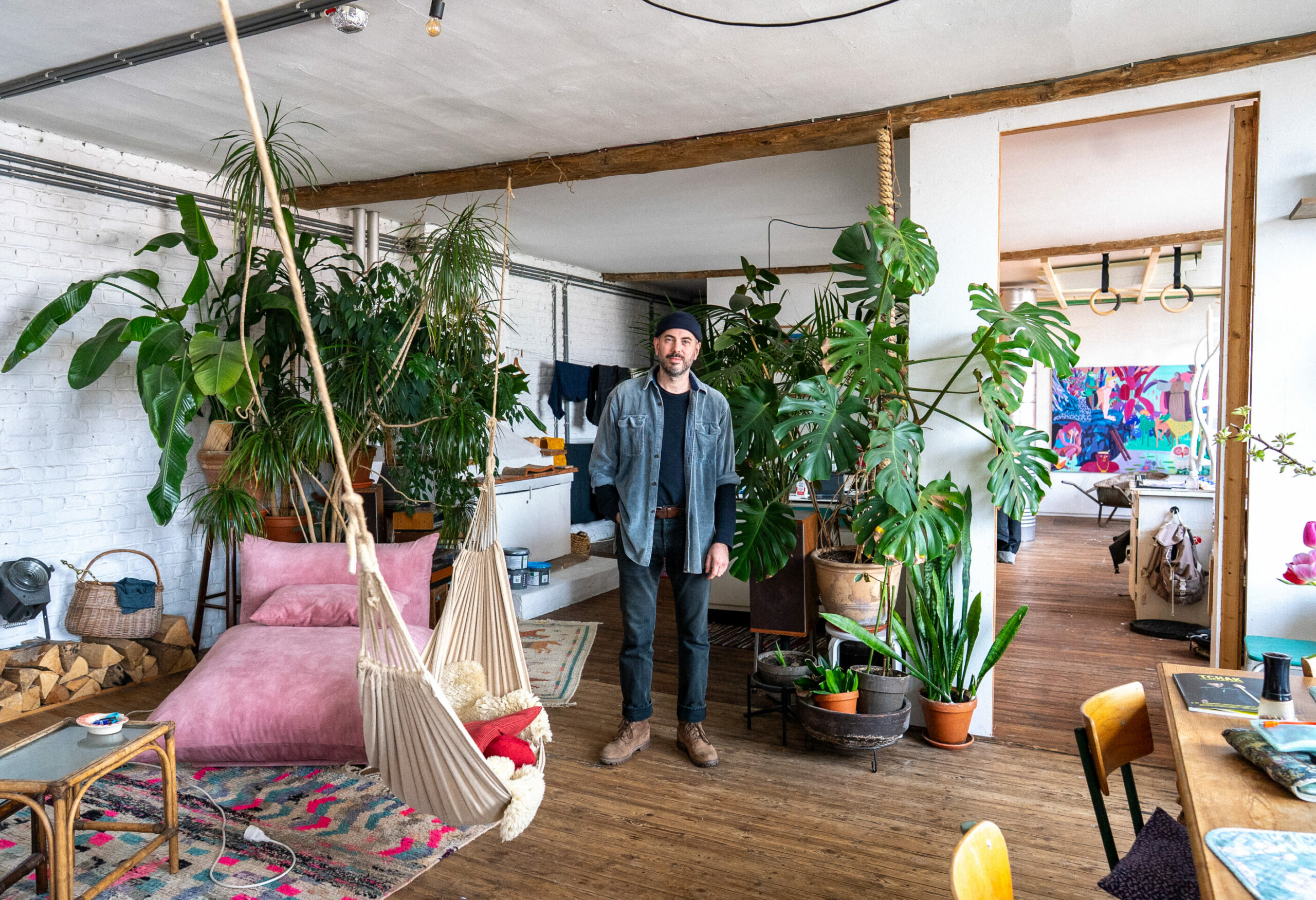
Artist Martin Wautié. Credit: Sarah Schug
After forming a non-profit association (ASBL/VZW) in 2003, residents began organising open days, exhibitions and events, drawing attention to a place that had long remained hidden behind its gate. Support grew quickly, from both the media and the wider cultural sector. “In a very short time, we collected 10,000 signatures,” Struyf says. “During the first open doors weekend alone, we got more than 4,000.”
The mobilisation quickly took over daily life. Weekly meetings were held and temporary offices were set up. “We had several computers, people from outside coming in to help us build the website, others organising events or helping renovate the exhibition space,” he recalls. “There was a very intense dynamic.” At its peak, they hosted five to six events a month, including regular exhibitions, drawing a steady flow of visitors. “There were always people here.”
For Struyf, this meant giving up his personal art practice for the duration of the fight. “I dropped everything,” he says. “It was 200%, with my partner. From morning until midnight, every day.” It was a race against the clock: they had nine months to secure the €3 million needed to save the site.
At stake was more than just a building: a home, “A village within a city, a micro society,” as he calls it. “Kids have grown up here. Young residents help old ones with their grocery shopping.”
Between sanctuary and turnover
Finally, their efforts paid off: the St Josse municipality acquired the complex, combined with funding from federal urban policy programmes. An independent municipal agency (RCA) was created to manage it. The latter and the artist non-profit later signed a convention, laying out the use of the buildings as artist housing and the details of their cooperation.
The artists’ mobilisation was central to saving the site, but it was not the only factor. In the early 1990s, the mayor of Saint-Josse initiated its classification, a status that made large-scale redevelopment difficult. Legal support, public intervention, societal and media pressure all did their part.
“It was possible because, at that moment, the political actors wanted to value this place,” says Guillemette Ridet. “Today, that’s rare: cultural subsidies are often about international visibility or economic return. Here, it produced social value, but that’s not what current policies prioritise. We rely on who is in power and their willingness. The collective strength gives us resistance, but we are still dependent on the political agenda.”
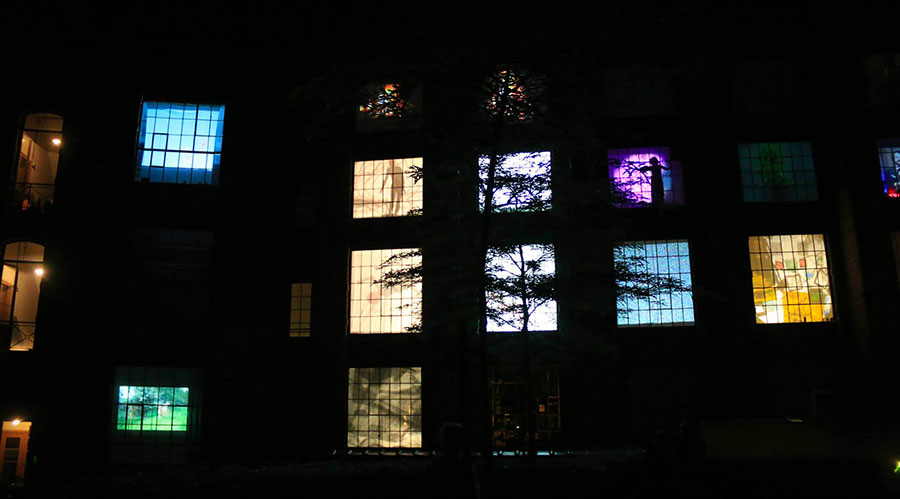
Ateliers Mommen
The new agreement stabilised the situation but also introduced new constraints. The current system includes time-limited leases for newer residents, typically capped at nine years. The policy wants to ensure fluctuation but has introduced new tensions. Some residents worry it will lose its identity as a real village and community and will be expected to function as an incubator.
While Ateliers Mommen is much more than just a roof over one’s head, living here also comes with obligations. The Salon Mommen, an on-site exhibition and event space located in the very room that served as headquarters during the campaign to save the project, is run by the artists themselves, hosting shows and performances throughout the year.
But the Salon is also proof that the fight never truly stops. In 2017, when the commune threatened to close the exhibition space and transform it into an apartment, a petition signed by 3,000 people succeeded in keeping it open – at least for now. “The Salon Mommen is a great laboratory for experimentation and a platform for emerging artists,” says Martin Wautié, 41, who has been living at the site for the last four years.
Wautié’s loft with Crittall-style windows offers a sprawling view over the city. Having lived in a small room before, the change in space completely altered his artistic practice. “The moment I arrived, I realised I could finally make large-scale objects,” he says. From making music, illustrations and comic books on his desk, he now has space to create large-scale paintings and installations, often addressing questions of class privilege and human resilience: “I have really blossomed.”
From the street, it still looks like just another townhouse. But more than 150 years after its construction, the Ateliers Mommen site still carries on the spirit imbued by its creator. It might not be the Belgian Montmartre anymore, but it remains one of the few places in the country where artists can afford to live and work with a sense of permanence.
