
The European Commission has announced a Fertiliser Action Plan that it says will support farmers facing higher costs and shortages, strengthen EU production and cut reliance on imports.
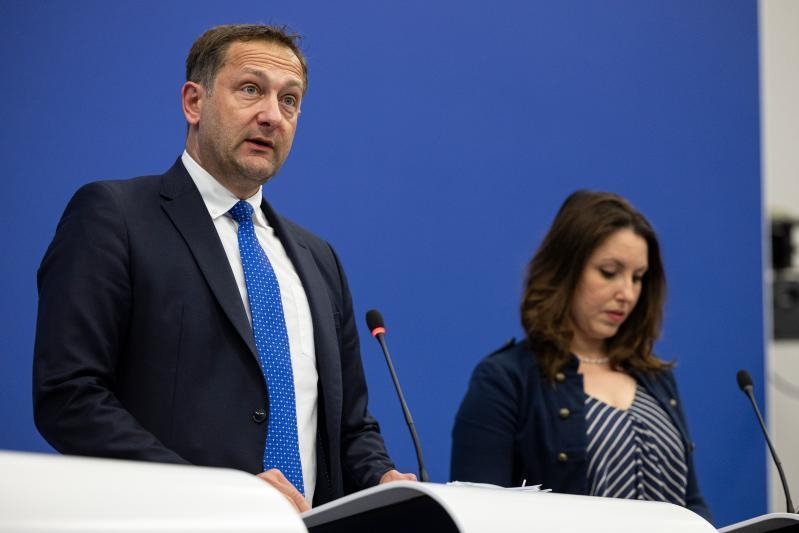
The plan was presented by the Executive Vice-President of the European Commission for Cohesion and Reforms Raffaele Fitto and EU Commissioner for Agriculture and Food Christophe Hansen.
The Commission said on Tuesday it would use existing EU agricultural policy tools to deliver “exceptional support” to farmers hit by high fertiliser prices.
It also declared it would propose using the EU budget to boost the agricultural reserve by a “substantial” amount, with a financial package due before the summer to provide short-term liquidity ahead of the next production cycle.
A separate legislative package is planned to help EU countries use support already available through their Common Agricultural Policy strategic plans, including a new liquidity scheme, more flexibility for advance payments, and incentives for farming practices that reduce and optimise fertiliser use.
The Commission also said it would bring forward measures to facilitate the use of digestate — nutrient-rich material left after producing biogas — with environmental safeguards.
It added it would clarify some implementation rules after an evaluation of the EU’s Nitrates Directive, which limits pollution from agricultural nitrates.
Domestic production and market monitoring
The Commission said it would take steps to support EU fertiliser manufacturing and reduce dependency on imports, including encouraging greater use of alternatives such as organic and bio-based fertilisers.
It listed options including algae biomass, soil enhancers, microbial solutions, biostimulants, and recovering nitrogen and phosphorus from sewage sludge.
Options affecting the fertiliser industry will also be examined as part of an upcoming review of the EU Emissions Trading System — a carbon market where companies buy allowances for greenhouse gas emissions.
To improve market transparency, the Commission will launch an EU fertilisers value chain partnership bringing together producers, farmers and member states, with a first policy dialogue planned in the coming months.
It added it would strengthen market monitoring and early-warning capabilities, including work on a report on how costs linked to the Carbon Border Adjustment Mechanism and the Emissions Trading System are passed on to fertiliser prices and ultimately food prices.
The Commission informed further it would assess options such as stockpiling, minimum stocks and, where appropriate, joint procurement to secure key fertilisers and inputs and reduce price volatility.
Fertilisers are a major cost for farmers and are considered essential for crop production, with recent supply disruptions and price swings increasing pressure on farmers across Europe.
