
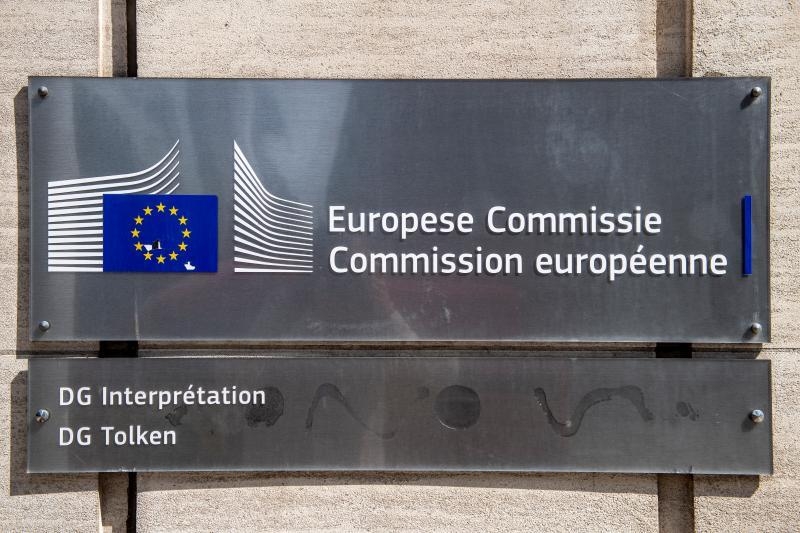
Rumours are circulating in Brussels that some of the European Commission’s directorates-general might be axed or merged into larger departments. But what actually are the DGs?
If European Commission President Ursula von der Leyen and her team of 26 European Commissioners, selected from each of the EU’s member states, are effectively the government of the Union, then the DGs are its ministries.
Down at national level, governments rely on ministries for trade, energy, transport and culture, among others, to help make and implement policy. At EU level, it is much the same structure.
There are 41 DGs currently, each headed by a director-general who takes care of the day-to-day management of the department. Commissioners oversee the big picture policymaking and often have two or more DGs under their portfolio.
Director-generals are appointed by the college of Commissioners and as such there is a degree of politics at play when officials are installed or removed from jobs.
Some of the DGs handle external relations and policy areas, others handle administration and IT services, like translation and recruitment.
Each Commission can organise the DGs however the president and their leadership team see fit. For example, in 2010, the energy and transport DGs were split into separate departments to reflect the increasing importance of energy policy in particular.
Climate, now governed under DG CLIMA, was spun off from the environment directorate in the same year. While CLIMA has evolved into one of the most influential DGs, ENVI has rather fallen by the wayside.
Name changes also happen. The directorate that took care of fisheries policy was until 2008 known at least informally as DG FISH. That, perhaps embarrassing moniker, was dispensed with when the department was renamed as DG MARE and given new responsibilities.
Now, another round of mergers, cuts and reorganisations is being considered by von der Leyen and her advisors, as reported by Politico.
That includes dismantling DG REGIO, which handles regional policy, as well as DG AGRI, the seat of farming policy, DG EMPL, which handles employment, and DG MARE too.
Although not confirmed, this restructuring would lead to the creation of what is already being called DG INVEST. This would be a central hub for all matters related to EU money and budget.
There is also an element of the Commission centralising control and becoming more of an ‘EU government’. The restructuring plan is expected to be presented by the end of the year.
