
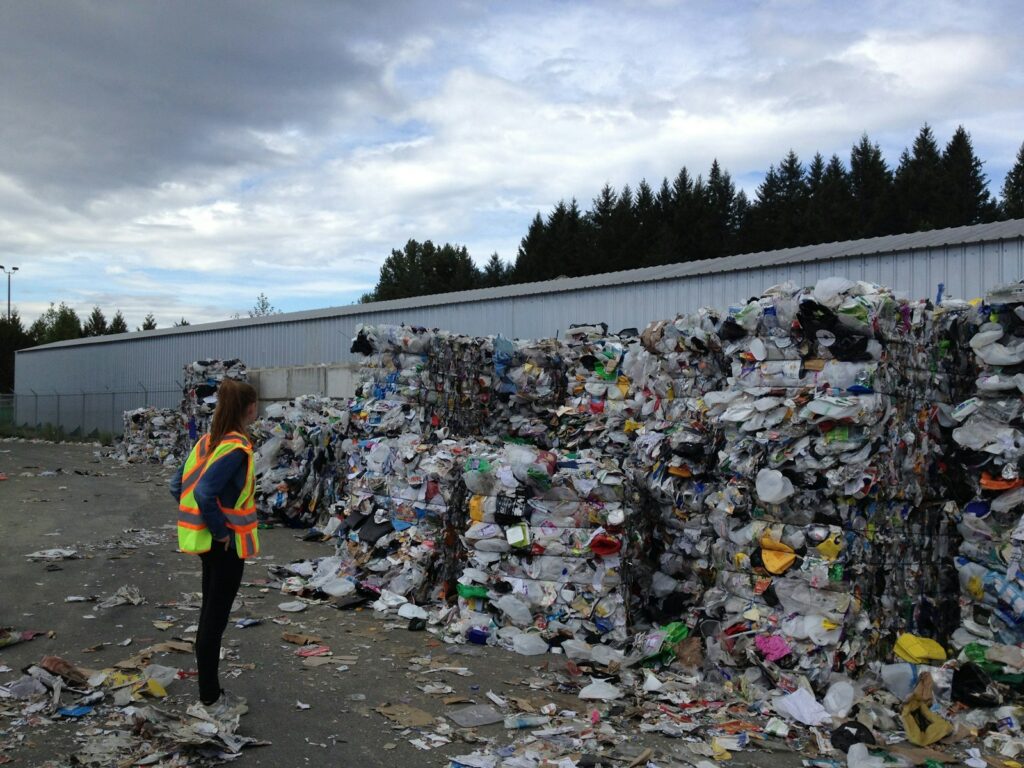
The EU imported 49.7 million tonnes of recyclable raw materials from outside the bloc in 2025 and exported 36.2 million tonnes, leaving a net import gap of 13.5 million tonnes.
Net imports rose by about 1 million tonnes in 2025, up 7.8% from 2024, Eurostat reported on Thursday.
The EU has recorded net imports of recyclable raw materials every year since the series began in 2005.
The 2025 gap between imports and exports remained below earlier highs, standing 35.6% lower than the peak net import volume of 21 million tonnes recorded in 2006.
Metals led exports while organic materials dominated imports
More than half of the EU’s recyclable raw material exports in 2025 were metals — 18.9 million tonnes, or 52.1% of the total — followed by paper and cardboard at 6.0 million tonnes (16.5%) and organic materials at 4.4 million tonnes (12.0%), the figures showed.
On the import side, organic materials made up the largest share at 30.0 million tonnes, or 60.3% of all recyclable raw material imports, followed by minerals at 8.3 million tonnes (16.7%) and metals at 6.3 million tonnes (12.7%).
Organic material trade was mostly not classed as waste — waste accounted for 1.8% of organic exports and 3.2% of organic imports — while metals and paper and cardboard were traded almost exclusively as waste.
Turkey was the top destination for EU exports in 2025 at 12.8 million tonnes, followed by India (3.9 million) and the United Kingdom (3.4 million).
Imports were led by Brazil at 11.2 million tonnes and Argentina at 8.7 million tonnes, followed by the UK (4.4 million) and Ukraine (4.0 million).
