
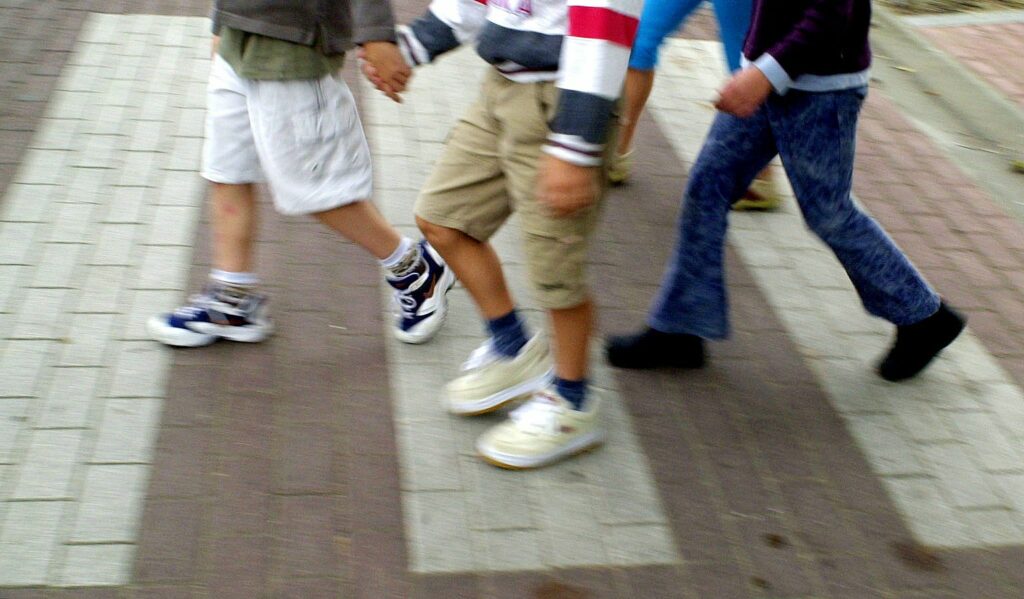
A large majority of people living in Brussels support the creation of pedestrian zones around schools and nurseries, according to a new survey published by Les Chercheurs d’Air.
The study, conducted in partnership with research institute Dedicated, found that 73% of Brussels residents are in favour of pedestrian streets in front of nursery and primary schools. Support is even higher for greener school streets, with 83% backing the idea of adding more vegetation and green spaces around schools.
Growing concern about air pollution
The survey comes as concerns continue to grow over air pollution exposure among children in the capital. According to Les Chercheurs d’Air, road traffic is responsible for 47% of nitrogen oxide emissions in the Brussels Region, while none of the Region’s primary schools respect the nitrogen dioxide recommendations set by the World Health Organization.
More than 120 schools are exposed to pollution levels between two and three times above the WHO threshold.
Despite the strong public support, only a limited number of municipalities are currently pushing ahead with concrete “school street” projects. According to a separate ranking by the organisation, only Saint-Gilles, Forest, the City of Brussels, Jette and Schaerbeek are currently committed to developing new low-traffic streets around schools.
School streets are roads temporarily or permanently closed to motorised traffic during school drop-off and pick-up times. Besides improving road safety, they are intended to reduce noise and air pollution around school entrances. “It is a shame that some municipalities do not seem to care about the well-being of their children,” said Renaud Leemans, campaign coordinator at Les Chercheurs d’Air.
Currently, only around 11% of Brussels primary schools benefit from a green school street, even though the organisation estimates that nearly 70% could relatively easily implement one.
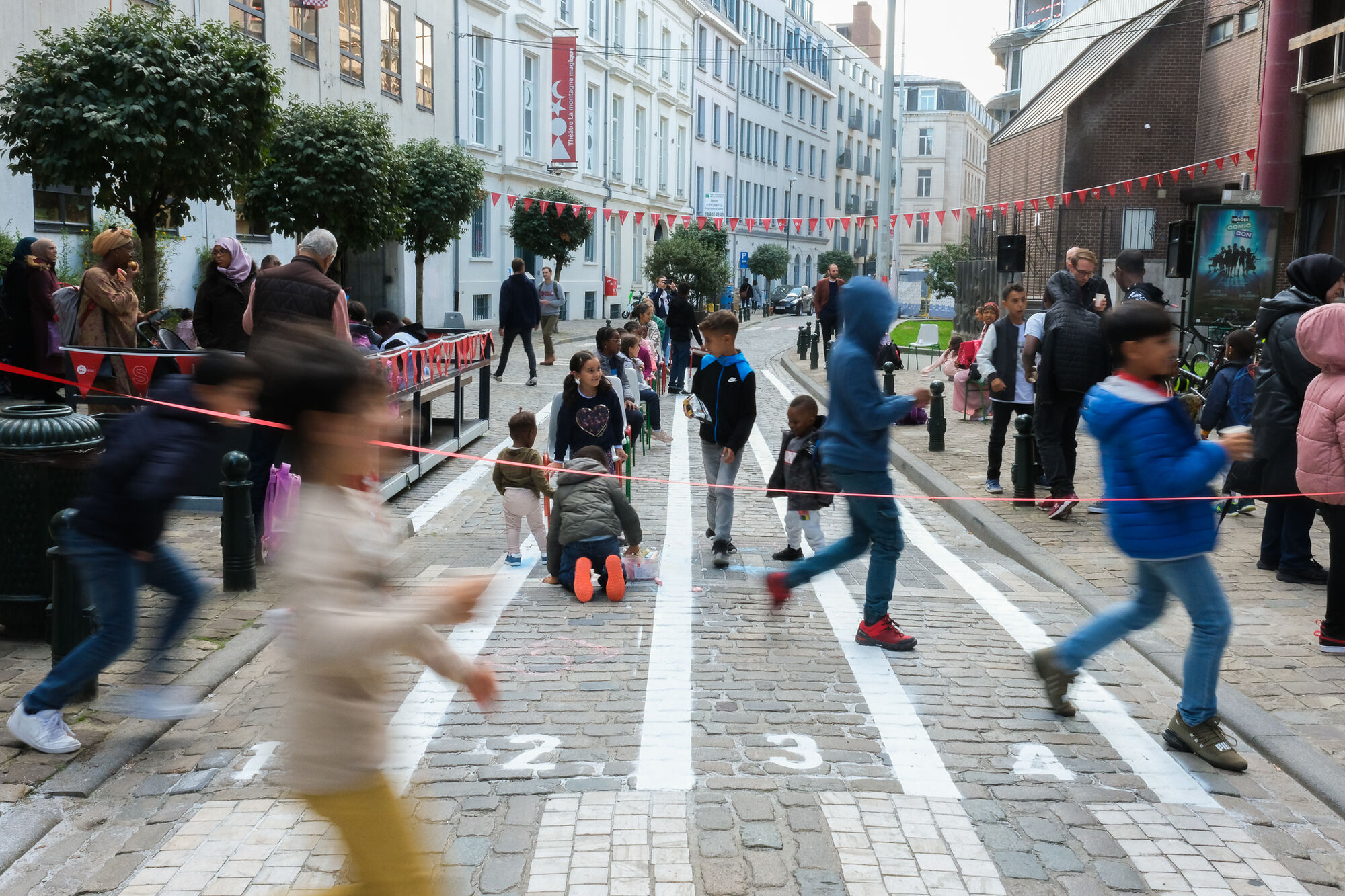
School street in Brussels. Credit: City of Brussels
The pedestrianisation of school streets
Support for pedestrian school streets remains high across nearly all demographics surveyed. Women (75%) were slightly more supportive than men (71%), while support was also shared by both parents and non-parents. Brussels residents without a car showed the highest approval levels, with 76% supporting pedestrian school zones compared to 69% among car owners.
The greening of school streets received even broader backing, particularly among residents without a car, where support reached 88%.
Les Chercheurs d’Air is now calling on Brussels’ 19 municipalities and regional authorities to accelerate the creation of pedestrian and greener school streets, arguing that such projects could quickly be introduced in front of nearly 50 schools across the capital.
