

While mortality rates have declined thanks to better screening and treatment, diagnoses among younger women continue to rise, forcing policymakers, doctors and patient advocates to rethink how breast cancer is prevented, detected and treated.
According to recent data, breast cancer incidence rates are increasing by around 1% each year overall, and by 1.4% annually among women under 50. Although most cases still occur in older age groups, more than one in ten breast cancer cases in Europe are now diagnosed in women under 44.
The trend is raising urgent questions about whether Europe’s healthcare systems are adequately prepared for a younger generation of patients - many of whom are navigating careers, fertility concerns, mental health struggles and financial pressures at the same time as cancer treatment.
For Tanja Spanic, a breast cancer survivor diagnosed at just 26 years old and former President of Europa Donna Slovenia, the gaps remain significant. “Young women are too often told their lumps are ‘nothing to worry about’ because of their age,” she explains. “Diagnostic delays are one of the most painful and recurring stories we hear from peers.”
She argues that healthcare pathways frequently fail younger patients from the very beginning. “Treatment pathways are rarely designed with younger patients in mind: the impacts on fertility, relationships and careers are frequently treated as secondary concerns. We need care that sees the whole person, not just the tumor.”

Prevention policies under renewed scrutiny
The rise in early-onset cancers comes at a time when European policymakers are intensifying efforts to tackle preventable cancer risk factors.
Last year, the European Commission renewed its push to reduce tobacco consumption through higher taxation proposals aimed at cigarettes and vaping products. Several countries are also strengthening anti-smoking legislation, while public health authorities increasingly warn about the popularity of vaping among young people.
Alcohol consumption is also coming under closer scrutiny. Ireland recently introduced mandatory health warnings on alcoholic beverages, while new research suggests that Generation Z may not be as resistant to binge drinking as previously assumed.
At the same time, researchers continue to examine the role of broader social determinants in cancer risk. “The women we speak with are navigating high-pressure careers, financial insecurity and environments they have little control over,” says Spanic. “We cannot talk about prevention honestly without acknowledging that stress, pollution, and socioeconomic disadvantage are not personal failings.”
She believes policy responses must go beyond encouraging healthier habits. “Policy needs to address the structural conditions that put younger people at greater risk, not just advise them to drink less and exercise more.”
Awareness campaigns for younger audiences
Advocates also warn that traditional public health campaigns are failing to connect with younger generations. “Young people are on Instagram, TikTok and YouTube - if awareness campaigns aren’t there too, they’re simply not reaching their audience,” Spanic says.
According to her, authentic storytelling from survivors often has a far greater impact than institutional messaging. “Peer-to-peer communication is powerful; we should be training and supporting young advocates to carry these conversations into their own communities. When we build communities, we reduce stigma, and as a result more people feel empowered to share their own stories on social media, creating a ripple effect that no top-down campaign can replicate.”
In many European countries, routine breast cancer screening invitations begin only at age 50, leaving younger women heavily reliant on self-detection or symptomatic referrals. “Honestly, I don’t believe current screening guidelines are fit for purpose,” says Spanic. “My own cancer was found by chance, not through a screening program.”
“As incidence rises among under-50s, we urgently need a serious, evidence-led conversation about whether those thresholds should change.”
The European Beating Cancer Plan has already recommended improvements to screening access across the bloc, but implementation remains uneven between member states. “Political will exists on paper,” Spanic says. “What’s needed now is accountability for delivery.”
A new generation of treatments
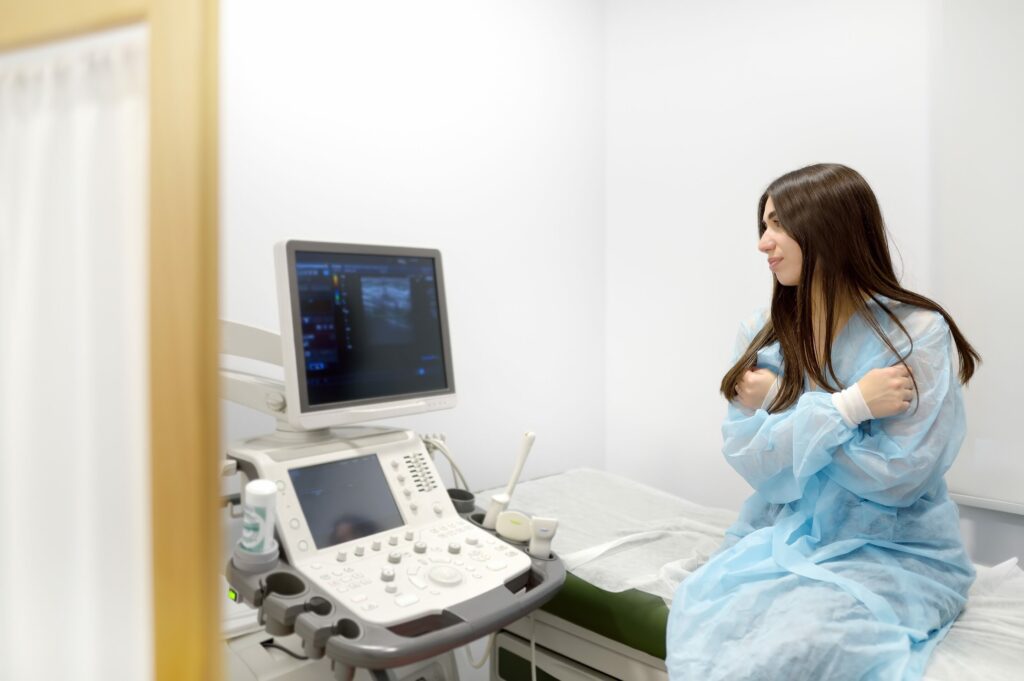
At the same time, advances in science and technology are transforming the future of cancer care. Artificial intelligence is increasingly being integrated into mammography and breast imaging, with emerging research suggesting AI-assisted screening systems may soon approach the diagnostic accuracy of radiologists in certain settings.
Meanwhile, pharmaceutical innovation is shifting away from traditional chemotherapy towards more targeted therapies designed to reduce long-term toxicity.
Next-generation treatments such as antibody-drug conjugates (ADCs) and mRNA-based therapies are generating growing optimism among clinicians and patient groups alike. Unlike conventional chemotherapy, these therapies aim to target cancer cells more precisely, potentially reducing the severe side effects that can affect patients long after treatment ends.
For younger survivors, these long-term consequences are a major concern. “Survivorship is not a footnote,” Spanic says. “For younger patients it can span decades, and the system largely abandons you once active treatment ends.”
She describes patients struggling to return to work, access fertility preservation or receive psychological support after treatment. “Policy must fund survivorship pathways as rigorously as it funds treatment,” she argues.
Bringing patient voices into policymaking
Patient organizations are also calling for a larger role in shaping future healthcare policy and clinical research. “Patient involvement cannot mean ticking a box by adding one survivor to an advisory panel,” Spanic says. “Patients' representatives must be included in the design of clinical research as equal partners”.
She argues that too many research priorities still fail to reflect the daily realities patients experience. “A truly youth-informed policy would be co-written with young patients, not just presented to them for comment after the fact.”
As Europe confronts the growing challenge of breast cancer among younger women, advocates say the conversation must evolve beyond survival rates alone.
The next generation of cancer care, they argue, will not only depend on scientific breakthroughs, but also on whether healthcare systems can adapt to the social, psychological and economic realities facing younger patients today.

Coverage of this topic was made possible with the support of Daiichi Sankyo, while all research and writing were conducted independently by The Brussels Times
