
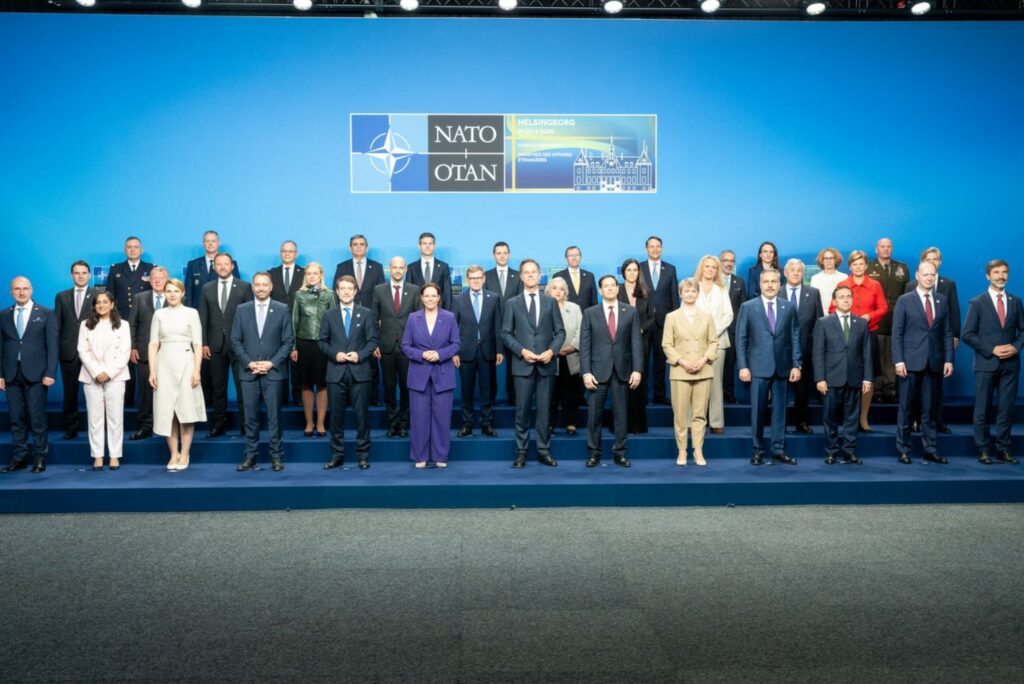
NATO foreign ministers have concluded a two-day meeting in Helsingborg, Sweden, focused on defence spending, arms production and support for Ukraine.
The talks on 22 May were described as groundwork for NATO’s summit in Ankara in July, according to a statement by the alliance's press service.
Ministers discussed “a credible path to the 5%”, meaning “steady and sustained increases in defence investment”, NATO Secretary General Mark Rutte said.
He declared that higher investment was needed to keep allied forces “capable and prepared” and to ensure they have the equipment required to “deter any adversary and defend every Ally.”
Ministers also agreed on the need to increase defence industrial production across the alliance — a reference to expanding the capacity to produce military equipment and munitions — Rutte said.
He welcomed European allies and Canada taking “greater responsibility for conventional defence” and referred to the strength of the transatlantic bond.
Ukraine and wider security issues
Ukraine’s foreign minister, Andrii Sybhia, joined discussions on 21 May on NATO’s support for Ukraine.
Allies are working to ensure support for Ukraine remains “substantial”, “predictable” and “sustainable”, and based on Ukraine’s “critical requirements.”
Ministers also discussed developments affecting allied security, including the situation in the Middle East.
Iran threatens freedom of navigation and global commerce by closing the Strait of Hormuz and “attempts to hold the global economy hostage”, Rutte said, adding that security challenges are “increasingly interconnected — and that Allies and partners have a strong interest in working closely and proactively together”.
Rutte also met US Secretary of State Marco Rubio during the meeting, with talks covering defence spending, defence industrial production and “the development of a stronger Europe in a stronger NATO.”
