
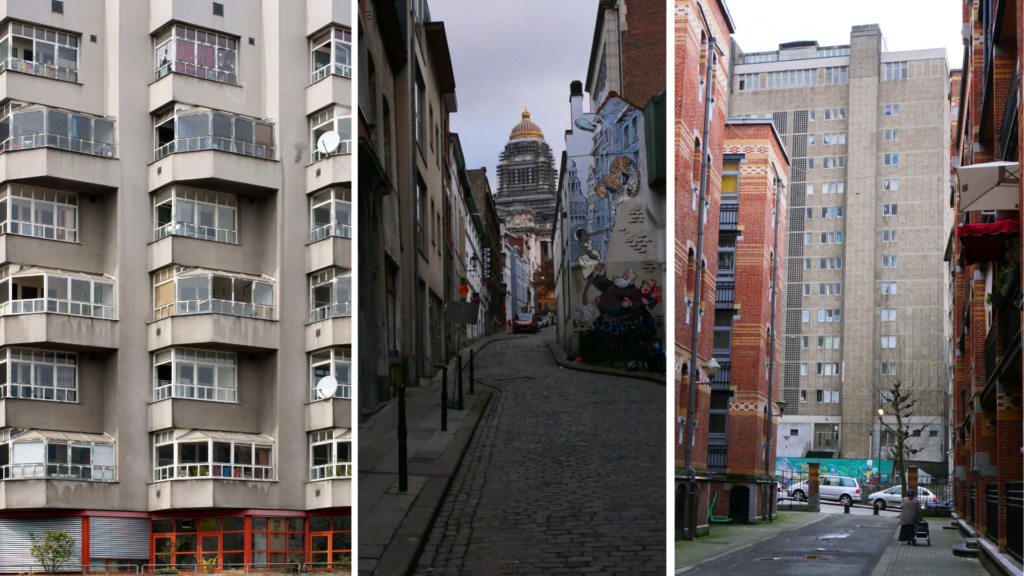
Major cities have a way of pulling a diversity of people and cultures into their orbit. With global populations set to move increasingly into urban environments, these hubs of activity will only grow.
Brussels is well known as an international hub, with some local councils looking to expand their services to integrate the international community. Yet for all the professional possibilities, events and cultural offerings that city-dwellers have on their doorstep, the living situation within the home is often rather less appealing than the excitement to be found outside.
Anyone renting in Brussels will know how hard it can be to find a good place to live – somewhere in a nice neighbourhood, well maintained and not exorbitantly expensive. But if renting is hard, the story for social housing is even harder with some less fortunate Brussels residents waiting literally years for a home.
To compound the difficulties, social housing that does exist is often in a poor state of repair, only winding the social divide. Belgium's economic hardship and the European energy crisis all combine to make city living that much tougher.
Yet innovative housing solutions could answer more than just the need to boost accommodation. What if as well as being designed to resist the sub-optimal weather conditions we know so well in Belgium, homes were designed to weather the economic and energy challenges that so many households face?
It's something that urban developers have been trying to do for some time and in one Brussels district could soon become reality. And it's exactly the kind of forward-thinking that we need to make city communities fit for the future.
Belgium in Brief is a free daily roundup of the top stories to get you through your lunch break conversations. To receive it straight to your inbox every day, sign up below:
1. Made in Asia: Cosplayers, artists and tech fans meet in Brussels
On April 8-10, thousands of anime, manga, and pop-culture fans flocked to the Brussels Expo Centre in Heysel. Read more.
2. Solving social housing: Fossil-free apartments to open in Brussels

Brussels is facing a chronic social housing shortage, with families in one municipality facing a 14-year wait to be given a home. Now, a fossil-free project on the site of a former school in Schaerbeek has a social and environmental solution. Read more.
3. Belgium reopens embassy in Kyiv; €500 million more aid
Belgium is currently preparing to reopen the Belgian embassy in the Ukrainian capital of Kyiv, after it was closed for security reasons in March, announced Foreign Affairs Minister Sophie Wilmès. Read more.
4. Bored of football? Meet Belgium’s roller football pioneers
In 2007, Joël Ogunade was roller-skating with friends, messing around with a football. They wondered if they had found something new. Read more.
5. Investigation opened into salmonella contamination in Belgian Ferrero factory
The public prosecutor’s office in the Belgian province of Luxembourg is gathering information about the salmonella contamination at the Ferrero chocolate factory in the municipality of Arlon, which is likely responsible for over 100 infections. Read more.
6. Deadly bus accident: Driver arrested after positive drug test
Following Sunday’s deadly bus accident, in which two were killed and five critically injured, the driver who tested positive for drugs has now been arrested. Read more.
7. Hidden Belgium: The refugee who brought pastéis de nata to Belgium
Joaquim Braz de Oliveira arrived in Brussels at the age of 19. He was a political refugee fleeing from repression in Portugal. He taught himself to cook, and opened a little Portuguese restaurant on the Chaussée de Charleroi in 1982. Read more.
