
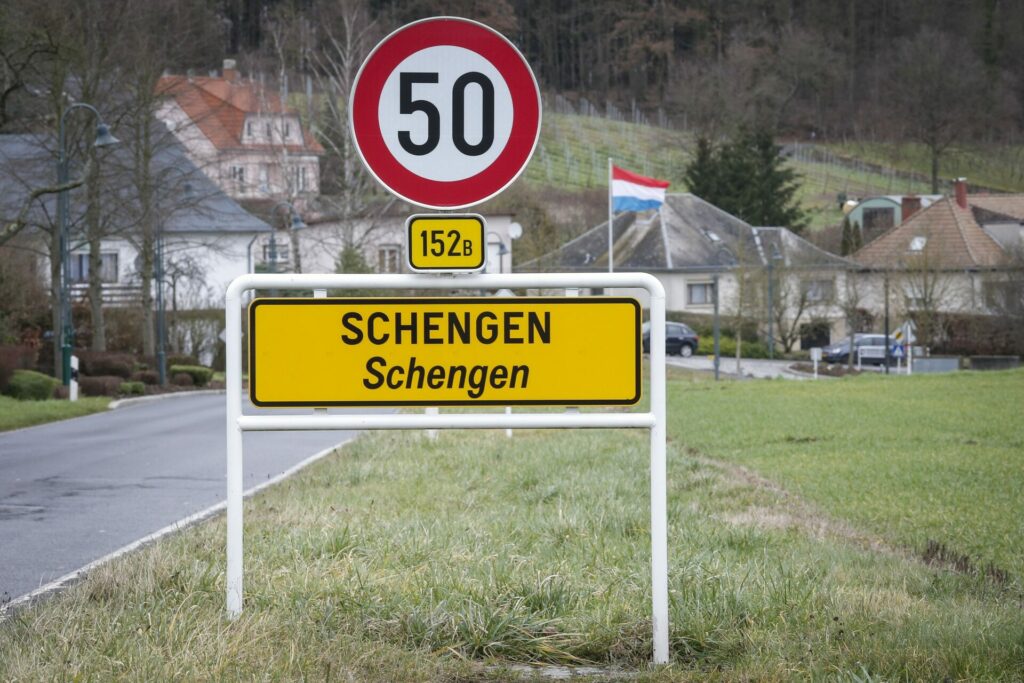
The European Commission has issued opinions on temporary internal border controls maintained by Austria, Denmark, France, Germany, Italy, the Netherlands, Norway, Slovenia and Sweden.
EU law allows Schengen countries to reintroduce checks at internal borders temporarily in response to a serious threat to public policy or internal security, but the Commission must issue an opinion when the controls last more than 12 months, the EU executive noted in a statement on Tuesday.
The opinions assess whether the notified measures are necessary and proportionate, and consider alternative and mitigating steps taken to limit disruption to cross-border travel.
The member states have relied on the rules because of “genuine and legitimate concerns” linked to security threats and the migratory situation.
The Commission said internal border checks have consequences for neighbouring countries, and called on governments to limit negative impacts on cross-border commuters and communities.
A consultation process led by the Schengen Coordinator has helped to reduce waiting times and improve operational co-ordination and information exchange between the countries concerned.
Technology and alternatives to border checks
The Commission recommended that the nine countries work towards phasing out and gradually lifting internal border controls, making full use of alternative measures and regional co-operation.
It declared that “more efficient and effective alternatives” to internal border controls were available, including non-systematic police checks, mobile biometric identification and vehicle tracking technologies.
In most cases, member states already use risk-based and non-systematic controls that resemble police checks and could be replaced by alternative solutions.
The Commission said the forthcoming application of the EU’s Pact on Migration and Asylum would strengthen conditions for gradually lifting internal border controls by reinforcing management of the bloc’s external borders and providing tools to address unauthorised movements within the Schengen area.
It also cited the Entry-Exit System — a digital system that records when non-EU travellers enter and leave — which it said has been fully applicable since April, alongside the planned European Travel Information and Authorisation System (ETIAS), which will require visa-exempt travellers to obtain an authorisation before travelling.
Schengen symbolises freedom of movement for more than 450 million people and internal border controls “must remain temporary and exceptional”, Executive Vice-President Henna Virkkunen said in a statement.
Illegal border crossings were down a further 40% in 2026, Internal Affairs and Migration Commissioner Magnus Brunner stated.
