

The people most likely to be struggling with anxiety are often the least likely to look anxious. They are the calmest person in the room. Prepared, articulate and seemingly impossible to let down.
The colleague who replies to emails too quickly, works too late and somehow still believes they are falling behind. The friend who remembers every commitment, delivers on every promise and quietly apologises for things that never required an apology in the first place.
From the outside, these individuals rarely raise concern. They are composed, dependable and professionally successful. Employers trust them. Colleagues admire them. Friends rely on them.
Yet beneath this polished exterior, many are navigating something far less visible: a relentless inner pressure that often goes unnoticed precisely because it looks like competence.
When anxiety looks like competence
- Do you struggle to rest without guilt?
- Do you replay conversations long after meetings end, wondering whether you said the wrong thing or failed to sound competent enough?
- Do you feel strangely uncomfortable when you are not being productive?
If any of this feels familiar, you are far from alone. Perhaps the problem is not that you are failing to cope. Perhaps you have simply become very good at hiding anxiety. We tend to imagine anxiety in recognisable forms: panic attacks, visible distress or someone struggling to function in daily life.
But anxiety does not always appear chaotic. Sometimes, it is remarkably organised. Sometimes anxiety looks like ambition. Sometimes it looks like perfectionism. Increasingly, it looks like success.
This quieter form of emotional distress is often described as high-functioning anxiety. While not a formal clinical diagnosis, the term captures a growing reality among high performers who outwardly appear to be coping exceptionally well while privately living with chronic worry, overthinking and emotional exhaustion.
Perhaps what makes this form of anxiety difficult to recognise is that it rarely interrupts achievement. Deadlines are met. Promotions happen. Responsibilities are fulfilled. On paper, everything appears stable. But functioning is not the same as flourishing.
The hidden cost of functioning well
High-functioning anxiety is not a formal medical diagnosis, but mental health professionals increasingly use the term to describe people who appear outwardly successful while privately struggling with persistent worry. Unlike anxiety that visibly disrupts daily functioning, this form often hides behind achievement.
It can appear as chronic overthinking, perfectionism or an inability to mentally switch off. For others, it looks like overpreparing, fear of making mistakes or difficulty resting without guilt.
Many describe a persistent feeling of being permanently “on”, as though rest must first be earned.
Often, it sounds deceptively ordinary: rereading an email five times before sending it, replaying a meeting long after the workday ends, or feeling vaguely uneasy on a quiet Sunday afternoon simply because nothing productive is happening.
Of course, not all ambition stems from anxiety, and not all high performers are struggling. Many ambitious people are thriving. The distinction matters. Because high-functioning anxiety often coexists with achievement, people frequently dismiss it as personality rather than distress. They tell themselves they are simply driven, conscientious or highly responsible.
The problem is that chronic anxiety rarely remains still. Left unaddressed, it can gradually contribute to burnout, emotional exhaustion, panic symptoms, depression, strained relationships and physical health problems.
Many recognise the extent of their distress only once exhaustion begins disrupting the very performance they worked so hard to protect. Recognising the signs early matters. Not because ambition is unhealthy, but because constantly operating from fear comes at a cost.
When success becomes self-protection
We often assume achievement is driven by confidence, discipline or ambition. Sometimes it is.
But for many high achievers, performance is fuelled by something more uncomfortable: fear. Fear of failure. Fear of disappointing others. Fear of becoming irrelevant. Fear of not being enough in environments where self-worth increasingly feels tied to productivity.
Success, in these circumstances, becomes more than aspiration. It becomes self-protection.
Productivity offers temporary relief from uncertainty. Overpreparing creates the illusion of control. Staying constantly busy provides reassurance that failure might somehow be avoided if one simply works hard enough.
The difficulty is that modern culture often rewards these behaviours without questioning their emotional cost. Perfectionism is praised as professionalism. Constant availability is mistaken for dedication. Overworking becomes ambition. Even exhaustion has become strangely respectable.
Being overwhelmed is increasingly treated not as a warning sign, but as evidence of importance. Modern workplaces have become remarkably good at rewarding symptoms. High-functioning anxiety survives partly because distress often arrives disguised as discipline.
For many people, rest starts to feel conditional - something permitted only after one more task, one more email, one more attempt to finally feel “caught up”.
Why Brussels quietly rewards invisible anxiety
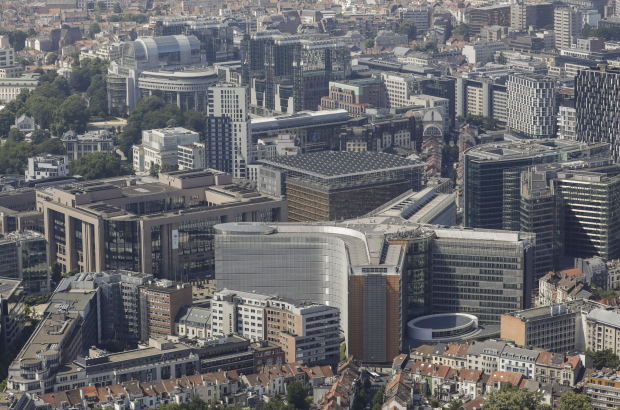
In cities like Brussels, this dynamic feels particularly familiar. Having worked within the European Commission, I recognise how easily high performance and chronic anxiety can become intertwined in environments defined by uncertainty, political pressure and relentless comparison. In settings like these, competence quickly becomes habit - and slowing down can quietly begin to feel dangerous.
A city shaped by EU institutions, diplomacy, consulting, lobbying and international media naturally attracts ambitious and highly capable people. Many arrive carrying not only professional goals but also quiet pressure to justify the sacrifices, relocations and expectations that brought them here.
For international professionals especially, there is often an unspoken pressure to continuously prove themselves. Careers frequently depend on visibility, networks and performance. Temporary contracts, political cycles and institutional uncertainty can quietly turn competence into a survival strategy.
Surrounded by exceptionally accomplished peers, comparison easily becomes routine. In Brussels, professional circles constantly evolve. Colleagues leave. Contracts end. Entire teams shift with elections, mandates and funding cycles. Stability can feel conditional.
In this environment, competence easily becomes identity.
The pressure to remain informed, relevant and employable rarely disappears entirely. Even outside working hours, many professionals continue mentally rehearsing meetings on the metro home, replaying conversations after dinner or questioning whether they sounded informed enough despite years of experience.
For many, rest itself becomes psychologically uncomfortable. Silence creates space for self-doubt. Slowing down feels risky. Doing nothing begins to resemble failure.
The culture of never enough
It would be simplistic to frame high-functioning anxiety solely as an individual problem. We are living through conditions that make it easier to develop and significantly harder to question.
Economic uncertainty, political instability, digital hyperconnectivity and accelerating technological change have collectively created an environment where constant optimisation feels less like ambition and more like survival.
We are expected to remain productive, adaptable and emotionally resilient while continuously improving ourselves. We are encouraged to stay informed, available and competitive in labour markets increasingly shaped by insecurity.
Against this backdrop, slowing down can feel emotionally dangerous. Rest becomes something many people feel they must earn. High achievers often carry the exhausting belief that their value depends on how useful, productive or exceptional they remain.
Anxiety, in this context, becomes strangely functional. It wakes people up early. It helps them anticipate problems before they happen. It pushes them to prepare more thoroughly, respond more quickly and perform more consistently.
For a while, it can even look like success. But when fear becomes the hidden engine behind achievement, accomplishment slowly begins to lose its meaning. Success no longer feels satisfying. It feels necessary.
When competence becomes camouflage
The question worth asking is not whether ambition is healthy. Of course it can be. The more uncomfortable question is whether we have become too comfortable rewarding behaviours that sometimes signal distress.
- What if the colleague everyone admires for never switching off is not thriving, but struggling to stop?
- What if the person praised for extraordinary discipline is operating from fear rather than confidence?
- What if some of the most emotionally exhausted people are also the ones appearing most successful?
The danger of high-functioning anxiety is not that it prevents success. It is that people can succeed for years while quietly falling apart. In cultures that reward endless competence, anxiety rarely announces itself loudly. More often, it learns to perform so convincingly that nobody notices the cost.
Perhaps the people most at risk are the ones everyone else envies - not because they are failing, but because they have learned to suffer in ways that still look like success.
