
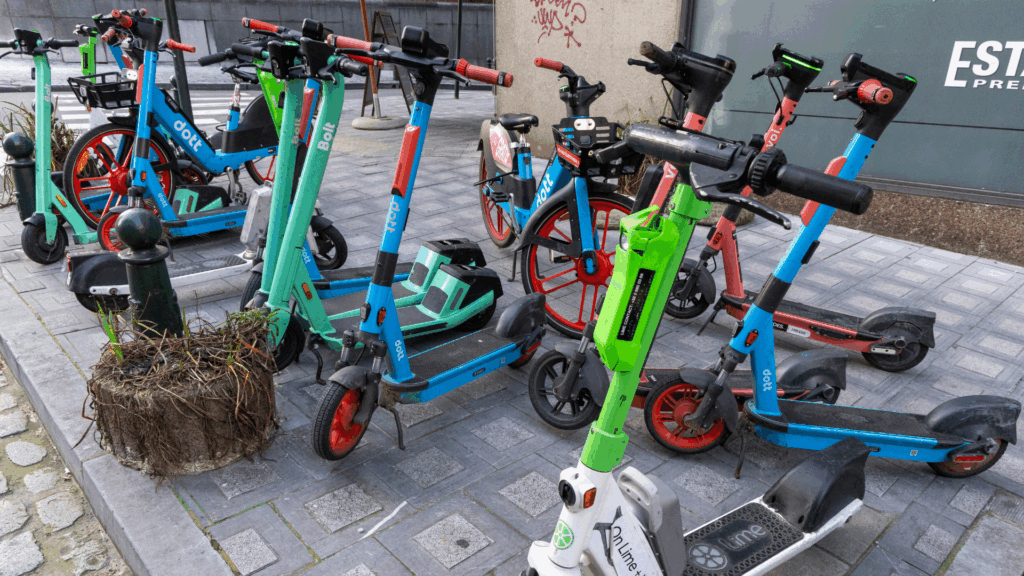
Shared e-scooters will disappear from Brussels streets from January 2027 after the regional government decided not to renew permits for the sector.
The Brussels-Capital Region announced this Thursday that the licences of the two remaining operators, Bolt and Dott, will expire at the end of 2026. From then on, new mobility providers will only be allowed to offer shared bicycles.
The decision follows a sharp increase in accidents involving e-scooters. According to regional figures, 666 people were injured in incidents involving electric scooters in 2025, representing a 26% increase compared with the previous year. Authorities argue that scooters' design also contributes to the severity of injuries. Unlike bicycles, riders are more likely to suffer head and facial injuries when accidents occur.
"Anyone who falls off a scooter is more likely to be injured than someone who falls off a bicycle, and haphazardly parked shared scooters make pavements even more difficult to navigate for people with reduced mobility, parents with pushchairs or the elderly," said Brussels Mobility Minister Elke Van den Brandt (Groen).
Beyond safety concerns, the government also pointed to the growing nuisance caused by improperly parked scooters, which can obstruct pavements and create difficulties for pedestrians, particularly people with reduced mobility or elderly residents.
Concerns over criminal use
The move also follows warnings from Brussels Public Prosecutor Julien Moinil, who recently highlighted the increasing use of shared scooters by organised crime groups and drug traffickers. According to the Brussels Government, shared e-scooters were used in connection with 25 shootings recorded in the capital last year.
Authorities believe removing the vehicles from the public space will provide police and judicial services with additional tools to tackle criminal activity.
Brussels is not the first European city to take such a step. Shared e-scooters have already been removed from the streets of Paris, Madrid and Prague.
Shift towards shared bicycles
Brussels intends to strengthen its bike-sharing network, particularly through the expansion of electric bicycles. The current Villo! concession, operated by JCDecaux, expires in September 2026. To avoid a gap in service, the operator will continue running the network until September 2028 at the latest while the Region develops a replacement scheme.
"The choice to remove shared e-scooters from Brussels streets is a clear and responsible policy," said Brussels Minister-President Boris Dilliès (MR). "They often cause frustration, lead to serious injuries, clutter public space and are increasingly being used by organised crime."
Van den Brandt added that the decision goes beyond safety alone. "It is about choosing a city with enough alternatives to get around quickly and efficiently," she said. "That is why shared bikes are staying, and we are giving Villo! a long-awaited update."
'Deeply disappointed'
In a statement sent to The Brussels Times, e-scooter operator Bolt said that it was "deeply disappointed" by the Brussels Government's decision not to organise a new shared scooter tender.
"Shared scooters and e-bikes are complementary services, not interchangeable ones. They serve different users, different trip types, and different needs," the company said, stressing that scooters have become "essential transport in Brussels and a key part of the transport system".
Bolt stressed that private and shared scooters are often lumped together in the public debate. However, private scooters are unregulated, untraceable and subject to no operator oversight, while shared scooters need to follow strict rules.
According to them, removing shared scooters will only push users towards private scooters, which the company said are "unregulated, untraceable, and genuinely dangerous".
The company stressed that it remains open to dialogue and hopes that Brussels residents will make their voices heard.
