
Belgian amusement parks are considerably more expensive following the pandemic, with an average family of four spending 14% more than three years before for a day of fun.
The average cost for those families is now €147 for a day, reports Het Belang van Limburg.
The amusement park season started in the second week of the Easter holidays, and entrance fees for parks across the country – along with the popular Efteling in the Netherlands – have risen.
Bobbejaanland is now the most expensive theme park with a maximum rate of €42.90 for an adult ticket. Yet marketing director Peggy Verelst was quick to point out that "we work with dynamic prices, based among other things on the expected crowds."
This means prices are often much lower than the maximum rate, with a visit this Saturday costing €34.99, for instance. This is cheaper than at most competitors but still higher than 2019 rates.
Still, Verelst says “prices are indexed and we believe they reflect proper value for money.”
Higher prices for more thrills
Plopsaland De Panne has a standard rate of €42.50 for anyone taller than one metre, regardless of the date, which is higher than 2019’s ticket price of €36.99.
Compared to three years ago, admission tickets for Plopsa De Panne and Plopsa Hasselt became 15% and 18% more expensive, respectively. After Bobbejaanland, this is the steepest increase of all major Belgian players.
The two Plopsa parks also charge the most for a parking space at €12.50. In 2014, visitors to Plopsa Indoor Hasselt paid less than half as much (€6).
Related News
- Belgium’s amusement parks reopen for 2022 season
- Tomorrowland sold out: some 600,000 visitors expected this summer
“We want to encourage people as much as possible to come by public transport,” says Plopsa.
Plopsa also points to the indexation and the recent multi-million euro investments that mean visitors now enjoy more park space.
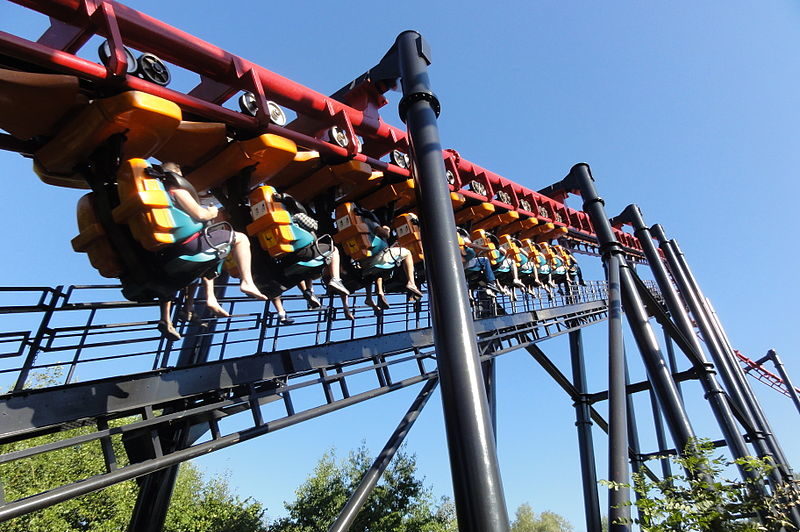
Walibi amusement park in Belgium attracts in and around 1.3 million visitors each year. Credit: Wikimedia Commons.
"Even during the mandatory closure, we continued to invest. Moreover, a lot of money was pumped into making the parks corona proof. All these factors are taken into account in the slight annual increase in ticket prices," says spokesperson Chelsea Vanhullebusch.
But at Walibi in Wavre, prices have only risen by a single euro, despite the addition of a new roller coaster.
Prices are going up in zoos as well: a ticket for Pairi Daiza became 16% more expensive than three years ago. “But since 2019, two new worlds have been added, representing an expansion of over thirteen hectares,” said spokesperson Sven Watthy.
“Visitors get considerably more value for money than they used to, especially if you take inflation into account.”
Food and drink prices also rise
Apart from the expensive entrance tickets, the amusement parks charge a lot for food and drink. This has not been popular among punters, with some taking to social media to voice their indignation.
A 500ml bottle of Chaudfontaine water from Plopsaland now costs €5.49, which includes a half euro deposit that visitors receive back when they stop by a collection point.
In comparison, Efteling visitors pay €2.90 euros for the same bottle of water, including a €0.15 deposit.
The Plopsa spokesperson emphasised that €4.99 for half a litre of water is a normal price compared with other tourist locations on the coast: “On average, the price of water there fluctuates between €2.50 and €3.50 euros for just 20 centilitres. That is in line with our prices, or even higher.”
