

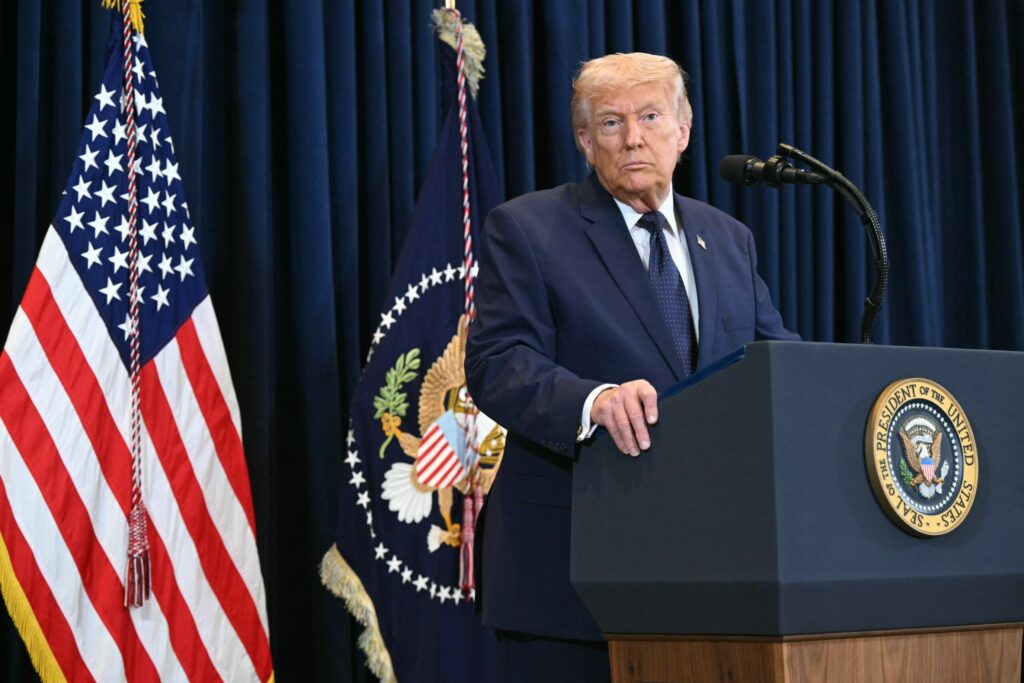
Donald Trump turns eighty on Sunday. It is meant to be a moment of celebration. Yet not everything is going according to plan.
Performers are pulling out of the festivities, and the geopolitical landscape offers far less to celebrate than many had hoped. With the FIFA World Cup now under way, Trump had envisioned a triumphant moment for both America and himself.
But beneath the spectacle lies a more uncomfortable reality: the United States appears weaker, more divided, and less influential than at any point in recent memory.
When the tail wags the dog
Trump is reportedly hoping for a deal with Iran to crown the occasion. The irony is hard to miss. The most coveted birthday present for the American president would have to come from the ayatollahs in Tehran.
On February 28, Trump launched a military campaign against Iran. The ambition was nothing less than the overthrow of a regime long viewed as one of the most repressive in the world. Supreme Leader Ali Khamenei was swiftly eliminated. At first glance, everything seemed to be unfolding according to plan.
Israeli Prime Minister Netanyahu had convinced Trump that war with Iran was both necessary and achievable. The argument was simple: the success of his intervention in Venezuela could be replicated in Tehran. What was conveniently overlooked was that Venezuela never experienced a genuine regime change.
President Maduro was replaced by a political ally who proved more accommodating to Washington, while the system itself remained largely intact. María Corina Machado won the election and was later awarded the Nobel Peace Prize for her commitment to democracy and human rights, yet she never assumed power.
Operation Epic Fury was supposed to be short, decisive, and successful. According to Israel, the strategic conditions had never been more favourable for finally dismantling the regime in Tehran. The tail wagged the dog. Trump gave the green light.
More than a hundred days later, the question remains: what has actually been achieved?
A display of impotence
Compared with Venezuela, there is even less evidence of regime change in Iran. What has changed dramatically is the economic toll.
Growth is slowing, inflation is rising, energy prices have surged, and international trade has been severely disrupted by the continued blockage of the Strait of Hormuz. For Europe, the economic damage is estimated at around one billion euros per day, amounting to well over €100 billion so far. That translates into roughly €300 per European citizen. And the costs continue to mount.
An estimated 560,000 jobs are now at risk as competitiveness declines, inflation accelerates, and growth weakens.
In an extraordinary twist, Trump has even abandoned the oil boycott against Russia and Iran in an attempt to soften the economic blow. The consequences are being felt in the United States as well. Economic growth is slowing and inflation is creeping upward.
Yet the geopolitical consequences may be even more significant.
The conflict with Iran has exposed Washington’s inability to keep the Strait of Hormuz open. Meanwhile, Hamas and Hezbollah remain active despite years of efforts to neutralise them. Global support for Israel has reached historic lows.
In the United States, only 37 percent of the population now views Israel favourably, while 60 percent hold an unfavourable opinion. In Germany, 73 percent express negative views. These are the very countries where support for Israel has traditionally been strongest.
The message heard in Beijing
America’s difficulties in the Strait of Hormuz have implications far beyond the Middle East.
During a recent meeting with Trump in China, President Xi Jinping reportedly left no room for ambiguity regarding Taiwan: stay out of it. The underlying message was clear. If the United States cannot guarantee freedom of navigation through the Strait of Hormuz, why should anyone believe it could effectively project power in the Taiwan Strait?
In essence, Beijing’s warning was simple: don’t even think about it.
Trump appears to have understood the message.
At the same time, the United States has expended vast quantities of missiles and interceptor systems in Iran. Replenishing those stockpiles will take years. Rival powers are watching closely. They understand the strategic implications of such a prolonged war of attrition and will draw their own conclusions.
The MAGA paradox
The United States has rarely appeared more overstretched. Trump’s handling of the conflict has, in this view, weakened support for Israel to unprecedented levels. Across the Pacific, allies who once looked to Washington for leadership are increasingly questioning American reliability. Taiwan, in particular, may have concluded that it can no longer count on Washington’s protection.
Back home, confidence in the president has eroded as well.
'Make America Great Again' was the promise. Yet America today appears less influential, less respected, and less capable of shaping events than it was before.
That is the uncomfortable reality behind the birthday celebrations.
Still, happy birthday, Mr. President.
