
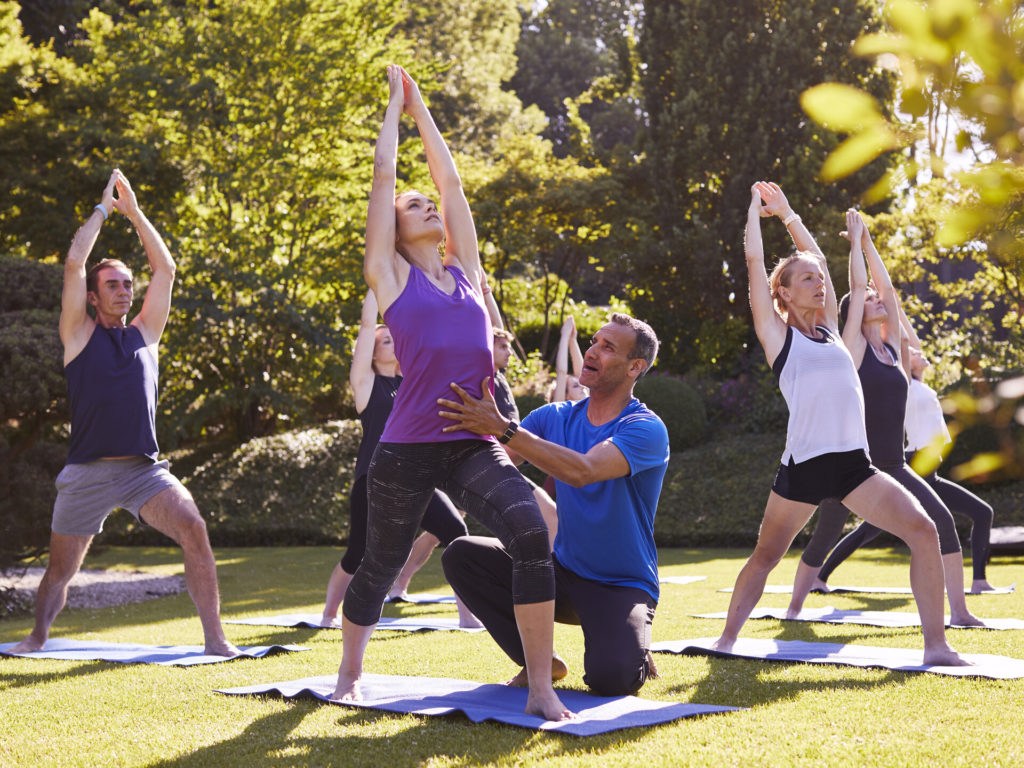
When stepping into the brightly lit Plasky Yoga Room entry hall, you're greeted by smiling receptionists and a big chalkboard announcing the day's classes: 'Morning Yoga', 'Hot Yoga', 'Ashtanga Basics', 'Open Flow', 'Ayuyog', 'Restorative'. In the Scandinavian-style waiting room, warm tea and pastel coloured bean bags are laid out for the Lululemon-clad yogis quietly waiting for an attendant to finish wiping down the 50 grey mats arranged in one of the three studio spaces for the next class.
Plasky is one of Yoga Room's six studios in Brussels, in addition to two abroad in Lisbon and Lyon. Now boasting over 10,000 members, 100 staff members (including 80 teachers), and 400 classes per week, it has become Belgium's biggest yoga offering since it opened its first studio at Defacqz in 2016.
Yet the growing accessibility of yoga has led to divisions among the Brussels yoga community on what yoga actually is and who it is for.
Queen Elisabeth and early pioneers
Although yoga is now somewhat ubiquitous in Belgium, offered at high-end fitness centres such as Aspria, Animo, and Mix, and in outdoor sessions across parks like the Cinquantenaire, it is far from a new phenomenon.
Originating in India, the practice first became popular among the Belgian upper class. An encounter between BKS Iyengar, the yoga teacher widely credited with bringing yoga to the West, and Queen Elisabeth of the Belgians (consort to King Albert I) in 1958 recounts the already 85-year-old queen demanding he teach her how to stand on her head.
Then came pioneering Belgian yoga teacher André Van Lysebeth, sometimes called the first teacher of European yoga. After three months studying yoga in India in the late 1960s with Sri K. Pattabhi Jois, who developed the Ashtanga Vinyasa style of yoga, Van Lysebeth wrote the 1967 hit book 'Yoga Self-Taught', popularising Jois' teachings.
A former student of Van Lysebeth, Jean-Claude Garnier has taught yoga in Belgium for about 50 years. He founded the Ashtanga Yoga Institute in 1988. Located in Uccle since 2003, Garnier continues to teach a holistic and traditional style of yoga while operating his osteopathy practice from a purpose-built space that includes a yoga studio, a consultation office, and his private residence.
At the Institute, the origins of yoga are very outwardly displayed. Wooden figures of Hindu deities and decorative bronze lamps dot the space, and a framed photograph of Jois smiles down on patrons, a clear reflection of the influence Garnier's time in India continues to have on his teaching.
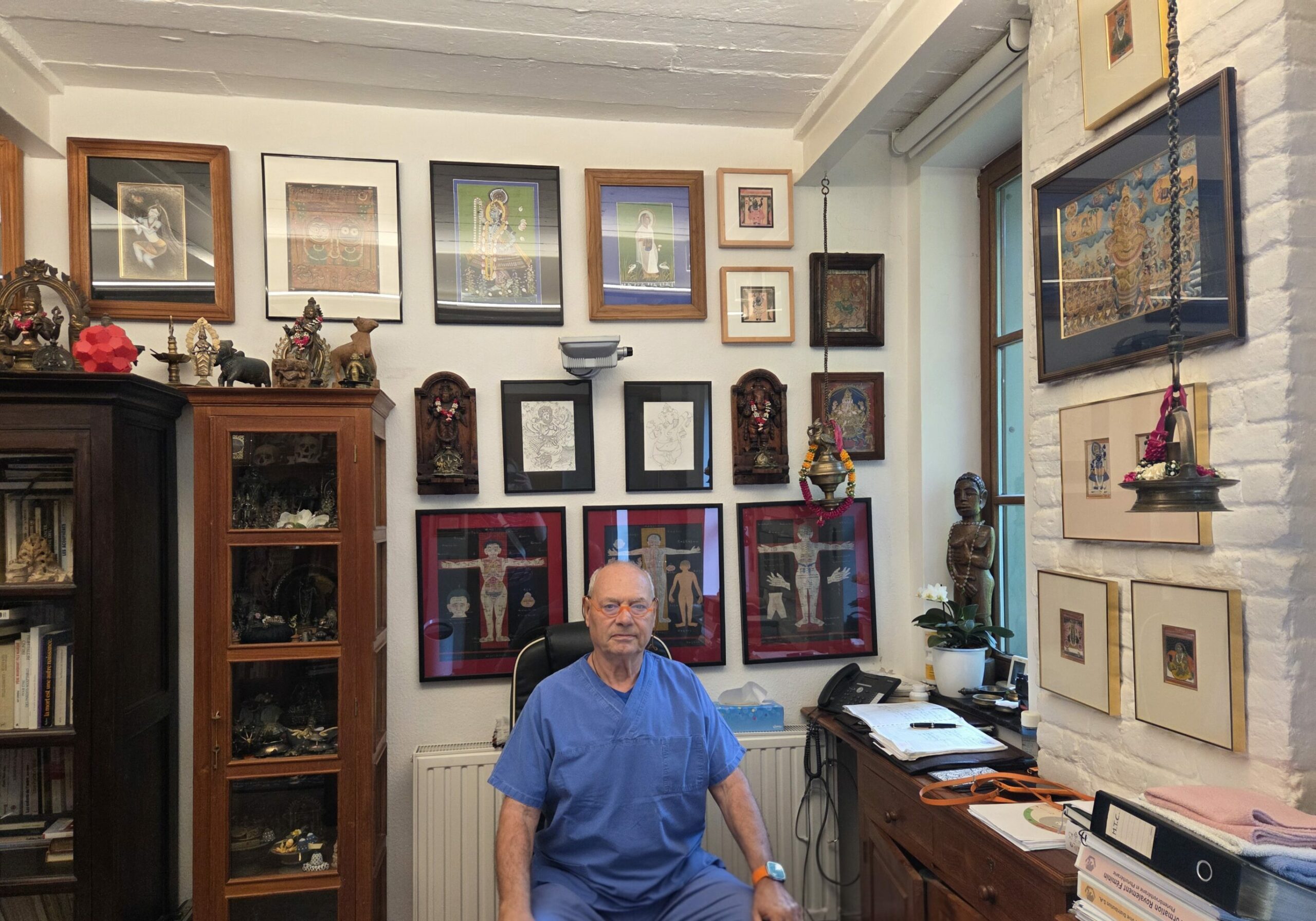
Jean-Claude Garnier. Credit: Sabine Zednik-Hammonds
For Yoga Room founder Pierre Rousseaux, though, the choice not to include such references to spirituality in his studios was a very conscious one. "At the beginning, one of the issues that yoga had was that it was considered too spiritual, too alternative. And so it's true that, in my effort to make yoga accessible to everyone, I removed all those references to spirituality."
While yoga benefited from a social media and lockdown-driven boom, it was confined to small circles until 2013, when Colin Wolf and Robbie Makroczy established their studio Yyoga at Place Saint-Catherine. Wolf recalled that during negotiations for their dual-studio space, the landlord abruptly called him to confirm they were not going to be founding a cult in his space. "He had heard rumours in the neighbourhood that a cult was about to open," he laughed.
"So, back then, yoga was kind of like that – there weren't any studios like the ones we have today," explained Wolf. "And besides, all the studios back then were really dedicated to a specific style of yoga." Their goal in offering a variety of styles at Yyoga in one accessible space was to avoid dogmatism, which he says can emerge from practising a specific style without questioning or perspective.
Stretch marks
Yoga Room attracts a high number of international residents, many of whom work at the European Institutions. They are all united by "a certain desire to work towards becoming the best versions of themselves", according to Rousseaux.
Many Brussels yoga teachers have long taught from home to small groups of students, often supplementing their income with other activities. Ramona Rouhdoust, who has taught at Aspria and has run Let's Yoga from her home near Merode since 2016, also offers Shiatsu, transformational breathwork, and sound healing services.
"It feels like a competition," lamented Rouhdoust, who has seen many small studios close since the pandemic. Sitting in her living room-turned-yoga-studio, Rouhdoust explained that she "never wanted to make any business out of my yoga. I was at service."
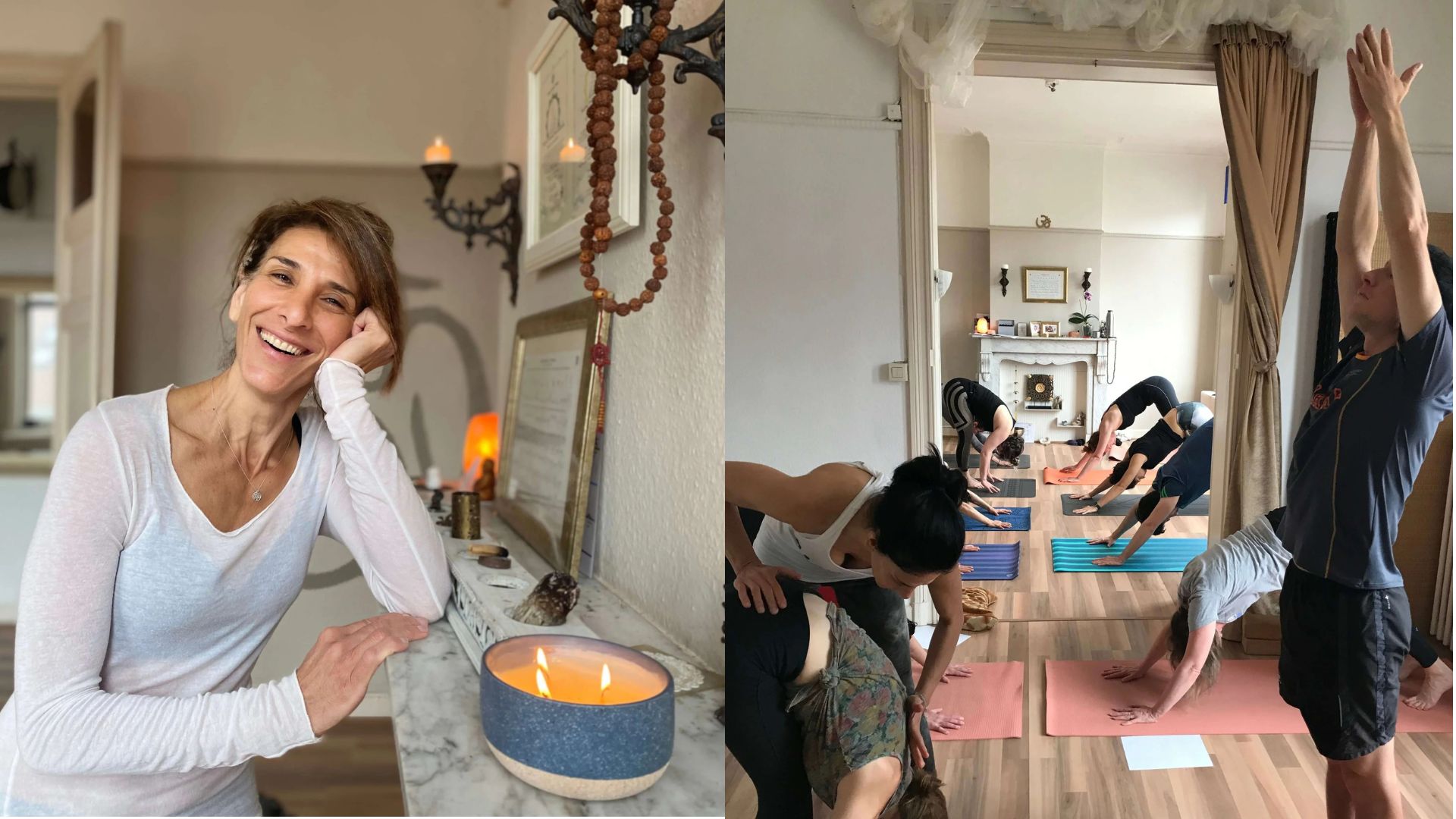
Ramona Rouhdoust. Credit: Ramona Rouhdoust
Some teachers struggle with the tension between earning money from yoga and being mentors to their students. "I admire [Rousseaux] because he’s such a businessman," admitted Rouhdoust.
A Solvay business school alumnus, Rousseaux opened the first Yoga Room studio after returning from Shanghai, where he had worked in the import-export and trading business for many years before discovering yoga. When asked whether he considers himself to be more of an entrepreneur or a businessman, Rousseaux confidently affirmed he was both. "I'm like a chef in his own kitchen. You can't have one without the other."
However, some, like Garnier, consider this less spiritual practice of yoga designed to fit easily alongside the busy 9-to-5 jobs of the majority of Yyoga and Yoga Room patrons, to be an inaccurate representation of yoga. "When I talk about yoga, I'm referring to traditional Indian yoga. Not that modern pseudo-yoga that uses the word 'yoga'," he scoffs. "It's not yoga, it's just gymnastics."
To Garnier, yoga is "a daily practice, not a wellness technique or a hobby". He compared the increasing disconnect to yoga's spiritual roots to what has happened with martial arts becoming purely physical endeavours.
Pilates takes the floor
Recently, the popularity of yoga has been overtaken by pilates. In March 2026, Yoga Room moved into an old fire station across the street from its Plasky studio, filling the space with rows of the increasingly popular Reformer machines.
While this moves Yoga Room away from its yoga speciality, Rousseaux said he decided to "surf the wave" of pilates because he believes the two practices are complementary: while yoga is all about stretching, space, and lengthening, pilates is all about structuring, strengthening, and toning the body, he said.
"We would never introduce spinning into the Yoga Room," Rousseaux said. "Whilst it's a really enjoyable activity, it has absolutely nothing in common with what we do. The same goes for Hydrox or CrossFit." Riding the wave has proven to be a good business decision: Rousseaux estimated that about 60% of Yoga Room members now practice both yoga and pilates.
At Yyoga, they've also noticed a shift. "It's incredible how things have changed in just a year," said Wolf. "We used to have classes that weren't doing too badly, like the Monday lunchtime [pilates] one, which was a fun class with an average of 15 to 20 people, and now we've gone from that to having full classes on Monday lunchtimes."
Related News
- Life lessons from my dog: When was the last time you pandiculated?
- Health habits for women in their 30s, 40s and beyond
None of these studio owners sees further expansion as a top priority; many believe that the yoga boom has passed.
Rousseaux believes that "more authentic" yoga is going to become more common from now on: "more in line with its original purpose, and less of a lifestyle trend". He intends to begin gradually injecting more traditional elements into his studios, his long-term goal being to make Brussels the European capital of wellness, with Yoga Room as the flag-bearer.
Still, to both the entrepreneurial and purist studio owners alike, what matters is making sure that their patrons have a lasting, positive experience. As Garnier put it, "It's not the Institute that matters. If everything comes to an end when I die, that's fine too. What matters is that everyone who has been trained here goes on to forge their own path."
