
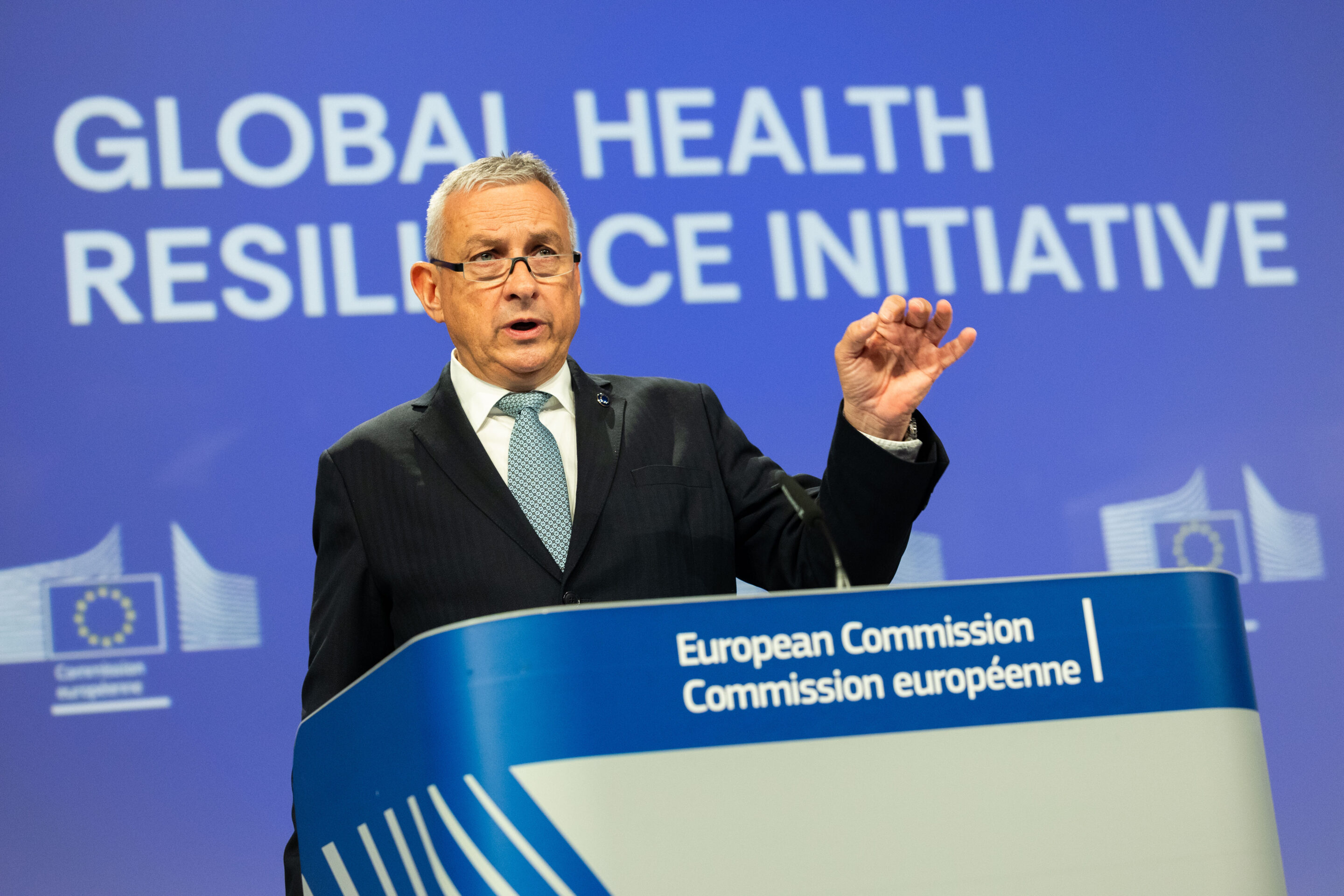
Eight months later, on 13 May 2026, the European Commission announced its Global Health Resilience Initiative, a sweeping framework promising to strengthen health systems, support "health sovereignty," and mobilize up to €300 billion through its Global Gateway investment arm.
Both strategies arrive amid a severe decline in Official Development Assistance and a deteriorating global health financing landscape. Together, they will define many of the terms under which developing countries access health resources for the foreseeable future.
While the EU's Global Health Resilience Initiative presents itself as a departure from blatantly transactional models of health engagement, such as the bilateral U.S. approach, its reorientation toward market-based mechanisms must also be accompanied by the sustained and predictable support that fragile health systems need to survive the transition. Current reductions in external assistance and crushing sovereign debt are already compromising the capacity of many developing countries to support access to essential services, so a transition that further erodes public financing risks deepening ongoing public health crises worldwide.
The Initiative speaks of "health sovereignty" but positions European pharmaceutical and biotechnology firms as the default implementation partners in developing countries. It relies on blended finance instruments that shift financial risk onto strained public budgets while directing returns to private investors. Without more, a stated commitment to multilateralism and the WHO does not alter the underlying structure: dependencies are reorganized rather than eliminated.
The undersigned organizations observe that the initiative must also confront the root causes of health inequity: sovereign debt crises that drain public health budgets, chronic underfunding that leaves countries unable to adequately build and support their own health systems, and intellectual property barriers that keep life-saving medicines out of reach.
As such, we call on the European Commission and all global health actors to ensure that frameworks presented as partnership translate into genuine shift toward cooperation in power and resources rather than a consolidation of donor influence under new architecture.
The following principles must underpin any credible initiative:
- Structural reform alongside new financing instruments. Any framework that introduces blended finance or co-investment mandates without addressing sovereign debt burdens risks deepening the fiscal constraints it claims to relieve. Debt relief and structural reform must be part of the solution.
- Genuine country ownership. Health priorities must be nationally determined, not shaped by the commercial interests of foreign companies or tied to geopolitical conditionalities.
- Regionally led governance. Institutions such as the Africa CDC and the Caribbean Public Health Agency (CARPHA) have demonstrated that effective public health responses depend on local knowledge, accountability, and trust. They must be resourced and empowered to lead, not weakened relative to the WHO.
- Respect legal flexibilities that promote access to medicines. The WTO TRIPS Agreement leaves countries flexibility to prioritize public health over patent protection, which includes the ability to produce or procure affordable generic medicines for public health purposes. The EU should make sure its trade deals don't take away the policy space that poorer countries have under global trade rules to protect public health.
Additionally, in the ongoing WHO Pandemic Agreement negotiations on the Pathogen Access and Benefit-Sharing (PABS) Annex, the EU should use its position to advance a strong multilateral system. That means benefit-sharing obligations that are binding and enforceable; guaranteed shares of vaccines, diagnostics, and therapeutics agreed upfront rather than left to bilateral negotiation; licensing provisions secured for Public Health Emergencies of International Concern; and no dual-track system that would let commercial actors access shared pathogen resources while circumventing equity obligations.
The undersigned organizations remain committed to working with all actors toward a global health architecture that serves the people it claims to protect. We urge the European Commission to ensure that the Global Health Resilience Initiative does not simply repackage the same power asymmetries that have contributed to the current global health crisis, but instead delivers on its stated promise of partnership.
Signatories:
AHF Global Public Health Institute
Third World Network
Public Citizen
Salud por Derecho
Lyft Partners
Health Global Access Project
Crisis Home
Consumers’ Association of Penang
Society for International Development
Promoted by AIDS Healthcare Foundation
