
Urban infrastructure is a complex affair, something that we generally take for granted until it goes wrong and we are forced to venture off-piste on our daily commute.
Of course, a city never really reaches a point of completion with all systems running smoothly. Urban centres are in a constant state of flux, with public services adapting to the needs of residents and, at times, residents adjusting to disruptions in public services.
With sensible planning and liaison with local communities, this should promote a positive evolution with an overall benefit. But the stakes are high when it comes to large-scale infrastructure projects: get it wrong and you risk making things worse rather than better. And these mistakes never come cheap.
In London, the Crossrail tube project to cut journey times across the city has faced successive delays, each postponement racking up eye-watering additional costs that dwarf the initial budget. What in theory would transform city travel has turned into a financial headache that continues to burn a hole in taxpayer pockets.
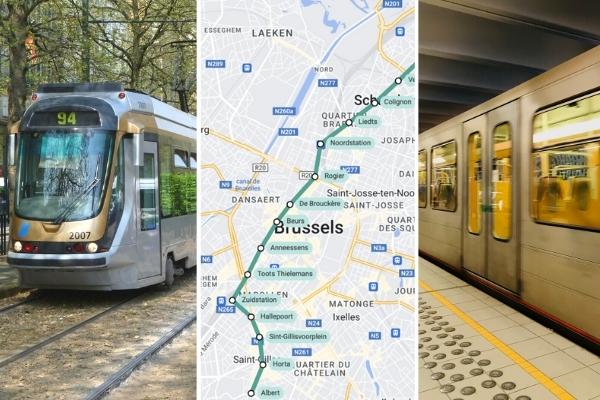
Though not on quite such a grand scale, the Brussels plan to extend metro line 3 to provide a swift connection between north and south raises similar concerns. On paper, the benefits are plain to see: reliable links to communities that currently depend on often-delayed trams and buses beholden to local traffic.
But at street level, the benefits have yet to come to fruition and local businesses have been hit hard by the construction works. Some critics have gone so far as to conclude that the project will even make mobility worse in some areas. City planners have been quick to counter this, though their arguments hinge on the undeniable need to improve Brussels connections rather than the practical issues that going about this creates.
Are you fed up with public transport? Let @Orlando_tbt know.
Belgium in Brief is a free daily roundup of the top stories to get you through your lunch break conversations. To receive it straight to your inbox every day, sign up below:
1. New parking rules enter into force in Brussels this Sunday
The City of Brussels will implement new parking rules beginning Sunday 1 May in an effort to balance resident and visitor parking. Read more.
2. Criticism grows for new Brussels metro that could even undermine mobility

Brussels is spending billions on a new metro line but a number of mobility experts are opposed, arguing that it will cause mobility in some districts to deteriorate. Read more.
3. Woman stops firemen from rescuing her husband
Authorities are investigating the case of a 50-year-old man who died in a fire on Friday in his home in Deinze in the province of East Flanders. Read more.
4. Wallonia opens up doors of 33 castles to public for free this Sunday
The gates of 33 castles in Wallonia will be opened to the public for free visits on Sunday 1 May, bringing to an end the region’s “Youth and Heritage Days.” Read more.
5. Richest 1% owns a quarter of wealth in Belgium
A new study led by one of Belgium’s leading economists, Arthur Apostel, reveals the extent of wealth inequality in Belgium and estimates that the richest 1% now owns 24% of the country’s wealth. Read more.
6. Belgians hit with record energy bills as providers reap the profits
The electricity and gas bills for an average household in Flanders have risen to an absolute record in April, according to the price dashboard from the Flemish energy regulator Vreg. Read more.
7. Hidden Belgium: The statue that shocked Saint Gilles
The 19th-century sculptor Jef Lambeau was always getting into trouble. His sculptural frieze in the Pavilion of the Human Passions in Brussels’ Parc du Cinquantenaire caused a scandal when it was unveiled. After three days, the authorities decided to close the building to protect public morals. Read more.
